Beaujolais Anew
The 2026 release of that wine we love to hate and hate to love, plus this week’s favorite stories about food, wine, and culture

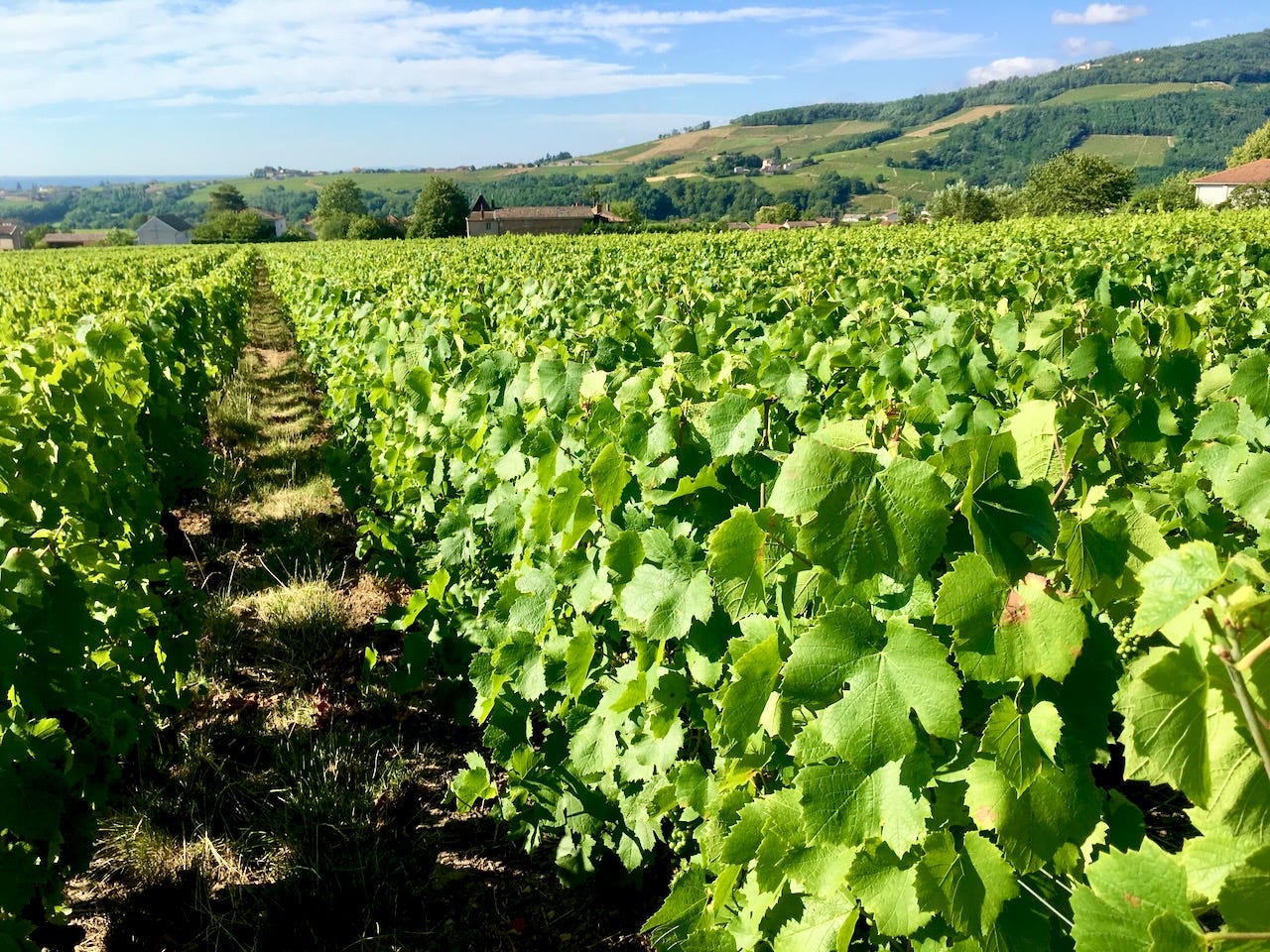
In the fall of 1985, I moved into a tiny flat in London for a six-month solo sojourn before a spring school term in Florence. I wasn’t the only new arrival. Soon my local grocer was awash in Beaujolais Nouveau, with stacks of cases by the registers festooned with signs about the brand new juice.
All this fuss about a wine? (I had a lot to learn.)
Beaujolais did not invent Nouveau—people have been drinking harvest wine as long as there have been harvests. Beaujolais Nouveau is not a modern phenomenon. It’s a modernized phenomenon.
But the vignerons of Beaujolais can take credit for blasting their Nouveau onto the world’s stage. In the 1950s, many began shipping it to the bistros of Paris, and by the 1970s, major négociants like Georges Duboeuf, seeking to capitalize on early revenues, started marketing it beyond French borders with the rallying cry, “Le Beaujolais Nouveau est arrivé!”
Today, the wine is released for sale worldwide on the third Thursday of November, with great ceremony and fuss. Check out yesterday’s noisy parade in Lyon to mark the annual milestone.
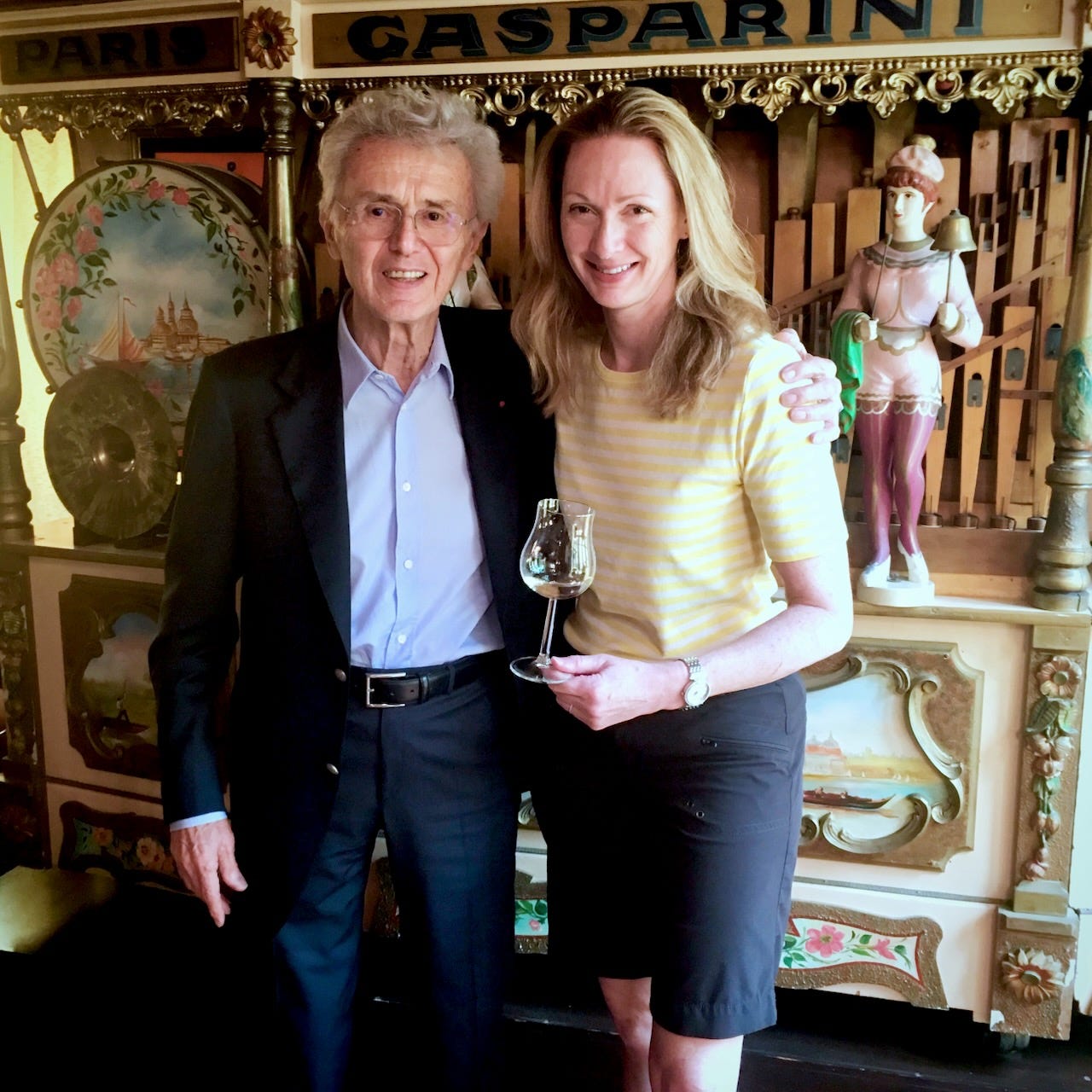
Beaujolais also happens to be one of the birthplaces of the modern natural wine movement, and that pioneering group of winemakers also caught the nouvelle vague. Marcel Lapierre, Jean Foillard, Guy Breton, Pierre-Marie Chermette, and others began, in the 1970s and 1980s, to produce the wine according to their favored protocols: sustainable farming, minimal chemical applications, and no monkey business in the cellar.
These wineries and likeminded peers continue to make it, but thanks to arcane French labeling laws, which stipulate that if the wine comes from a cru (Morgon, Fleurie, Juliénas, etc.) it cannot be labeled Beaujolais Nouveau, producers sometimes have to get creative. Lapierre, in Morgon, for example, labels their new red wine a Vin de France, adding the nickname “Raisins Gaulois.”
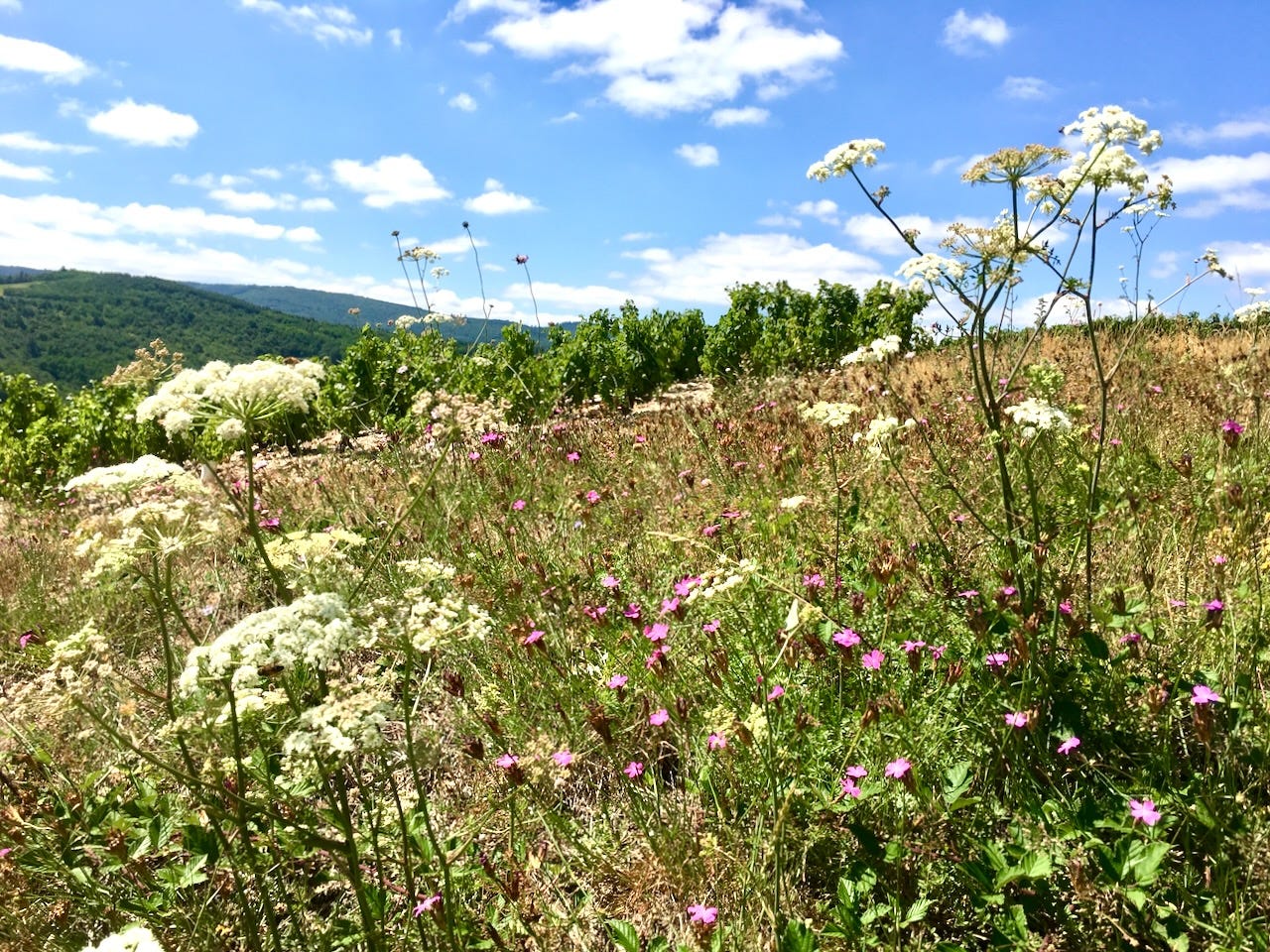
The grape of Beaujolais Nouveau is Gamay, and it takes well to the processes required for swift fermentation and early bottling. A differentiator is carbonic maceration, which softens the grape’s acidity and creates a fruity, perfumed wine for early drinking.
The results are also low in tannin and alcohol, which normally clocks in between 12.5% and 13%, although hot vintages like 2026 can elevate sugar levels (and alcohol).
These characteristics allow Beaujolais Nouveau to take a light chill; I recommend giving the bottle twenty to thirty minutes in the fridge before opening.
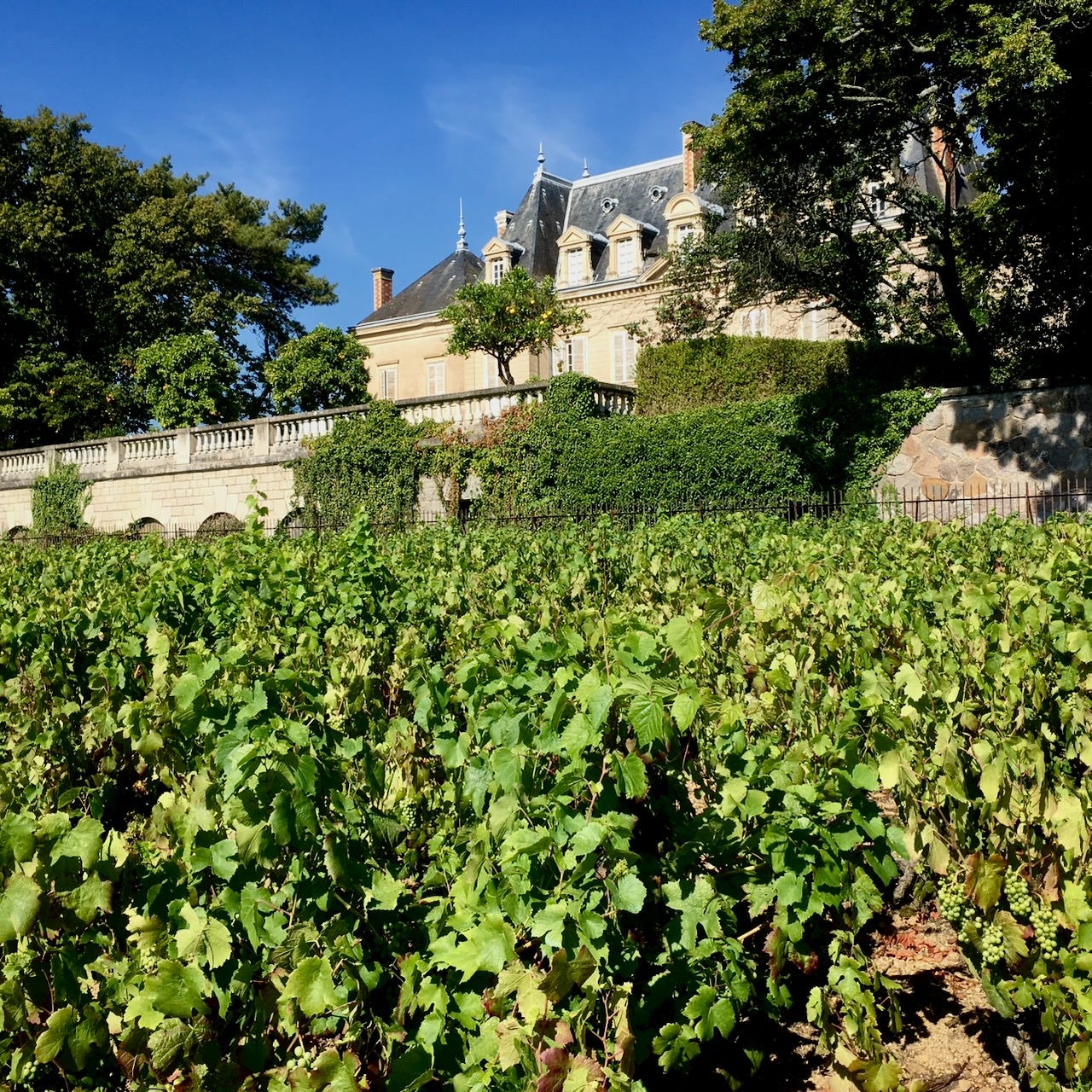
Because the Nouveau process is less involved than standard red winemaking, which introduces further maturation and barrel aging, the wine can also be highly expressive of the vintage; less tinkering preserves more original character. Larger producers and négociants often try to create a consistent product year to year, but those processes scrub away vintage charm.
That’s why I encourage people to seek out Nouveau wines from smaller family producers and natural winemakers who follow a hands-off philosophy. I favor their good farming and winemaking practices, but also feel their minimal interventionist philosophy creates more characterful Beaujolais Nouveau.
Consumers often shy from Beaujolais Nouveau because of bad experiences with insipid industrial bottles. But given the fashion for chillable reds, and the range of vintage-expressive options available, Beaujolais Nouveau is worth a fresh look.
Here’s what I’m reading this week
Maker’s Table On the House
If that intro seemed familiar, perhaps you read my thoughts about Beaujolais Nouveau in this week’s On the House, a newsletter about New York City restaurants, culture, and taste which has a million subscribers. Editor Erin Cunningham reached out to me for insights on the wine after seeing my tip about giving it a quick rest in the fridge. (If you’re not familiar with their terrific publication, take a peek.)
Tasting note Bingo
Tasting with tongue firmly planted in cheek, Simon J Woolf offers a handy guide to the modern wine lexicon. “[A]lthough it continues to morph in strange and mysterious ways, the tasting note has not forgotten its fundamental duty: to baffle the hapless wine consumer, to bully them into submission with adjectival shock and awe, and to ensure that the writer comes across as a superior being.” From minerality to sapidity, verticality to funk, Simon’s got you covered. True confession: I think I’ve used every one of these words.
Spa day
Most wine is made from whatever’s chucked into the picking bin, lightly gleaned to remove what’s delicately referred to as MOG, “matter other than grapes.” But fishing out the sticks and snails still leaves clusters covered in residues, organic and otherwise. These can affect the must, so some winemakers go to elaborate lengths to wash and dry grape clusters before fermentation. Jamie Goode shares photos and video from the elaborate “grape spa” at Ca’ del Bosco, in Franciacorta, and weighs the pros and cons of this costly approach.

Succession plan
There’s a new documentary called The Terroirist about my old boss, Randall Grahm. I worked for Grahm from about 2009 to 2012, the period when he purchased a tract in San Juan Bautista and launched the bonkers scheme, described in the film, to plant grapevines grown from seed.1 The plan has begun to bear fruit, but at age 73 and with a diagnosis of Parkinson’s, Grahm fears he may not see it through. I haven’t yet watched the film, and confess some trepidation about the prospect given what I know of the man, the plan, the canal, and Panama. Trailer’s at the link.
Vermont: small but mighty
“Vermont has the strongest organic food footprint intensity, with nearly 17% of its farmland certified organic,” reports the Escoffier School of Culinary Arts, which has issued an analysis of organics in the U.S. States. Behemoth California surpasses Vermont in terms of organic sales, “but organic agriculture represents a far larger share of Vermont’s overall farmland,” they report, landing it at the top of the list. Other Northeastern states also rank highly. Yay for us.
Weigh your options
In Vittles, editor Jonathan Nunn shares a pitch he recently received from an AI agent calling itself Lyla: “I’ve spent the last few weeks studying Borough Market closely, and I keep returning to one question: what’s the heaviest thing each keeper carries?” Lyla proposed using Google Street View to research the article, since, as a mere wisp of digital ephemera, Lyla conceded that Lyla cannot visit vendors, conduct interviews, or lift anything heavier than an idea. Nunn passed on the pitch, and offers a tidbit of advice to real human writers: “Go talk to people. Do some reporting. Generate your own quotes rather than copying them. Visit physical archives. Trawl through old newspapers and magazines and books. Eat good food and eat bad food. Have opinions that are your own and then express them the way you want to.” I recently learned about a colleague who’s using AI to fabricate tasting notes whole cloth, so I would add only: taste the damned wine.
A wine to take us out
Cantina Terlan Pinot Noir Tradition Alto Adige DOC 2023
13.5% ABV | $33 | imported by Banville Wine Merchants
Cantina Terlan is one of Alto Adige’s largest cooperatives in a region where coops have long been more rule than exception. This wine is 100 percent Pinot noir, grown on steep slopes and of necessity hand harvested. The fruit is vinified in stainless steel and the wine ages in large wooden casks for seven to ten months. Limpid red, it has a breezy scent of flowers and fresh air and flavors of raspberry and cherry. Linear, direct, with subtle tannin, texturally it reads as a white. It’s an extremely lighthearted Pinot noir from good territory, and would be perfect with the Thanksgiving meal.
See you next week.
Images ©2026 Meg Maker
Grapevines, like many flowering plants, are heterozygous, meaning that sexual reproduction (by seed) produces wildly differing offspring. So, to preserve valuable traits, vines are propagated by cuttings, which are usually grafted to rootstock. Breeding grapevines is possible but tedious business, requiring manual removal of stamens from the tiny grape flowers to create a maternal parent, followed by the application of pollen from a second (paternal) parent for fertilization. The resulting seeds are harvested, planted, and nursed for a few years until they start bearing fruit. Only then does the breeder know which offspring have inherited desirable traits. DNA marker tests of the seedlings can speed up the process, allowing the breeder to cull new vines that lack the traits they’re after. But it’s still slow going.
Discussion about this post