


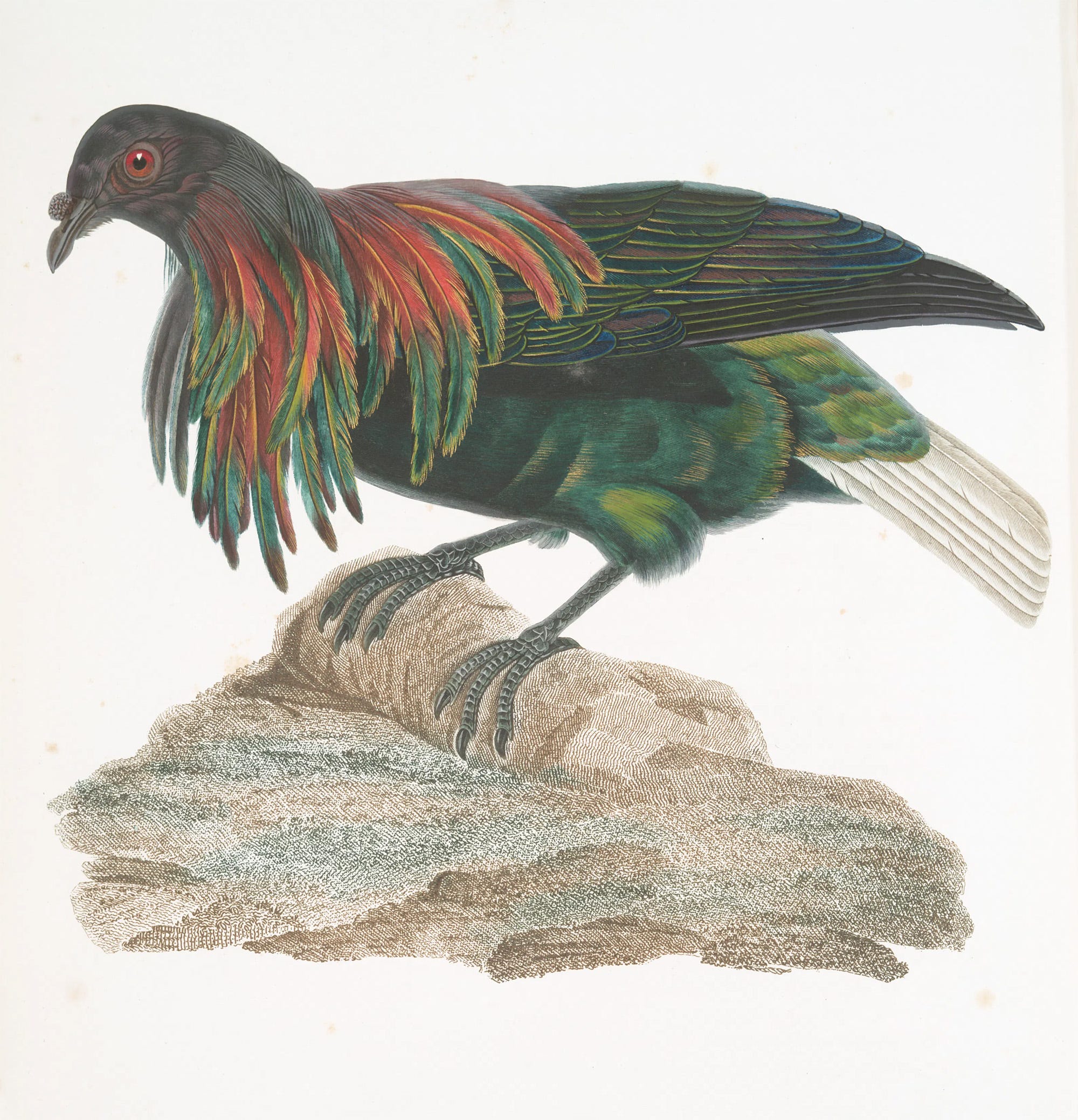
Pigeons and wine? What’s going on here?
Writing about wine means confronting the difficulties of animating the experience for readers, making it alive and vivid in their minds. We must write text, but we can also use visuals to advance understanding. Bottle shots are de facto but boring, and anyway say little about the qualities of the stuff inside.
Lately I’ve been dabbling with other modes to illustrate my notes; you can find examples here, here, and here. For those articles I relied on my own fine art paintings, selecting an existing image that mirrors the wine’s sensibilities, or creating bespoke images after tasting.
But I wanted to venture further afield, to experiment with fresh imagery that somehow felt resonant with the wines. After a recent tasting of Merry Edwards Pinots, I stumbled on a folio of images made by a nineteenth-century artist, Pauline Knip. I had my material.
The winemaker
Merry Edwards studied enology at UC Davis under Maynard Amerine, graduating with an M.S. in Food Science 1973. During this period, the university’s Department of Enology and Viticulture was almost entirely male; Edwards recalls only two other women in her class, and neither became a winemaker. In fact, the powerful professors of the time encouraged female students to seek roles as lab techs, and made no secret of recommending only males for top winemaking jobs.
Edwards, determined not to end up in a lab, managed to break through (with help from Amerine, an ally), landing her first winemaking job at Mount Eden, in the Santa Cruz Mountains. She later joined Matanzas Creek, and also consulted to wineries up and down the West Coast.
In 1996, she purchased a 24-acre site in the Sebastopol Hills, planting it to Pinot noir. As she expanded production, she focused on single-vineyard Pinots, sourcing fruit from her own sites and other vineyards in the Russian River and Anderson Valleys, eleven in all. She also made Chardonnay and Sauvignon blanc (see my notes on two 2023 Chardonnays). For her accomplishments, Edwards has been honored with a James Beard Award and inducted into the CIA’s Vintner’s Hall of Fame.
In 2019, after a 47-year career, she sold her winery to Louis Roederer, fully retiring a year later. The winemaking is now in the hands of Heidi von der Mehden, Edwards’s hand-picked successor who’d worked as her associate winemaker since 2015. Nicole Carter, a wine sales and marketing veteran, now serves as President. That means the company, newly owned by a remote, benignant French institution, continues to be helmed by women.
The artist
Pauline Knip (1781–1851), née Pauline Rifer de Courcelles, was a Parisian artist and illustrator working principally in watercolor and ink. She exhibited her work in four salons between 1808 and 1814, and was awarded a gold medal in 1810. In 1808, she married fellow artist Joseph August Knip; they had one daughter but divorced when the girl was three, in 1824. Thereafter the artist signed her work Pauline de Courcelles femme Knip.
Knip’s artistry caught the eye of a Dutch naturalist and ornithologist, Coenraad Jacob Temminck. In 1811, he commissioned her to create illustrations for his new, multi-part text on pigeons and game birds, Histoire Naturelle Générale des Pigeons et des Gallinacées. Knip created the watercolors and oversaw printing of the engravings and text as livraisons, or printed installments, in Paris, while Temminck remained in Amsterdam.
But starting with the ninth volume, Knip eliminated Temminck’s introduction and index and changed the title page to Les Pigeons par Madame Knip, citing herself as author and editor and mentioning only that Temminck had written the text. Notably, she also added a dedication to Empress Marie Louise, Duchess of Parma, second wife of Napoleon Bonaparte, to ingratiate herself with the powerful court elite. Knip sent unmodified copies to an unsuspecting Temminck in Amsterdam.
By the time Temminck discovered the cunning switcheroo, during an 1812 visit to Paris, Knip had already secured the Empress’s patronage. Temminck, realizing he’d been both plagiarized and politically outmaneuvered, did not put up a fight, but simply parted ways with the artist. He published a new edition of his work in Dutch which lacked Knip’s illustrations; it failed to enjoy the same level of success. Meanwhile Knip went on to publish a second, expanded edition of Les Pigeons with fresh text by French naturalist and illustrator Florent Prévost (who, in a twist, had also worked with Temminck).
As Natalie Lawrence, Ph.D., points out in her essay, A Wetted Beak: Engravings from Pauline Knip’s Les Pigeons (1811), “Knip achieved her position due both to her extreme skill as a painter and her Machiavellian scheming… Though she is less well known than other natural history artists such as John James Audubon, Knip was working under the constraints of a society in which it was far more difficult for women to gain recognition, and only a very few managed to do so, especially in their lifetimes.”1
Putting it together
These stories have resonance across the centuries: two women working at a systemic disadvantage, striving to earn career standing. Knip’s tactics weren’t entirely honorable, but her bravura reveals a certain shrewdness and professional cunning uncharacteristic of women of her time. And from today’s vantage point, it’s easy to forget the rampant sexism that dominated the American wine industry a half-century ago, and to comprehend the degree of grit and determination required of any woman who wanted to make wine.
Over the last few weeks, I tasted six of the current Merry Edwards Pinots: two appellation bottlings and four vineyard designates from the 2023 vintage, made by von der Mehden. For each wine, I selected a pair of Knip’s birds, choosing them for certain sensibilities that map to those I found in the wine.
Knip’s pigeons have personality. They are vivacious and alive. They are characterful. They spring from the page, catching us in their rubescent eyes. The renderings are not clinical despite the source material: skins, meaning dead specimens, warehoused in Parisian museums, and drawings made by other, far-flung naturalists. Knip has re-animated these birds, re-vivified them.
There are qualities I find in these drawings that echo my subjective taste experience of the wines. One example: I’m mildly synesthetic, and color itself has personality. When I choose two green doves, I’m not saying the wine is literally green, I’m saying it suggests freshness, purity, and youthfulness. The connotations and associations that I offer are, in other words, not literal but figurative: similarities in details and structure, delicacy or durability, sharp or smoothed edges. Perhaps the birds help convey character to you, the reader. Or perhaps the exercise only underscores the sublime subjectivity of tasting.
The notes and illustrations
Pinot Noir Anderson Valley 2023
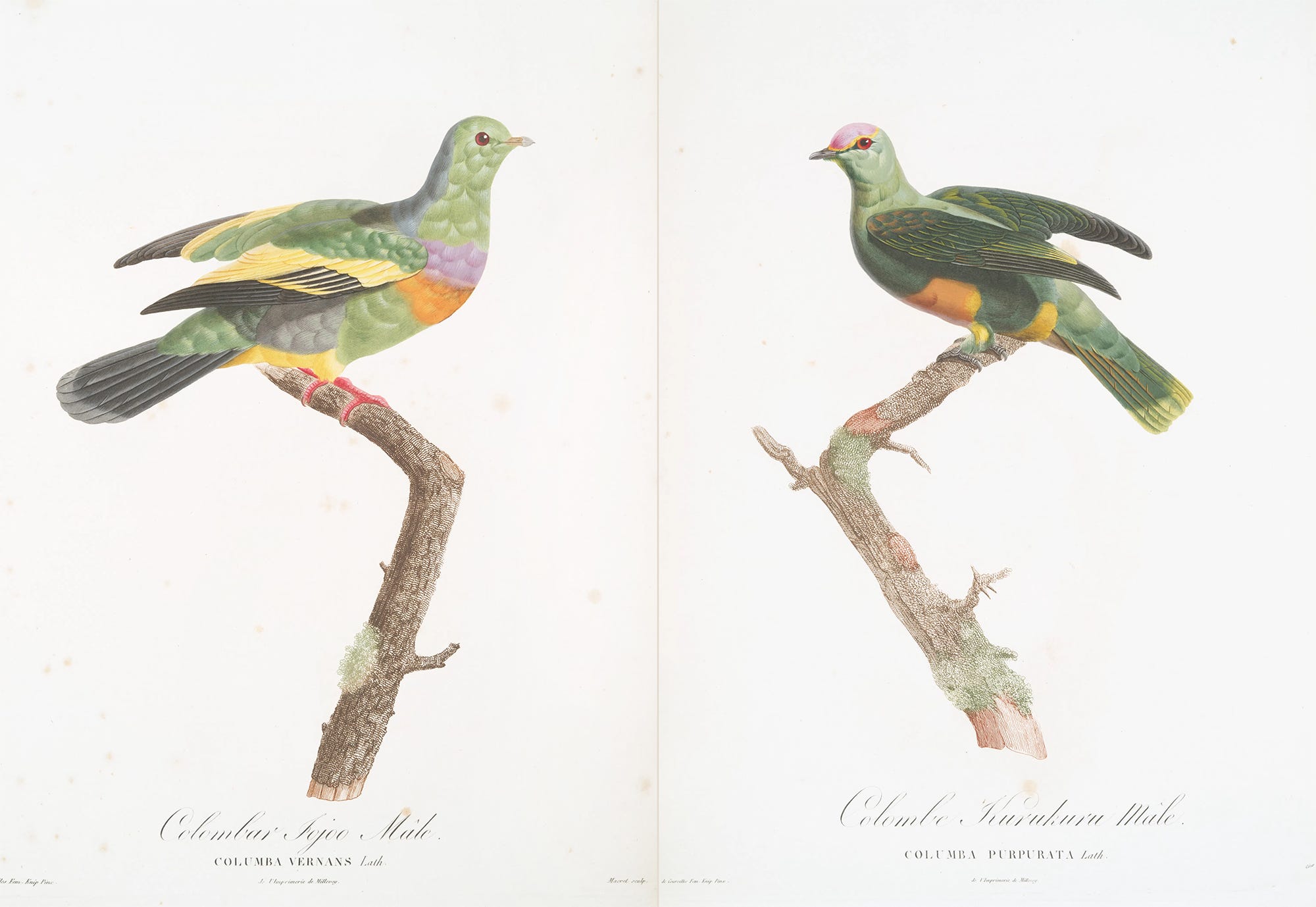
The wine feels youthful, fresh and bright-eyed, its robe transparent with a clear rim, its texture sharp and juicy with shimmery acidity carrying pink berry flavors. The wine is tinted with cola and spice from eight months in French oak, some new, but it all melts seamlessly into the fruit. Overall a friendly, smiling wine, warm and approachable. 14.5% ABV | $55
Pinot Noir Russian River Valley 2023
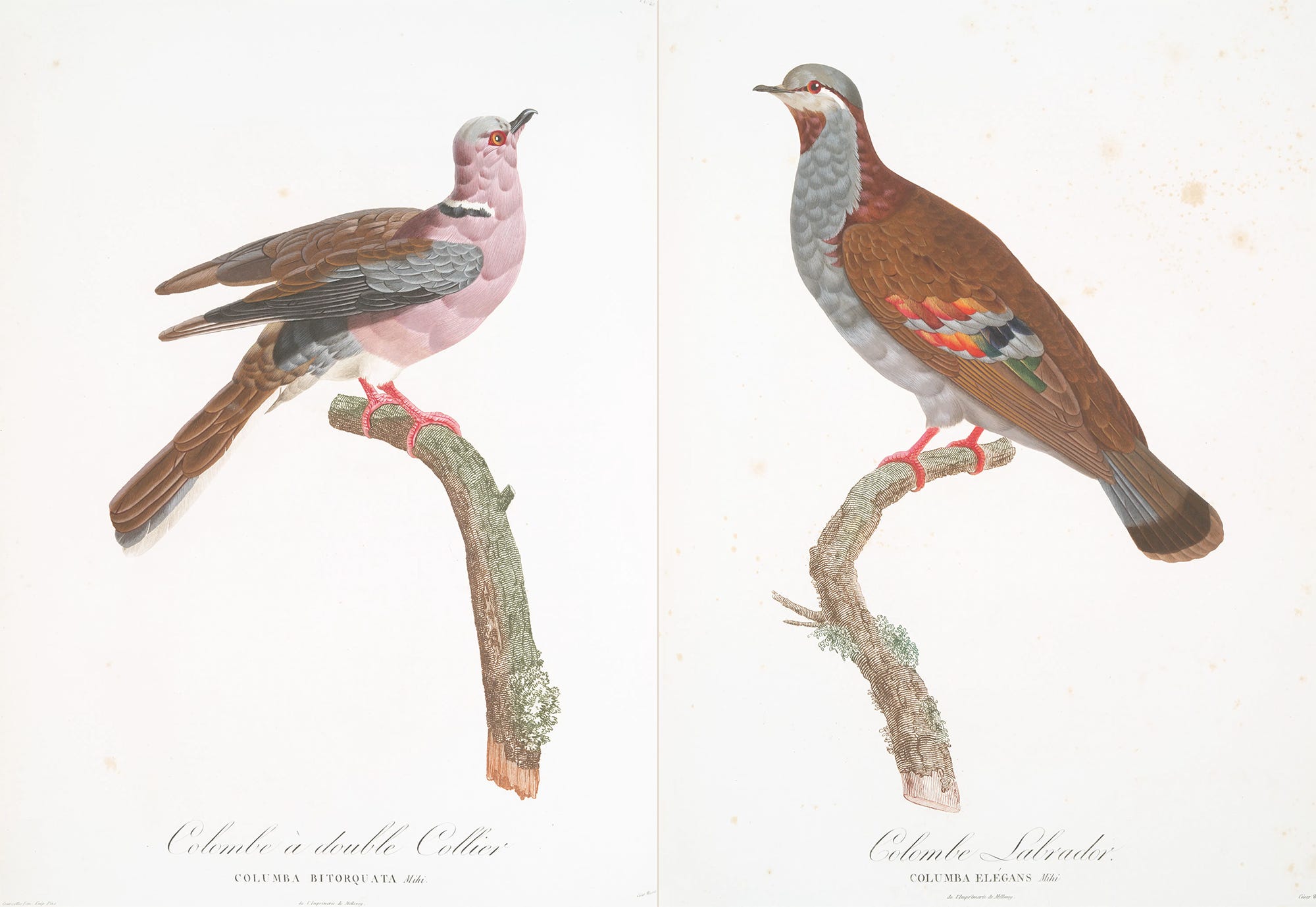
The robe is limpid, with blue glints to the Anderson Valley’s pink, and its fragrance is earthier, offering a sense of black fruit and faint loam. It has more structure, too, from front to back, with spices from the dark end of the rack. Dimensional and intriguing. 14.5% ABV | $60
Georganne Pinot Noir Russian River Valley 2023
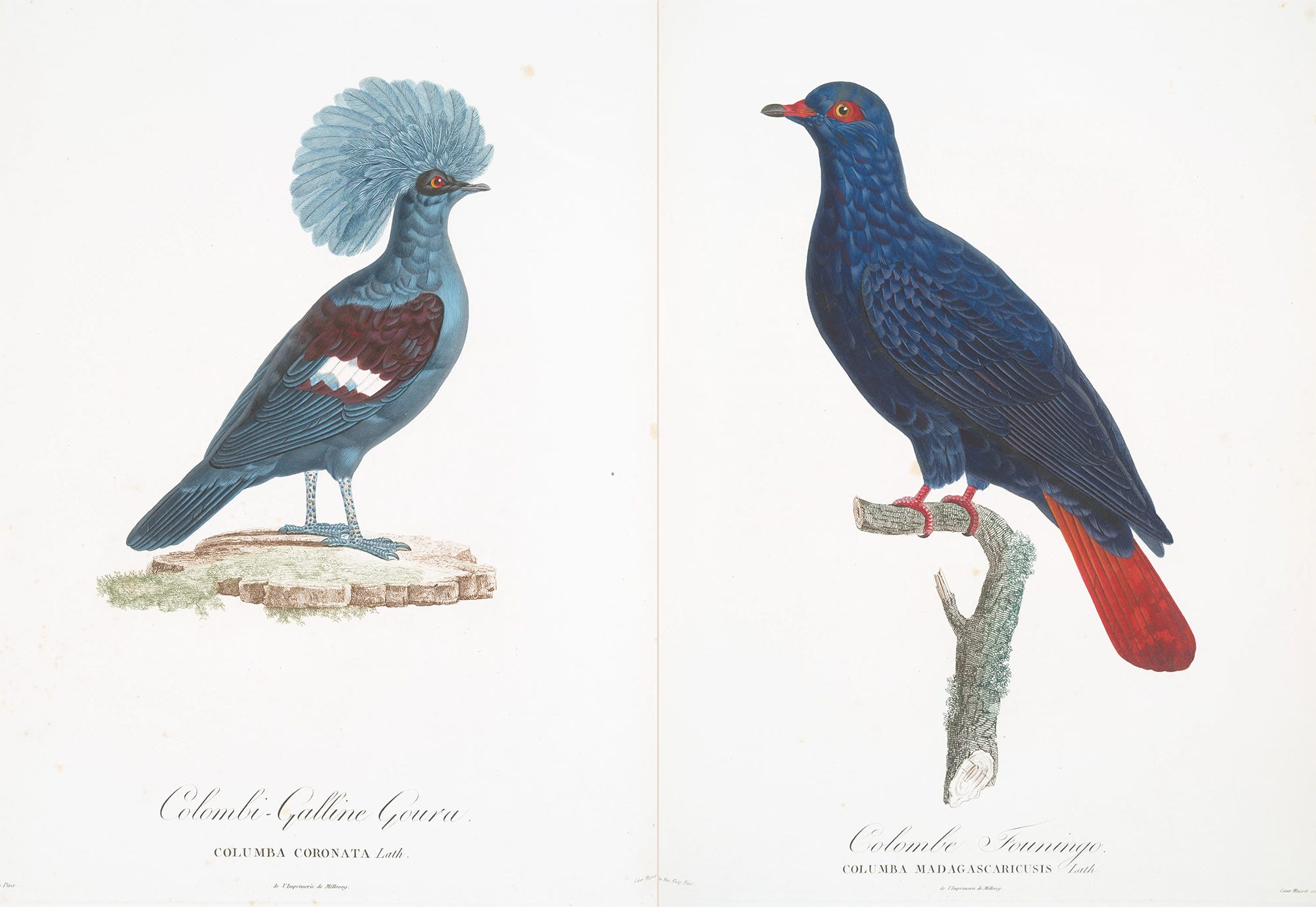
The color is clear purplish red, and the wine’s aromas sing in the top register: flowers, spring berries, sunshine. It’s the most perfumed of these wines, with a texture that feels light and silky. But it grips at the finish, and its bright acidity casts rays of rhubarb and raspberry. Overall it’s mercurial, lighter in many ways than the others but also more complicated. 14.5% ABV | $72
Coopersmith Pinot Noir Russian River Valley 2023
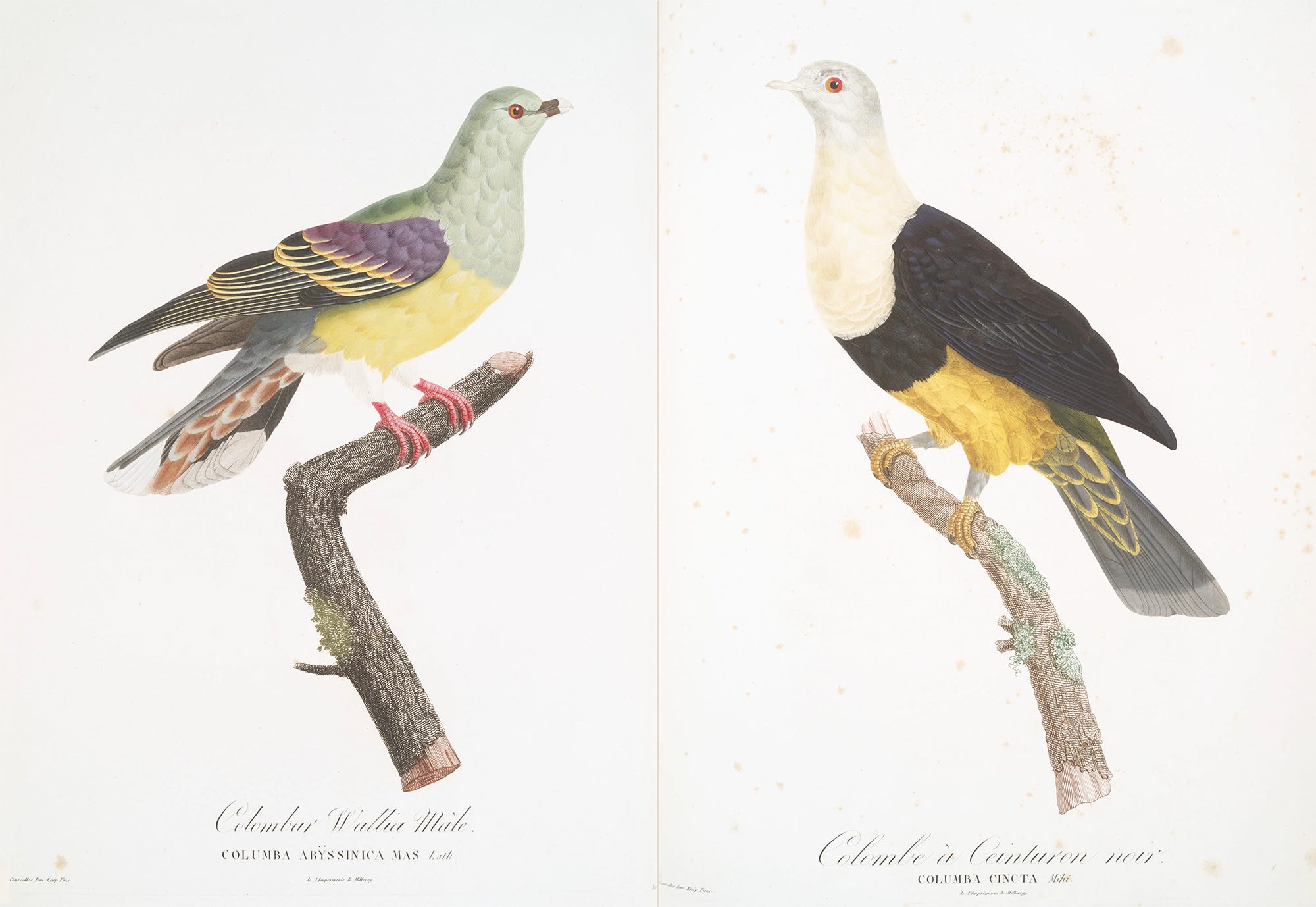
Rubescent, limpid, fey, and sweet—metaphorically sweet, not literally so. It offers a sense of delicate pink fruits and flowers, but also dried and spiced berries. It feels simple at first, with a vanishing texture, but it blooms later in the finish. It reminds me of corduroy: one way it’s softer, the other way it’s rougher. 14.5% ABV | $75
Dach Pinot Noir Anderson Valley 2023
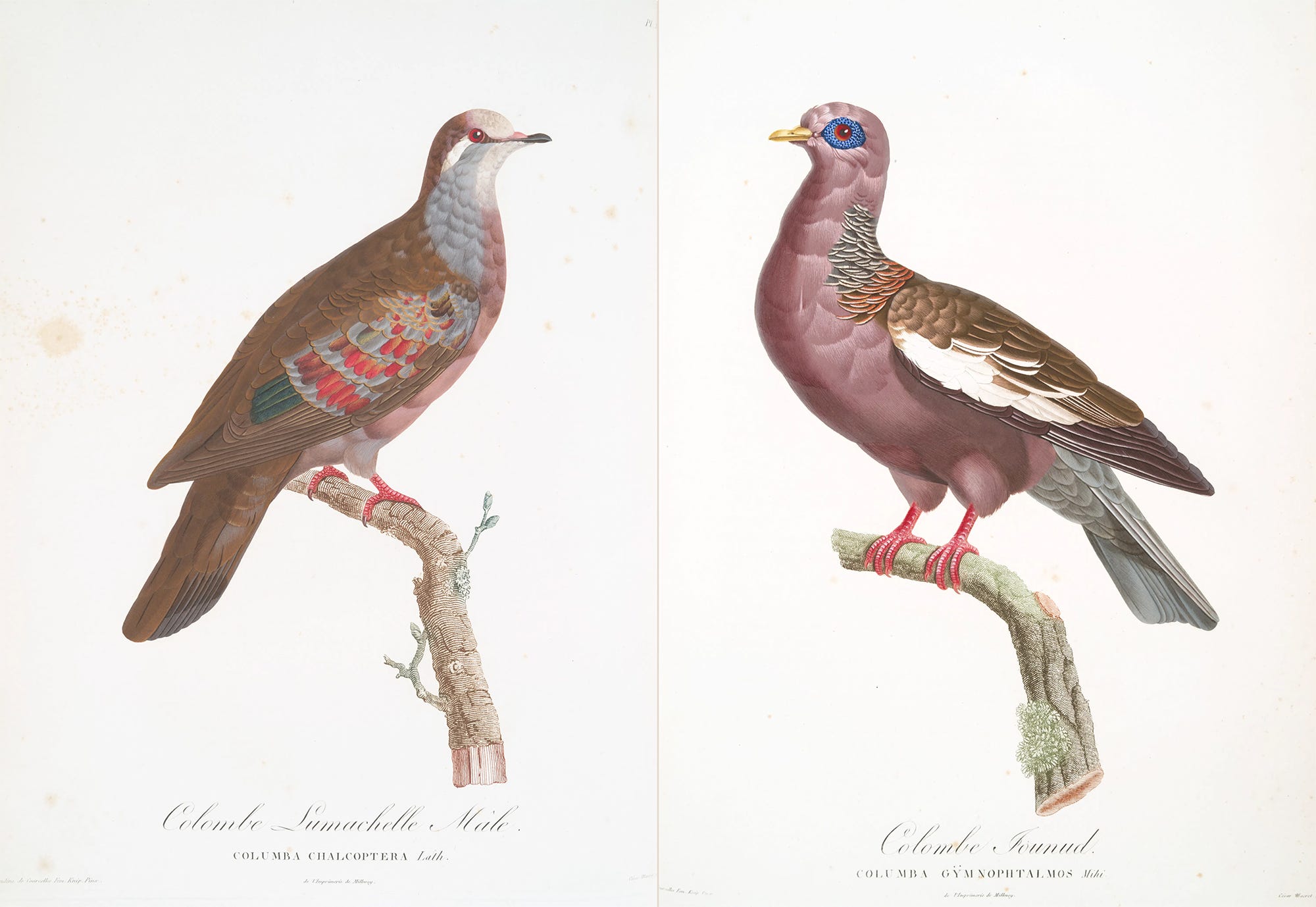
Clear red, not as purplish as the other wines. The aromas lift up into roses and strawberries, but then the wine does a loop-de-loop, diving down into deep, loamy flavors before levitating again into juicy acidity. It feels the most complex of this suite of six, even complicated, striving. 13.8% ABV | $77
Olivet Lane Pinot Noir Russian River Valley 2023
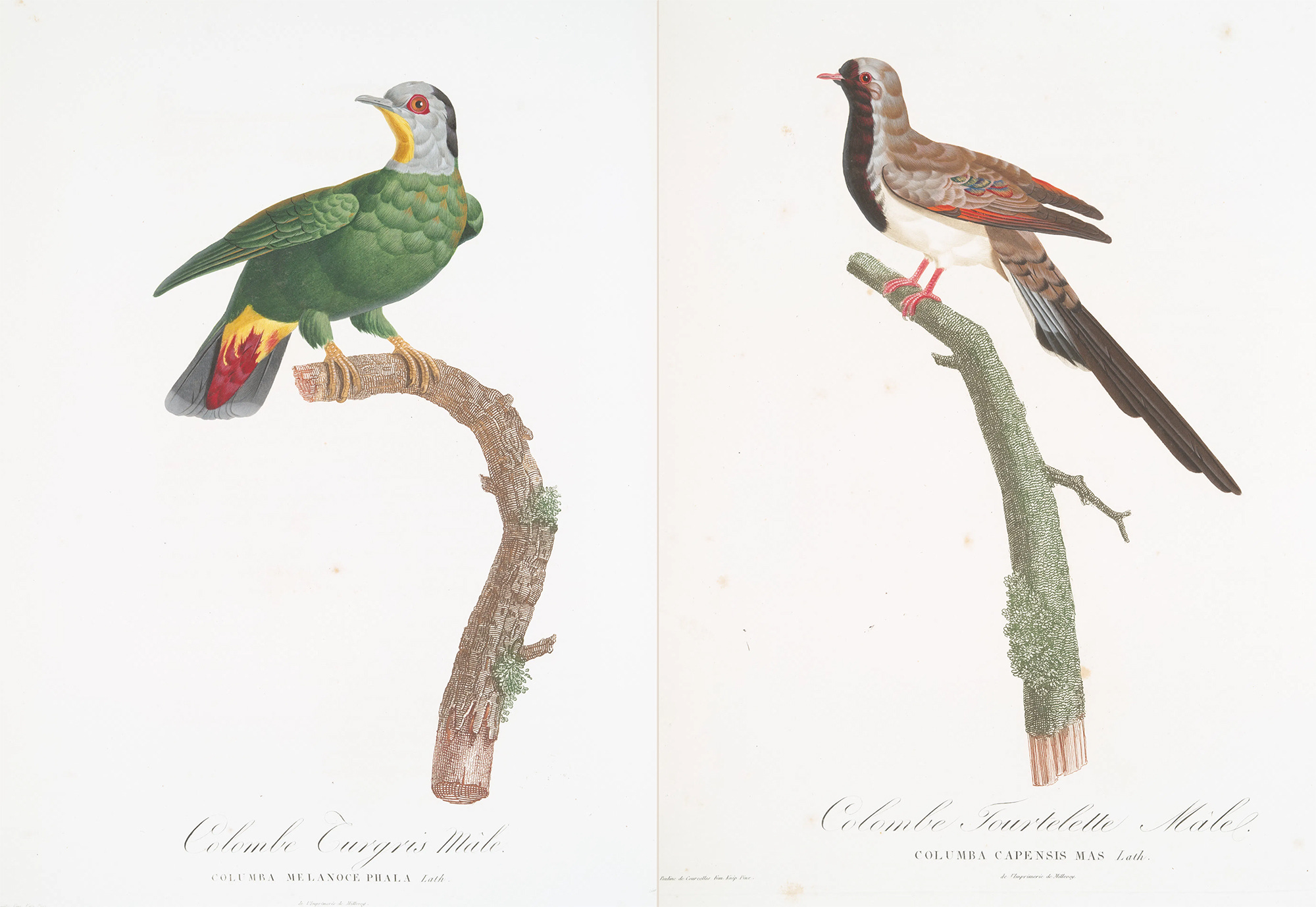
A mix of bright and dark, hot and cool. The fragrance suggests macerated fruit touched with balsamic, and the wine rakes the palate with light astringency. The flavors shine red, both ripe and dried, and it has an evolved, salivating finish. It’s willing both to challenge and to yield. 14.5% ABV | $77
Les Pigeons, by Pauline Knip, 1811. Images were sourced from The Public Domain Review, originally digitized by the New York Public Library, which made them available worldwide in the public domain. See the complete suite of images on NYPL Digital Collections.
All wines were samples for review.
Lawrence, Nathalie, Ph.D. A Wetted Beak: Engravings from Pauline Knip’s Les Pigeons (1811), The Public Domain Review, 23 January 2025; Accessed 18 January 2026.