


Welcome back to The Salt, my weekly curated collection of writing and marginalia at the intersection of wine, food, and culture.
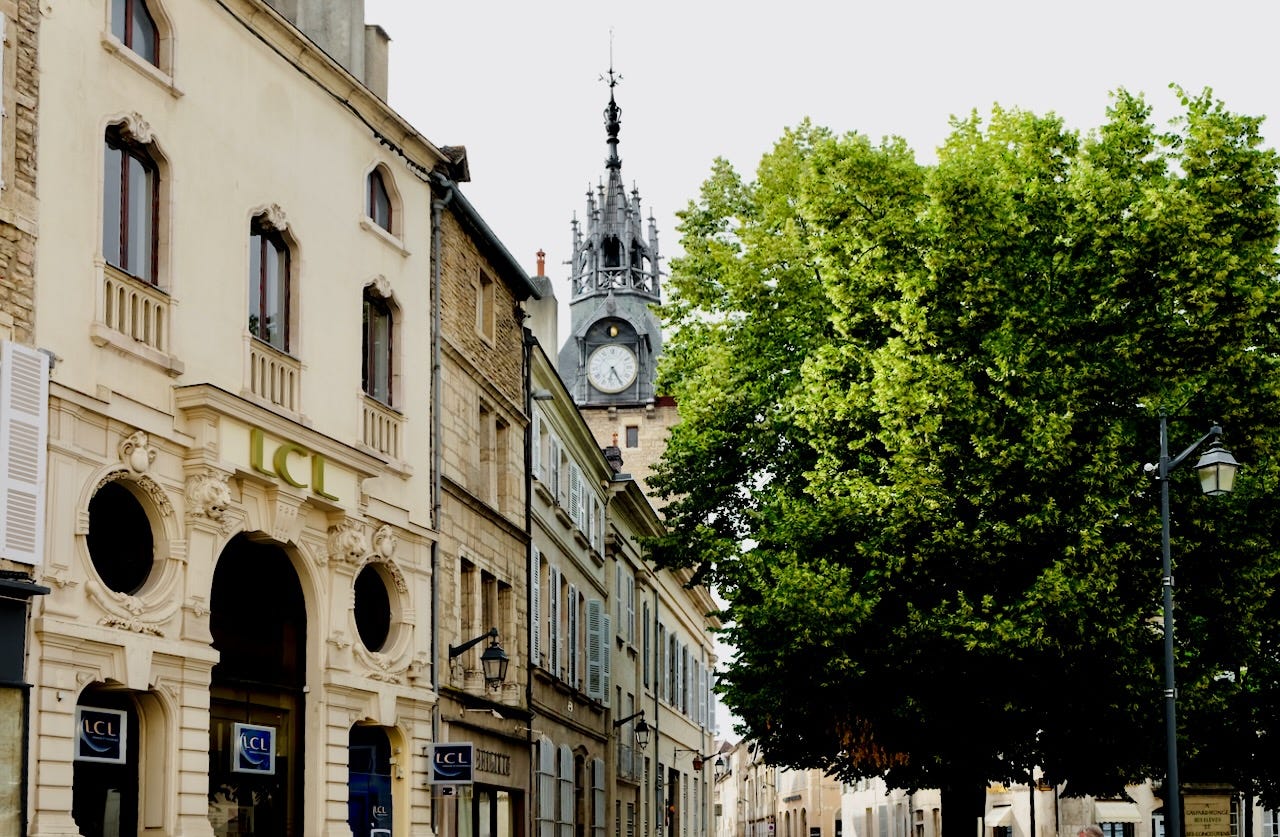
Burgundy producer to Michelin Guide: “Get off my lawn!”
The Michelin Guide, which has long issued ratings for restaurants (using Stars) and hotels (using Keys), recently announced they would begin rating wine producers (using Grapes). They started with Burgundy, an approach about as sensible as setting an electrical apprentice to work on the track’s third rail. Burgundy’s tremendous complexity, history, and thin-sliced terroir, not to mention the money at stake for winners and losers in the ratings game, make it one of the most contested stretches of vignoble on earth.
Michelin announced the Burgundy ratings on July 7, prompting a firestorm of commentary, mostly unflattering. Among the many problems is their decision to focus on producers, not products. This elides wine’s existential considerations of both vintage and place, because a single Burgundy producer might make wine from various lieux-dits. It’s baffling why they chose this approach versus, say, focusing on the producer’s hospitality experiences, which is arguably something they know a bit about, having published guides for motor tourists for well over a century. Worse, Michelin’s announced criteria—agronomy, technical mastery, identity, balance, and consistency—are pretty arm-wavy, leading to speculation and distrust of the specifics.
Last week, producer Arnoux-Lachaux, in Vosne-Romanée, which had been awarded a single Grape, posted an Instagram story saying, politely, eff you. Florence Arnoux-Lachaux and Charles Lachaux, fifth and sixth generations, respectively, wrote: “We do not know how the Domaine’s rating, reportedly based on five criteria, could have been established, as we have not received Michelin or presented our wines to the press since the 2020 vintage.” It was a deliberate choice to opt out of professional reviews and ratings. “We have therefore asked Michelin to remove the Domaine from the selection, in keeping with this long-standing position.”
Perhaps the Michelin reviewers, whoever they are, simply bought and tasted the wines together (Michelin says the process is collaborative and non-anonymous). But given that Arnoux-Lachaux’s wines are all allocated and the top wines reach four figures, that idea strains credulity, especially given the vintage timeline.
One more thing: Michelin also owns Robert Parker’s Wine Advocate, whose 100-point wine rating scale tacks pretty much opposite, assessing wines by the quality of the bottling in each vintage, not by the personality of the producer over time.
No word from Michelin about whether they’ll honor Arnoux-Lachaux’s request.

Living the sweet life at last
Since the mid aughts, wine impresario Tyler Balliet has been creating hit wine events, including Wine Riot, a 50-city festival with 150,000 attendees, and Rosé Mansion, which reached 375,000. Tyler’s work was featured in Wine Enthusiast, L.A. Times, Boston Globe, ABC News, and myriad other outlets. A huge majority of event-goers, especially for the rosé project, were female. At the time, Tyler was not. Assigned male at birth, she had launched her entrepreneurial wine career as a man, figuring the industry wouldn’t accept a trans woman. In 2023, she decided to begin hormone replacement therapy, and today, thanks also to laser hair removal and TikTok makeup tutorials, she has fully transitioned.
New you, new palate. “I thought I understood all the effects of H.R.T.,” she writes, in a new candid essay for Wine Enthusiast, “[b]ut 18 months into my transition, something changed that I didn’t expect; wine tasted very different. My sense of smell increased by about 40%, and my sensitivity to bitter flavors became far more intense. What’s more, my mood and the setting are now critical. If I’m tired or stressed, wine just tastes kind of flat. I can still identify the flavors and aromas, but the overall experience has shifted.”
As have her wine preferences. Bitterness is out, high aromatics are in, as are crunchy fresh reds. “Ultimately, it’s the experience of wine that changed the most,” she says. “The people, the vibes, and my mood play a much larger role in my overall enjoyment of wine.”
I recently wrote how my own palate has changed over the years, but Balliet’s essay adds necessary dimensions to the discussion about the evolution of personal taste. In 2025, she was nominated for a James Beard Media Award for her book, Rebel School of Wine. It didn’t win, but her new essay should.
Appetite for change
Speaking of life-changing medical care: Six months ago, food writer John DeVore started taking a GLP-1, both to lose weight and to address high blood pressure. It’s been—destabilizing. DeVore has learned to handle the drug’s side effects: the gastric distress, the silencing of the food noise, the blank, non-urgency of forgetting to eat.
What happens to a food writer who cannot consume food? “I’m writing about GLP-1s now because they are the only food topic I’m qualified to write about,” he writes, in a wry self-appraisal in Taste. “Although, to be honest, I could probably crank out 800 words about the low-key charms of cottage cheese.”
But while he has lost weight, he’s also lost the pleasures and comforts of hunger. With his career, he had “found a way to monetize my appetite,” he writes, “I used to obsess over my culinary lusts all the time, and as a writer, I could pitch publications about meals and delicacies that piqued my interest—and made me hungry.”
So, yes, GLP-1s are torture, he says, but he sticks with the program because he’s seeing results. “I step on the scale and, for a brief, delicious moment, I’m as light as pink cotton candy.” A food metaphor, and a sweet glimmer of hope.
See you next week.
Photos of Burgundy ©2026 Meg Maker
The story rings both sides of my chimes. I’m not a big fan of Michelin in Italy or outside France, but I do think it works well for French gastronomy in the country.
In that context, why wouldn’t they as legacy media apply their criteria to the most expensive and Frenchy of all wine zones?
Burgundy is complex,sure. But I think the French approach has long been to follow the producer in their journey through terroirs. (A reaction to the not-so-long-ago days of mediocre to poorly made reds in particular)
There’s a plausible rumor out there that William Kelley provided a lot of the info for the selections in the Michelin Burgundy ratings.