


I was speaking recently with a fellow wine writer about the nature of palate. After noticing changes in his own sensorium, he’d been reaching out to colleagues to ask how their palates have evolved over time, and how much of that evolution was thanks to changes in physiology versus the impact of memory and experience.
He had received various responses, including from a few writers who said their palates had not changed at all. I was gobsmacked. My own experience is completely orthogonal: not only has my palate changed, it’s always changing.
But untangling the drivers of change is difficult, because the evolution is both physiological and aesthetic. I wondered aloud whether it’s an existential question for wine writers: If my palate is different now from twenty years ago, what does it say about the trustworthiness of my earlier pronouncements, my reliability?
I kept thinking about all of this after our call. I was captivated by questions about what constitutes a palate: how much of it is somatic and how much emoto-psychological, how much of its development is driven by exogenous versus endogenous factors, and what palate changes over time say about about taste, preference, and discrimination. (In a parallel track, I’m working to understand the nature of taste—good, bad, and otherwise—and issues of palate slot into that inquiry.)
So, what is a palate, and how does it learn?
The short version feels like this: The somatic effects of taste (sensory detection) continually collide with the emoto-cognitive effects of taste (discernment) in an ongoing negotiation, one learning from and influencing the other in a never-ending spiral.
The long version has to start with biology: the sensory apparatus, the equipment on board. I’m neurologically sensitive, a common characteristic of red-haired people, who notoriously need more lidocaine for dental work and anesthesia for general surgery. I live with a palette of sensitivities that can sometimes result in cacophony. I’m particularly sensitive to cold, light, smell, and sound. Loud noises cause me physical pain.
My sense of smell has always been exceptionally acute. Oddly, as a child I was not a picky eater and had few food aversions, which mostly centered on texture (slippery) and visuals (chop suey). I had no strong feelings about bitterness, sourness, or saltiness. I enjoyed savoryness and sweetness.
My mother, our household cook, worked in a Franco-American tradition of roasted or boiled meat, starch, veg. Like many American housewives in the 1970s, she experimented with a handful of global cuisines, but principally the food was mild and under-seasoned thanks to the era’s burgeoning fear of salt. I doubtless would have enjoyed more elaborate flavors. It was as if I had the machinery but it was never driven over fifteen miles per hour.
It finally got into gear when I moved out and started cooking for myself. Cooking makes many demands of the sensorium, the first of which is not to poison anyone. I became vegetarian after a particularly objectionable chicken dish a housemate prepared, and I can still recall the stench when another housemate cooked spoiled meat, then burned it. At 2 a.m.
I taught myself to cook by flailing through vegetarian cookbooks, learning to pay attention not only to flavor and smell but also to texture, color, freshness, balance, seasoning, doneness. Learning how to cook was learning how to taste, and as I became a better and more experienced cook, my palate became both more literate and more fluent. I began to notice that flavors were more pronounced for me than they were for other people. My first husband preferred strongly flavored foods; if to me a dish felt nuanced and subtle, to him it seemed bland.
So, until my thirties, my relationship to my palate was principally one of awakening: What is this tool, what can it do, how fast can it go, what can it tell me about my own preferences and those of the people I’m feeding? I would not characterize this as evolution but as discovery. And I wouldn’t say that I had taste, good or bad, meaning I held no particular stylistic attitude toward food. I had some fences on the table—no meat, poultry, or fish—but those rules were about nutrition and ecological philosophy, not aesthetics.
It was when I began writing about food, in my late thirties and early forties, that the discovery process accelerated. Especially when I learned the formal process of wine evaluation, which makes structured demands of the tasting experience and invites the taster to conjure myriad, variegated taste memories in order to make analogous and metaphorical pronouncements. I had never paid such close attention to flavor before I started tasting wine. After thousands of wines and thousands of tasting experiences, the attention-paying became second nature, just as it does for many colleagues. But it’s critical to remember that most non-wine-writers do not approach tasting this way. The exercise is not a natural act. It is learned.
Through this process I started to develop discernment, taste in the sense of aesthetic standards versus simple likes and dislikes. As I began traveling to research wines, which are naturally served in the context of a region’s gastronomy, my flavor world expanded. My palate was no longer simply a mechanism for tasting the world, it was a tool for understanding it. And by “world” I mean food traditions, trends, the flavors of an era: taste in a figurative versus literal sense.
Writing about food invited me to interrogate my proclivities in a way that simply eating does not. I cannot overemphasize the importance of articulation to this process—putting these insights into language. Compelling myself to describe the signals I was receiving from my sensorium changed my relationship to the signals themselves. A food I formerly found repulsive—mushrooms, say—was now, in the context of new ingredients, preparations, and cultural ambiance, delicious. I was no longer “a person who doesn’t like mushrooms.” My register expanded.
It’s worth noting that being a good food writer demands skills that are uncommon in specific and exceptionally rare in aggregate. You need fluency with your own sensorium, how you turn the signals it receives into something like meaning. You need to have had this fluency over a long period during which you’ve been curious enough about these phenomena that you’ve built memories and associations based on them. You have to be able to make imaginative comparisons between those memories and your present impressions. And then you have to be able to articulate all of this to yourself and others.
Wine writing poses particular challenges, with its heavy reliance on analogy. If a wine “tastes like cherries,” we assume the reader knows what cherries taste like, and that’s not merely a personal but also a socio-cultural proposition. Most of us have low taste literacy, because as children we’re rarely asked to describe food beyond utterances of “yum” and “yuck.” Fast forward to adulthood when we have our first glass of wine and suddenly we’re called upon to catalogue our somatic and emotive responses in complete and cogent prose. Perhaps if we’d been taught from a young age to describe each glass of milk, or to disambiguate apple from pear, we would be better equipped for this exercise. But we’re not, and so we’re stuck with a predicament I’ve been grappling with in my writing, speaking, and teaching: how to put the entirety of a flavor experience into words.
Putting sensations into language is a way to have another kind of relationship with them, cognitive-emotive versus strictly electro-chemical. As an artist, I find it’s the same with painting. Once I make the first gesture on the canvas, I have something to respond to, so I make another, each mark accreting in a dialogue with the image that was impossible before the image existed. The process of externalizing the internal idea changes the idea itself.
Language similarly transforms sensations into sensory ideas, which can be assimilated and learned from. Verbalizing flavor sensations invites me to catch the sensory signals and turn them into feelings, thoughts, and comparisons. That adds data to my matrix of preferences and predilections. It’s more than simply grasping “what I’m tasting now.” It’s an exercise in a longer evolution, or co-evolution, of my sense of taste.
All of this is what gives me confidence to say that, especially over the last two decades, my palate has evolved in myriad ways. I pay closer attention to texture, structure, and tactile sensations, including warmth and coolness, and take more pleasure in these sensations thanks to qualitatively better attention-paying. My skin is dryer now, and it seems no matter how much water I drink my mouth and sinuses are always parched, so astringency is physically more impactful. Whereas I used to like bolder red wines, I now prefer aged wines whose tannins have fully melted, or wines with enough acidity to provide offsetting salivation. I am more attuned to savoriness and salt, and appreciate them more, and realize both were missing from my early cooking. And I no longer truly enjoy sweetness unless it’s twinned with a balancing flavor like bitterness (dark chocolate), sourness (lemon curd), or saltiness (caramel).
I’m glad to be able to recognize these changes, but the physical changes aren’t the most interesting to me. What’s most interesting is the change not in sense but sensibility.
It’s like this: Flavor becomes sensation becomes notion, which adds information to my aesthetic code base. Taste (somatic) becomes taste (discernment), which helps me make future choices. The evolution feels less like a line and more like a feedback loop. And reminds me I’m alive.
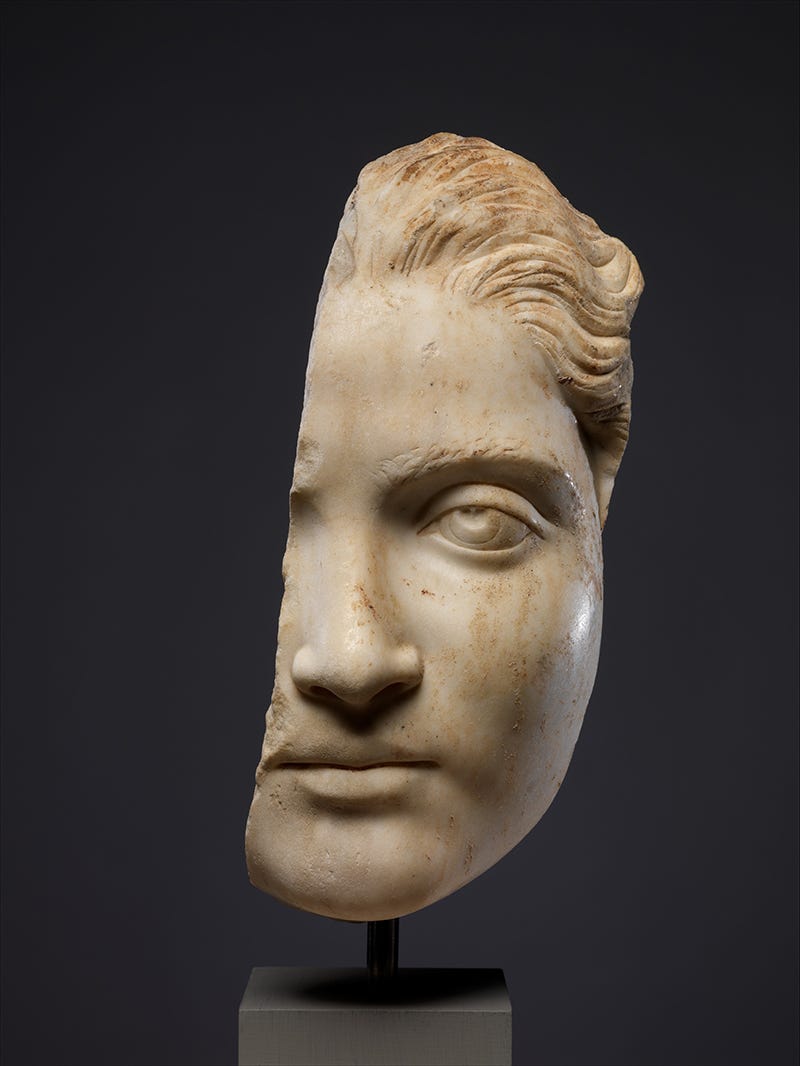
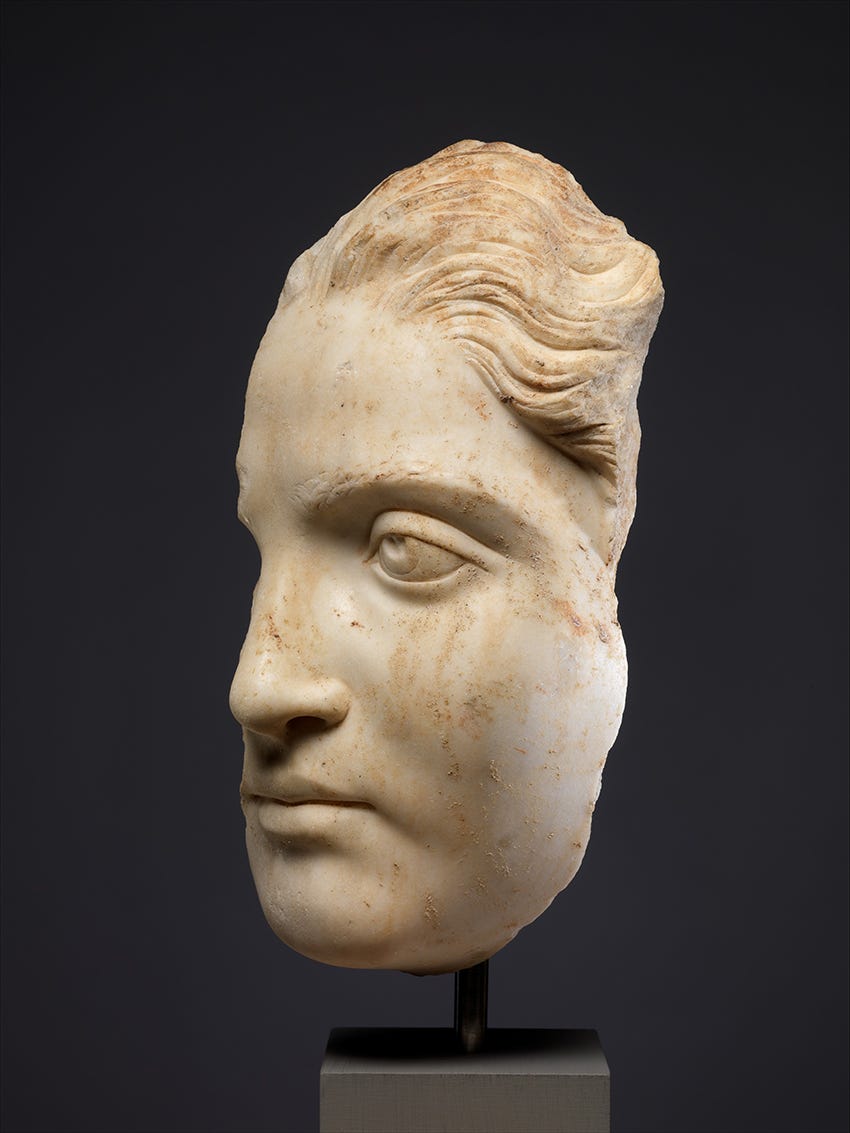
Images credit The Metropolitan Museum of Art Open Access collection
I love this post so much, and wish I could sit with a glass of wine and talk about it with you for...as long as we needed. haha!
I grew up in a house where my mom hated cooking. So, we had pizza from a local pizza place or chinese food about twice/three times a week. And then there was fast food. And, always, the stand-by: cereal.
I baked with my dad when I was eight. Just chocolate chip cookies. And then, my parents divorced when I was ten, and I started doing the baking on my own. It was literally my chore to make chocolate chip cookie dough when my mom started dating my step-dad. He loved it so much.
So, basically what I'm saying is: my palate would only respond to hyper-palatable foods.
I moved out, I started to cook. Somehow, I had developed taste of my own. I like to say that it was my genetics. My biological father is Sicilian. It is uncanny because my mom (as I mentioned) loves fast foods. Terrible food taste. My dad who raised me - his favorite foods are also McDonalds and canned corned beef hash. (Which I have a gag reflex for. Your story about the spoiled meat being burned reminded me of my dad's canned hash...)
I bake well. I cook. I loved all of this, but I grew up Mormon, so things like coffee and wine were out. Mormons now are known for their "dirty" sodas - which is just high fructose corn syrup on top of sugar on top of artificial flavors. I have always hated sweet drinks. Only water for me.
I feel I can only credit my genes. Somehow I learned to love bitter things like bitter chocolate, or Brussels sprouts.
The change came for me when I left Mormonism. First I started drinking coffee. This really changed my palate a lot. For the better. And this has been amplified when I started to drink wine. At first, the idea of bitter tannins or a sour wine was not appealing at all.
Now, I find myself craving something acidic when I eat an Asian meal. Or I love the earthy, bitter red wines.
I feel like a grown up. haha. Anyway - I agree. It's learned, and I believe developing the palate is worth it. Life becomes more interesting, meditative, and beautiful. Again, thanks for the great post!
Great article, one of your best!