


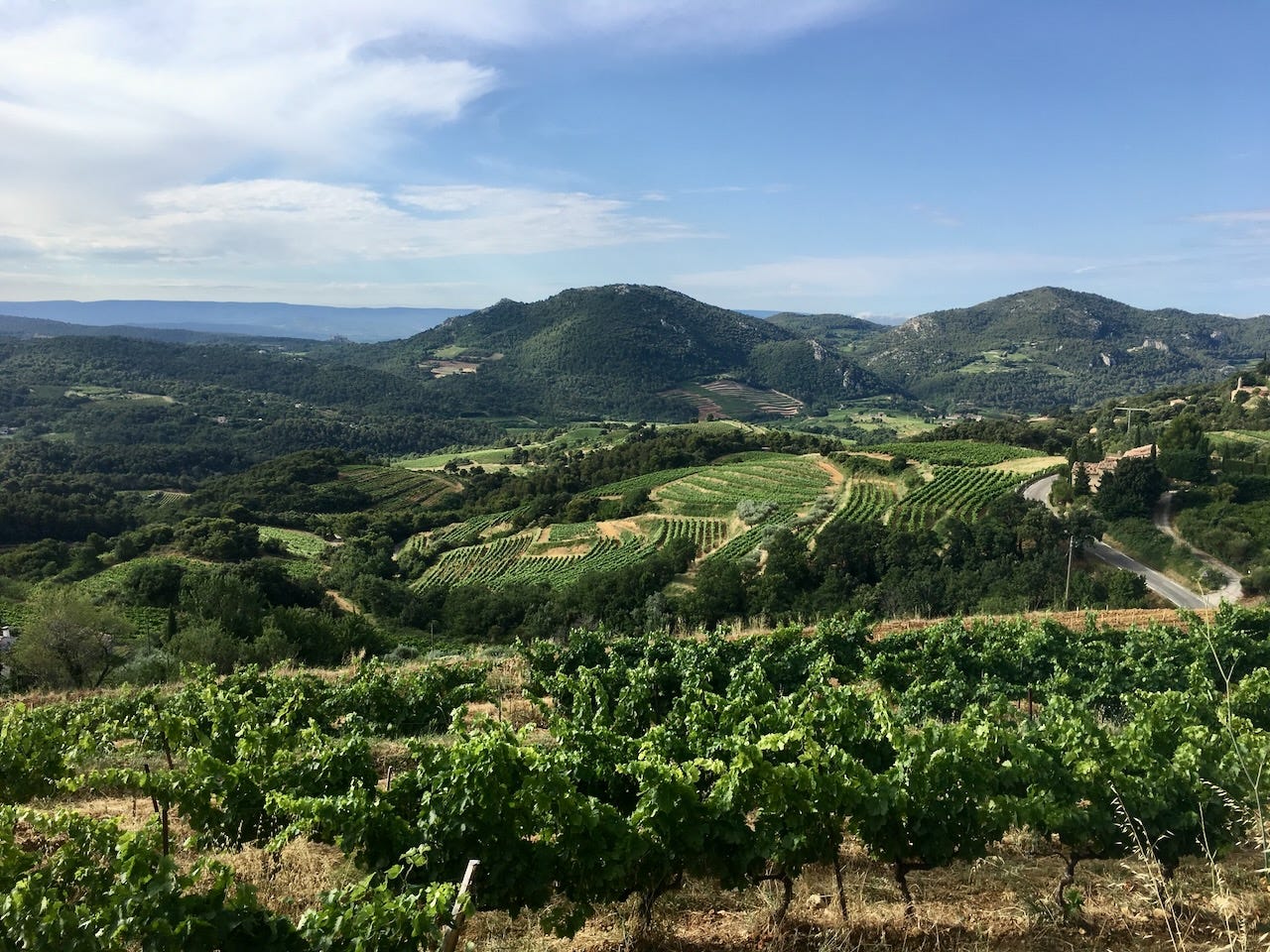
Welcome back to Notable, where twice a month I share the best wines from recent tasting.
Our focus today is on Rhône varieties, vinified both in their native territory and abroad. There is a gorgeous Saint-Joseph Rouge from Faury, in the northern Rhône, and a Ventoux from organic Château Pesquié in the south, plus four wines from Troon, a regenerative organic producer in southern Oregon: Amphora Amber Vermentino, Amphora Grenache, Amphora Mourvèdre, and a Rhône-style blend called Druid’s Red.
A note about Notable: with this edition it has become a Section, which in Substack parlance means it is now its own sub-newsletter, allowing readers to subscribe specifically to this content. (By default I’ve opted everyone in.) And if you like what you read here, please comment, like, share—and subscribe! Paying subscribers help keep this independent wine commentary flowing. Thank you.
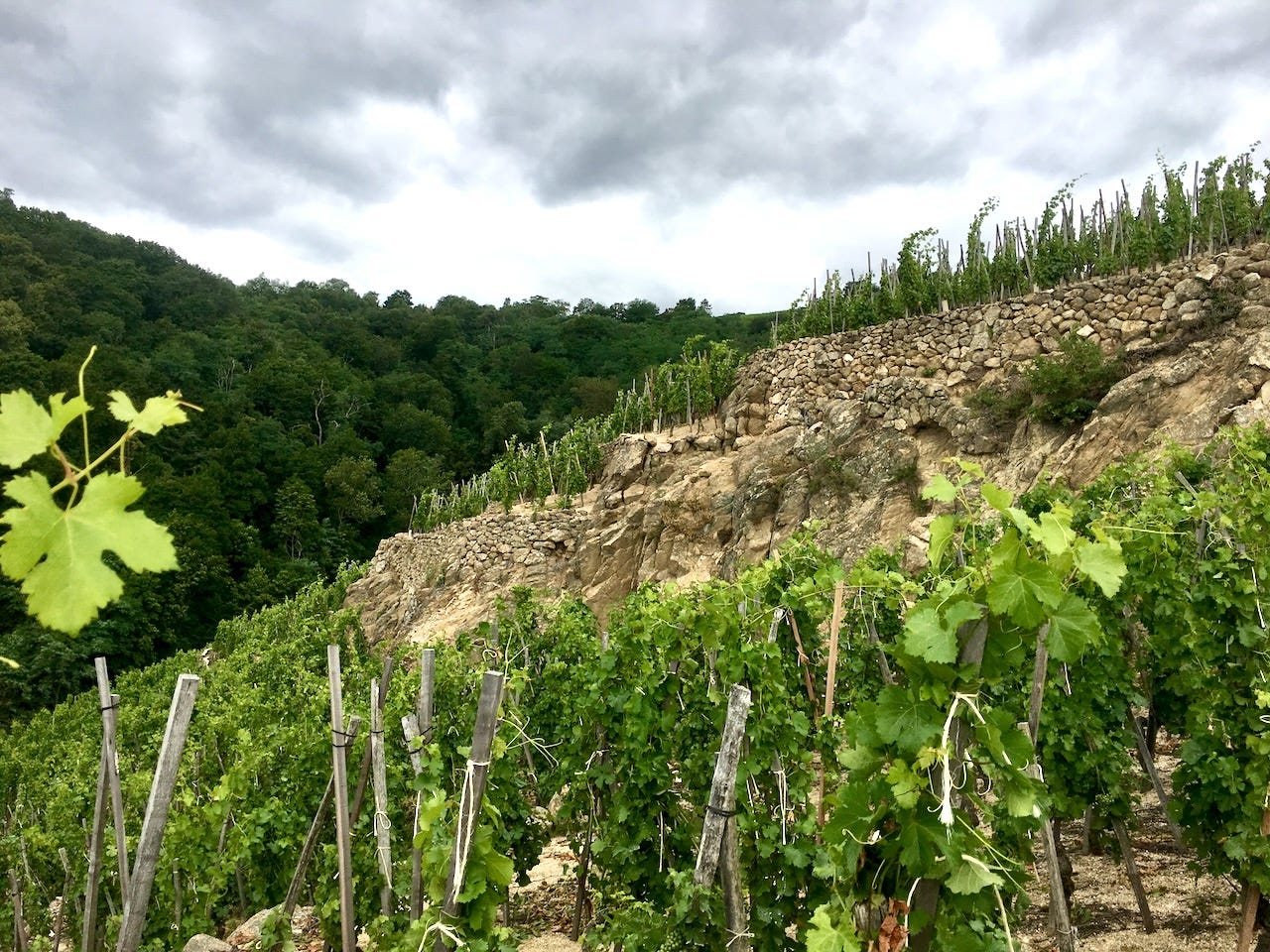
Lionel Faury Saint-Joseph Rouge 2019
14% ABV | About $37; we purchased this bottle in 2022 for $32. Faury is imported by Kermit Lynch Wine Merchant.
Saint-Joseph is a rangy terroir stretching for fifty kilometers along the northern Rhône’s right bank. The vines cling to steep hillsides on the eastern flank of the Massif Centrale, and soils are granite in various stages of disrepair.
Jean Faury began farming in Chavanay, at the northern end of the Saint-Joseph appellation, in 1950. He raised livestock and planted tree fruits and grapes, selling some wine in bulk (en vrac) to local bistros. His son, Philippe, who succeeded him in 1979, gradually phased out the fruit trees and invested in higher quality viticulture and winemaking. Philippe’s son, Lionel, took over the estate in 2006 at the tender age of 23.


Today Lionel farms in Saint-Joseph, Condrieu, and Côte-Rôtie, following lutte raisonnée. Syrah is his cornerstone, and he bottles two different Côte-Rôtie, two Saint-Joseph Rouge, and two Syrah Collines Rhodaniennes IGP. He also produces Condrieu and Saint-Joseph Blanc, the latter a blend of Marsanne and Roussanne. Case production is about 7,000 annually.
Lionel Faury’s wines are serious, self-assured, confidently old-school but never rustic. The higher-tier Saint-Joseph, “La Gloriette,” comes from three vineyards planted in the 1950s. This wine, the basic Saint-Joseph, is grown on younger Syrah, planted between 1979 and 2007. It spends about a year in a mix of wooden vessels, from foudre to barrique, only 10 percent new. Faury is not a fan of young wood.
Our household has been holding this bottle a few years. It has fully come into its own. My tasting notes are crowded with associations: violets, smoke, rare meat, porcini, pepper, plum, blackberry. These are flavors characteristic of Syrah in granite, especially that Syrah in that granite in that place. But the wine transcends these specifics. It is grounded and earthy but also reads as easy, welcoming, open, even loose. It’s doesn’t make demands. It asks only to be enjoyed.
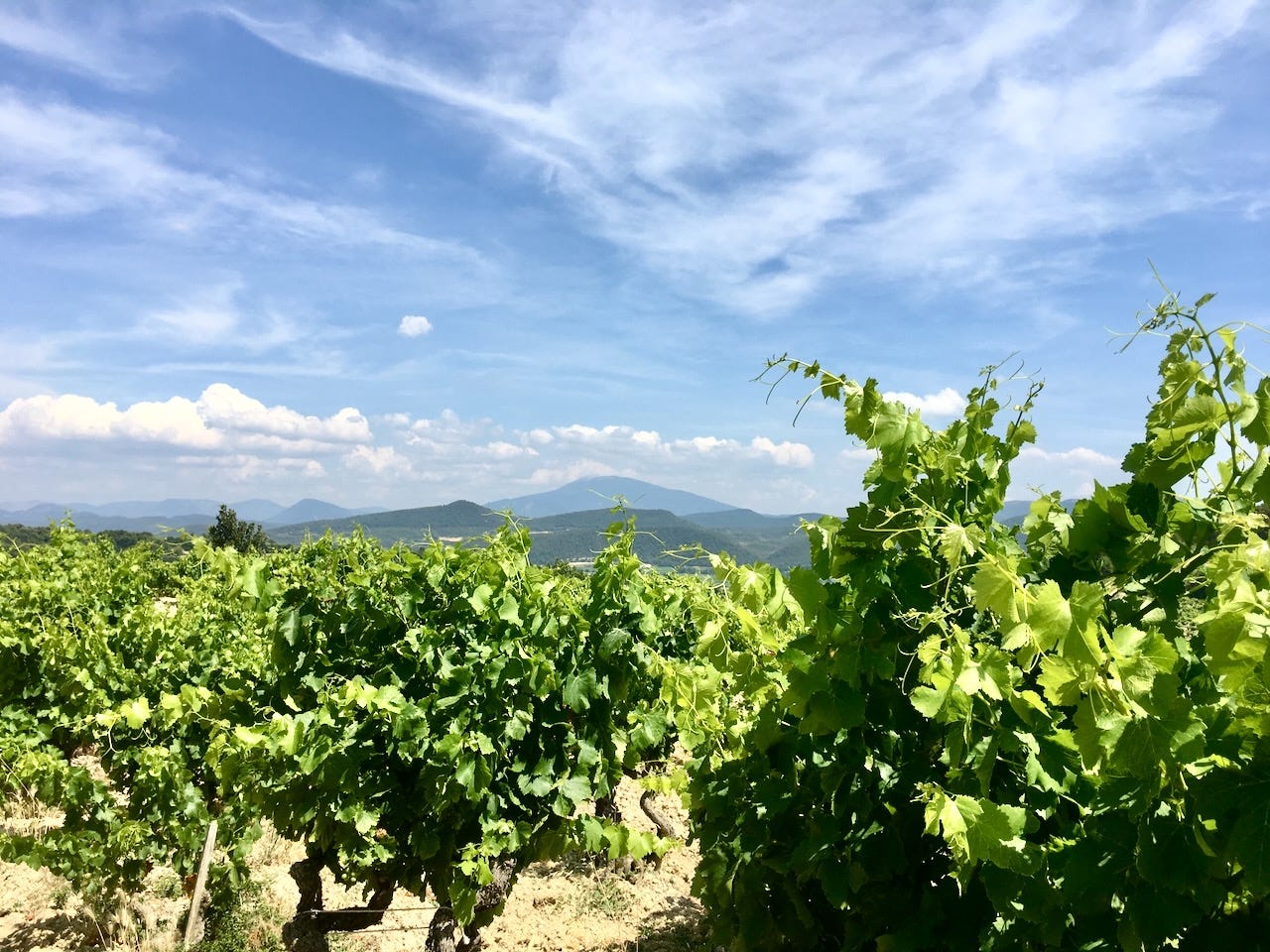
Château Pesquié Quintessence Ventoux 2021
15% ABV | About $25; imported by European Cellars / Eric Solomon Selections
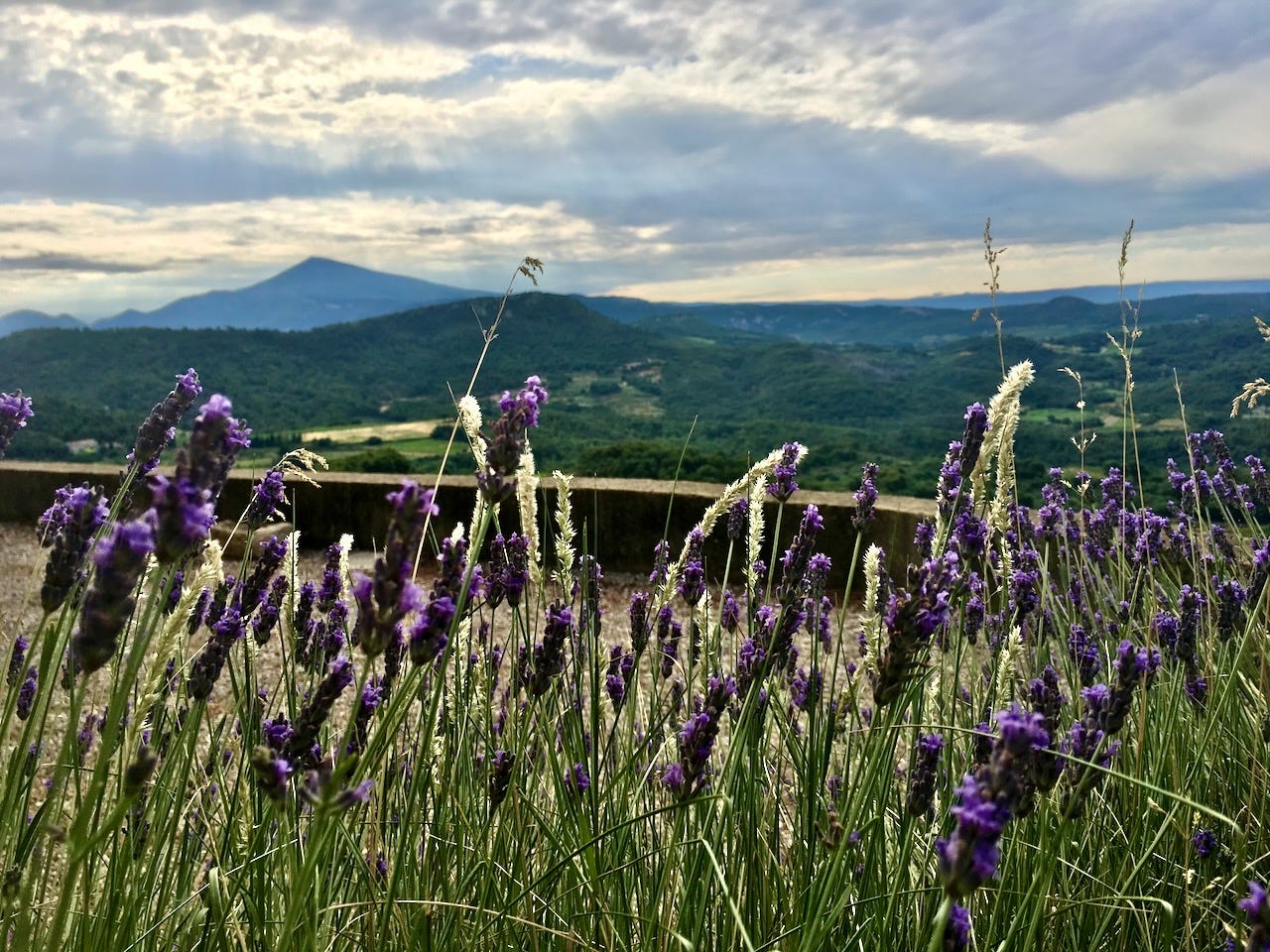
Château Pesquié is sited at the opposite end of the valley from Saint-Joseph, in the southeastern appellation of Ventoux. Here the riparian Rhône segues to a landscape more generously Provençal. The region has roughly 6,000 hectares in vine, and about 60 percent of wines are red blends based on the traditional trio of Grenache, Syrah, and Mourvèdre, with special appearances by Cinsault and Carignan. One-third of Ventoux’s production is pink wine; we are in the region of Provence-Alpes-Côte d’Azur, after all. There’s only a drop of white wine produced, various blends of Grenache blanc, Clairette, Roussanne, Marsanne, and Viognier.
The region is hot but buffeted by the Mistral, which keeps the Mediterranean’s moisture from affecting the vines. Soils are an ancient marine mix of sand, clay, and limestone, and some vineyards rise into the Mont Ventoux foothills, sipping mountain air. Producers can follow organic practices without the heroism demanded by wetter regions, and about one-sixth of the acreage is organically certified.
The Chaudière family purchased Château Pesquié, a traditional Provençal manor home, or bastide, in the 1970s. Ventoux was still a young appellation then, and at first they sold their produce to the local cave cooperative. In 1990 they left the coop to bottle their own wines, and today third-generation brothers Alex and Frédéric Chaudière manage the estate. Pesquié is one of the largest producers in Ventoux, and farming is biodynamic and Ecocert organic.
The Quintessence red is a ripe wine, concentrated, potent. Syrah dominates the blend, at about 60 percent, with the balance Grenache noir, all grown on fifty-year vines. The wine spends 12 to 15 months in a mix of wooden vessels, about 40 percent new. The first whiff is spiritous, almost like plum brandy, and later there is a sense of dark and brooding fruit. But it’s not a weighty wine, reading lighter on the palate than the nose, and acidity leavens its smooth tannins. There is cherry fruit, black and red, and an earthy finish. I prefer lower alcohol libations, but if one wants to drink southern Rhône wines, sacrifices must be made. The wine was a solid partner for slow-braised pork shoulder with garlicky mashed potatoes, winter comfort food’s (sorry) quintessence.
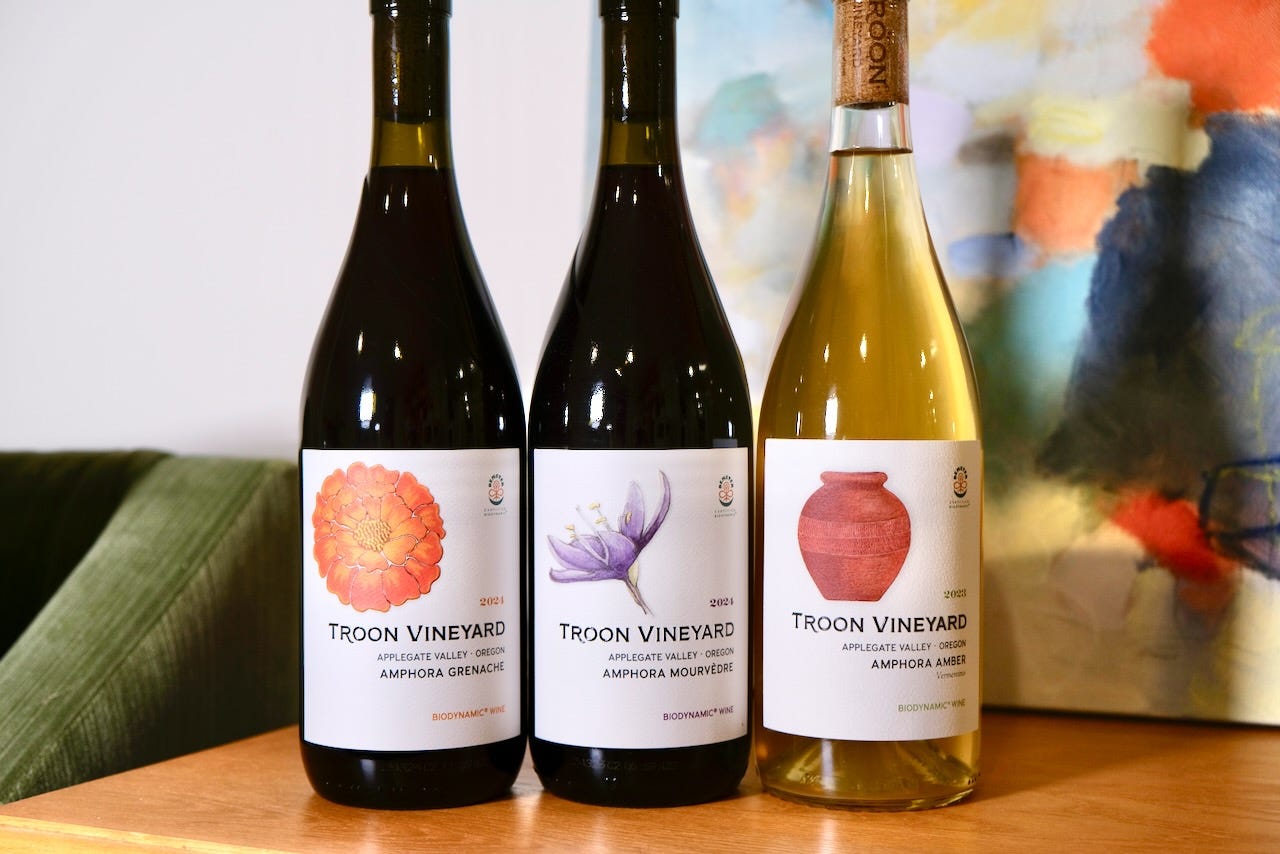
Four Wines from Troon Vineyard
Troon Vineyard is a hundred-acre, mixed-use farm in Oregon’s southern Applegate Valley. In addition to vines, they grow cider apples, vegetables, and hay and tend sheep, chickens, and re-wilded honeybees. Farming is biodynamic in its original interpretation, which views the farm as a closed-loop, self-sustaining ecosystem. Troon is both Regenerative Organic Gold Certified and Demeter Biodynamic certified.
Rhône grape varieties dominate the plantings, principally Vermentino, Syrah, Mourvèdre, and Grenache (blanc, gris, and noir), plus Marsanne, Roussanne, Picpoul, Bourboulenc, and a smattering of others. There’s also soupçon of grapes from elsewhere in France: Tannat, Malbec, and Cabernet Franc. Winemaking is light-handed, what many call natural. Ambient cultures drive fermentation and malolactic conversion, there is no fining or filtration, and the wines receive only minimal sulfite at bottling.
I’ve been tasting Troon’s wines since their 2018 vintage, the year Nate Wall joined as winemaker and two years after industry veteran Craig Camp took the reins as G.M. Those early wines weren’t always Rhône-centric, the blends sometimes incorporating Riesling, Tinta Roriz, or Primitivo; these grapes have since been removed from production. Over that time the wines have found solid footing. They are forthright but detailed, low in alcohol, refreshing without loss of gravitas. The Amphora series (below), in which the fruit was both fermented and aged in terra cotta vessels, feels especially successful, the clay aging adding weight without flavor while switching the aromatics into hyperdrive.
Troon Amphora Amber Vermentino Applegate Valley 2023
12.1% ABV | $55 (sample)
The only 2023 wine in the lineup. The grapes were fermented on skins in amphora, mostly de-stemmed but with a small portion of whole cluster. The wine completed full malolactic during its ten months in vessel, then was pressed, settled, and bottled. The wine is the color of light honey, faintly cloudy, and smells of sultana, ginger, and mead. The flavors are tawny, suggestive of birch bark and dried leaves, with a gingery, spicy finish. It’s lightweight, not stridently tannic, an amber wine in a clean, accessible style. Don’t serve it too cold.
Troon Amphora Grenache Applegate Valley 2024
14.2% ABV | $55 (sample)
The Grenache noir was fermented in a mix of clay and concrete, with some vessels seeing de-stemmed fruit and others whole-cluster. After fermentation, the wine was pressed and returned to vessel for malolactic and ten months of further aging. It’s a pretty color, rose-red with blue glints, limpid, with the fragrance and flavor of summer fruit. Glittery acidity fingers the sides of the palate while tannins kick in at the back. Overall it reads as amiable, charming, super-drinkable.
Troon Amphora Mourvèdre Applegate Valley 2024
12.9% ABV | $65 (sample)
Like the Grenache, the Mourvèdre was treated to a mix of vessels and de-stemming protocols; the final blend is about one-third whole-cluster. After fermentation, the wine was pressed and moved into extra-large amphorae for malolactic and about ten months of aging. It’s another pretty wine, likewise limpid but redder than the Grenache. It’s fragrant of dried fruits and flowers: roses, oregano, berries. The texture is diaphanous but the flavors are dark and plummy, with pop of red cherry at the end. It’s likewise an approachable wine, albeit with a darker mien.
Troon Druid’s Red Applegate Valley 2024
13.4% ABV | $30 (sample)
Druid’s Red is a blend of, in descending order, Syrah, Cinsault, Mourvèdre, Carignan, and Grenache. A portion was vinified whole-cluster, and some lots were co-fermented. About a quarter of the wine saw concrete for fermentation and aging. It’s a darker wine overall, a fine contrast with the high-toned Amphora wines. Brooding, spicy, it snaps with pleasant bitterness at the finish.
Coda: I had this bottle open for six days, poured initially for tasting, then casually for tastes, and it remained fully itself from Day 1 to Day 6. If anything it got bigger, better, more expressive, more fruity. This is perhaps surprising for any wine, but more surprising for those who believe natural wines are unstable. I’ve had a similar experience with many other wines made naturally, which is not a new but rather quite old way to make wine.
All images ©2026 Meg Maker. Some wines (indicated) were samples for review.
Whoa! New labels for Faury!