


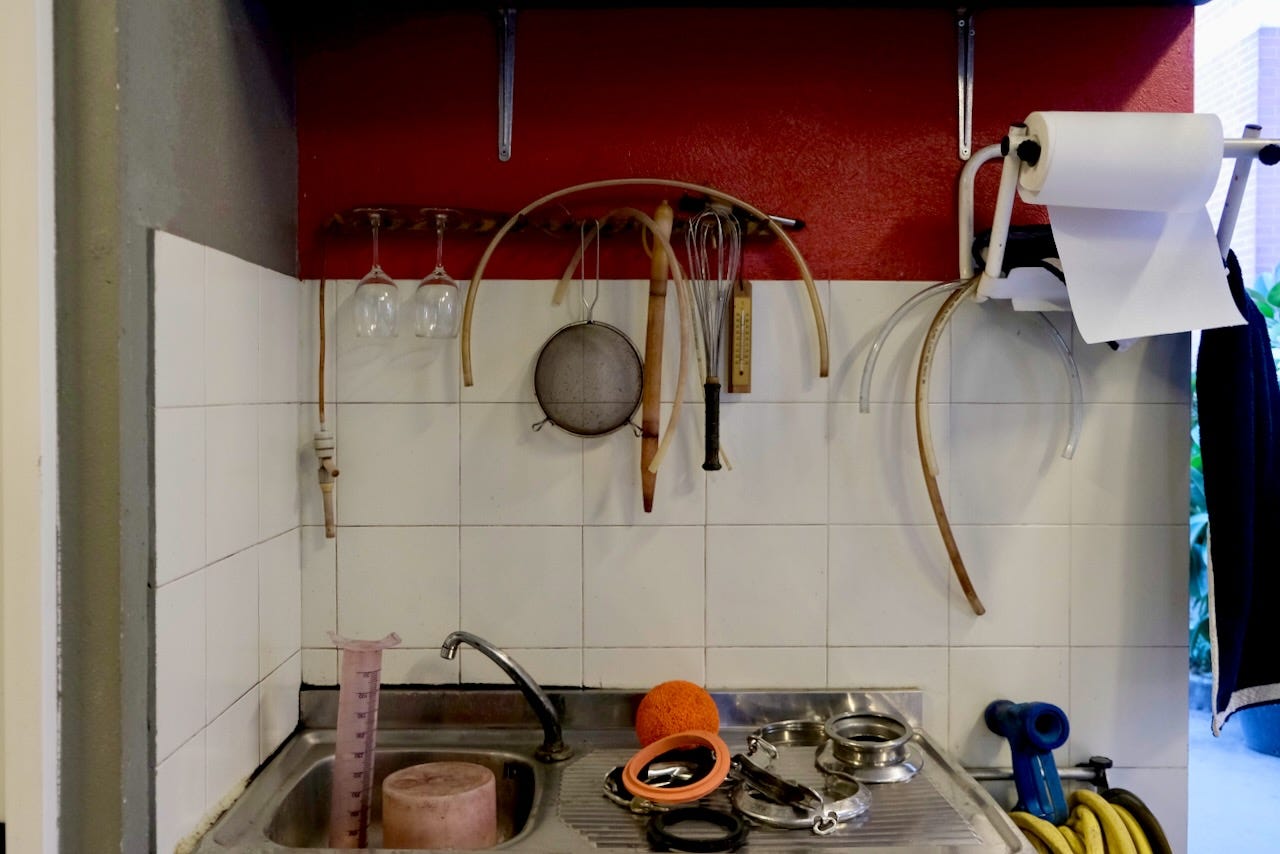
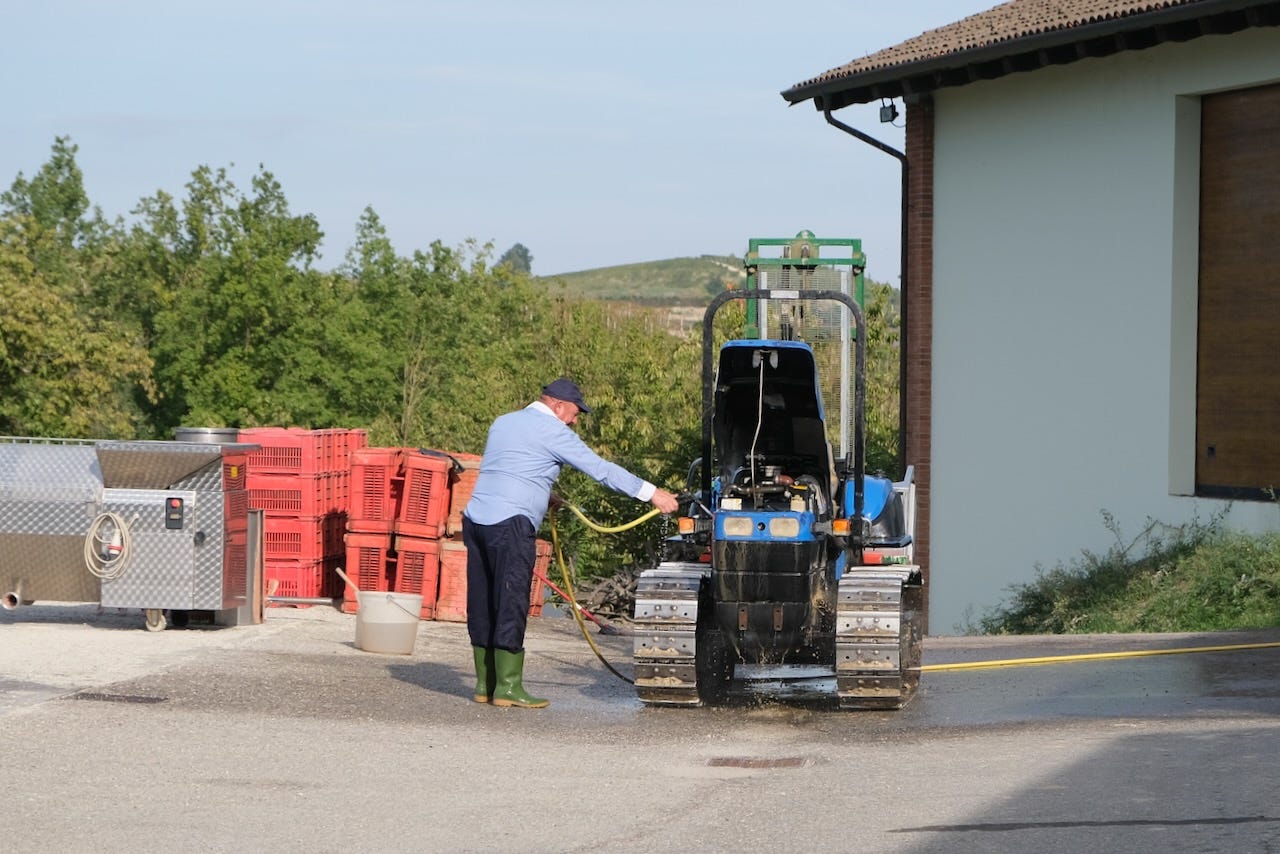
I’ve just returned from Roero after a four-day whistle-stop tour. The itinerary was orderly but busy. At 9:30 each morning I’d leave the hotel with my colleagues for the first producer visit. These invariably started with a cruise through the tank room before progressing to a seated tasting. (Winemakers love their tanks.) Harvest was just wrapping after the earliest start in memory, so all of the season’s whites and most of its reds were in house and cooking. I asked one producer when he’d finished gathering fruit. “Cinque minuti fa!” he said. Five minutes ago.
After the first visit we’d head to lunch at a small restaurant where menus leaned hard on local dishes. We’d start with crispy appetizers, move to primo (always pasta), mercifully skip secondo (it was lunch, after all), and finish with dessert and restorative coffee.
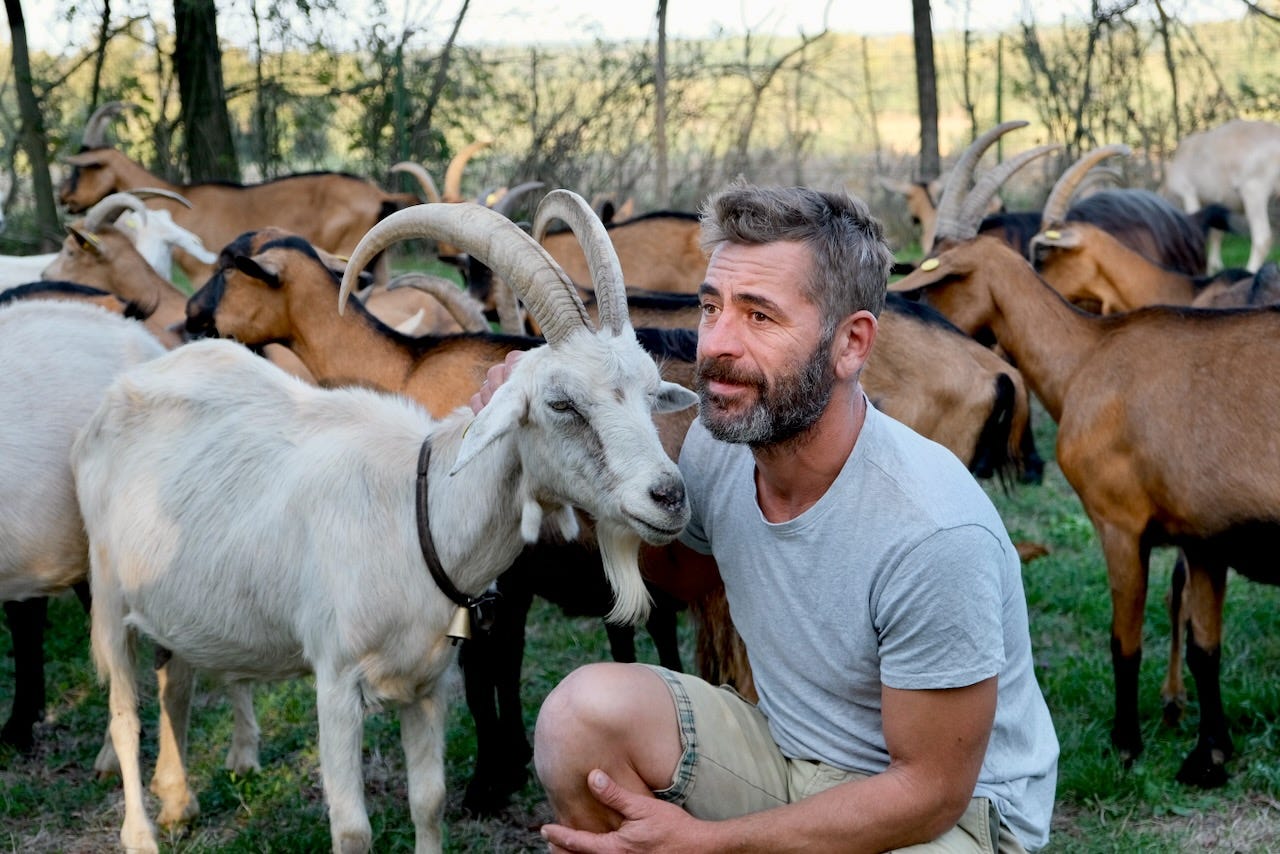
Next we’d light out on a gastronomic micro adventure. We met a goatherd cheesemaker and his flock in a field. The goats mobbed us like Golden Retrievers as we stroked their ears and grasped their horns. A few of us tried our hand at a lactating teat, and we sampled the minute-old milk, warm and sweet.


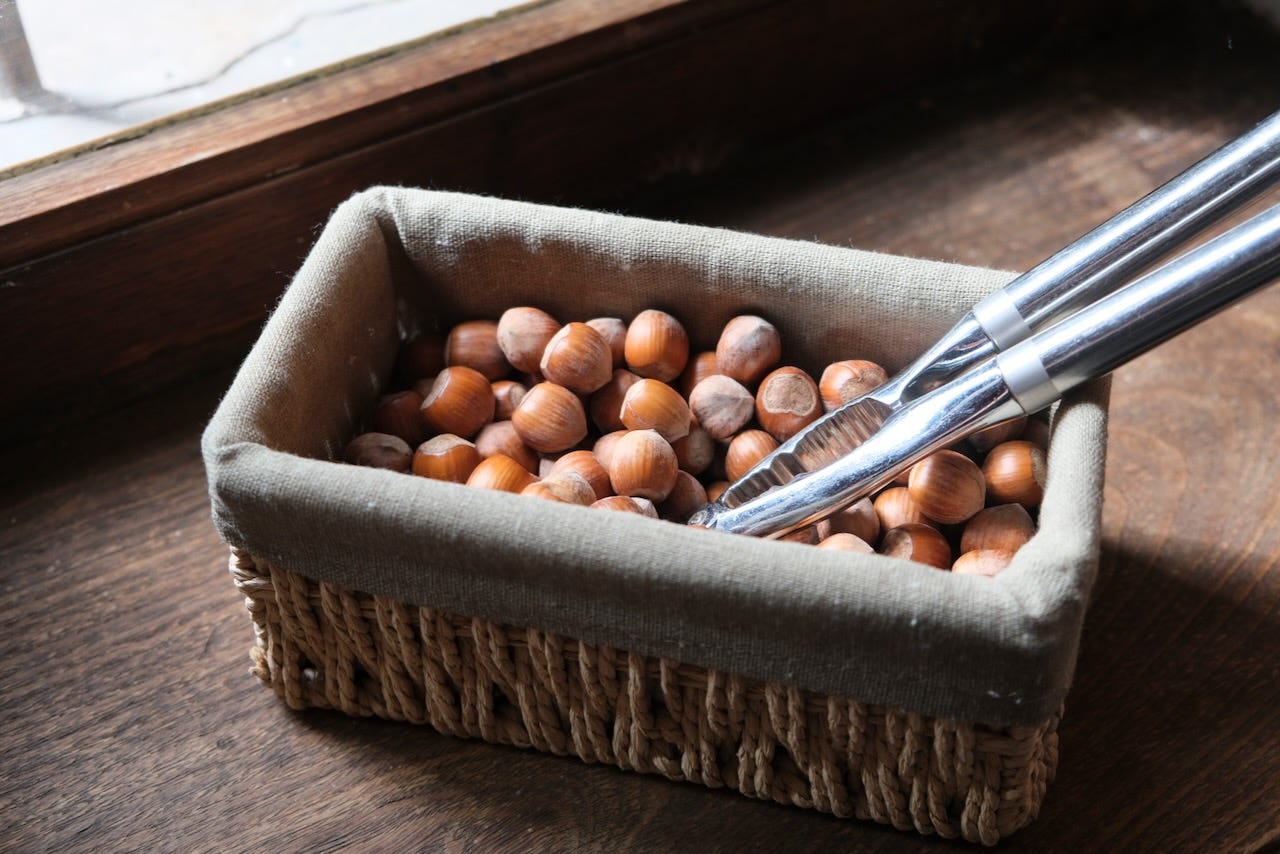
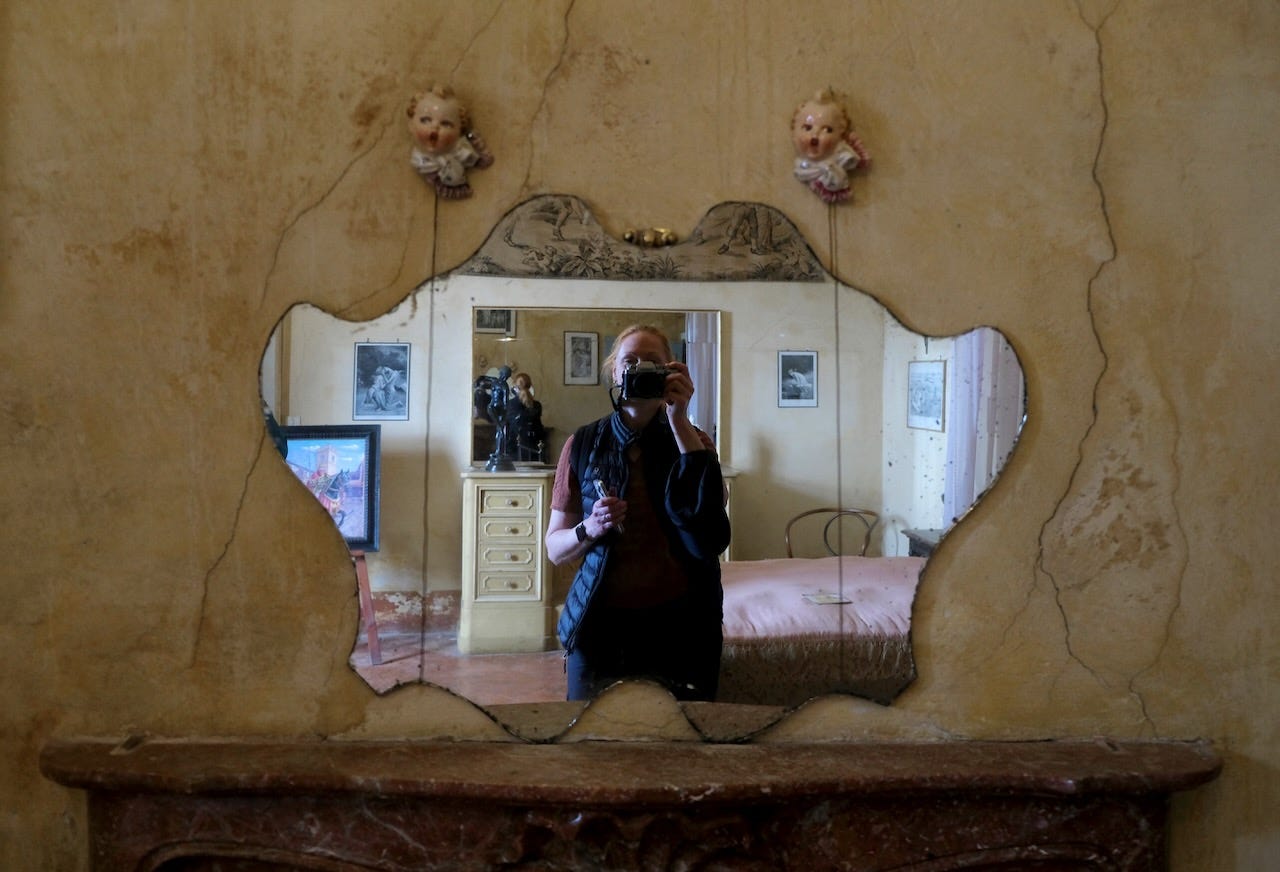
We toured a 12th-century private castle that had been furnished over the centuries with contemporaneous bric-a-brac, giving the place a historic shabby-chic vibe: medieval ironworks, Renaissance frescos, Murano chandeliers, Victorian bedframes, Art Deco dressers, a velveteen settee that would have looked at home on the set of The Brady Bunch. We made gelato with a chef, visited a honey producer, tasted hazelnuts with a woman who’s revived her family’s grove, and ventured into the forest with a tartufaio and his truffle dog, Hedwig (yes, like Harry Potter’s owl), a German Shorthaired Pointer who scratched black truffles from the soil with the zeal of a starved wolverine.
After these excursions, around 5:00 p.m., we would visit a second wine producer for another tour and tasting. At 8:00 we’d move to dinner, joined by yet another winemaker and sometimes two. Despite fastidious planning by our host, dinners were curiously recapitulative of lunch, with only faint distinguishing flourishes. I believe I had vitello tonnato four times, agnolotti three, tajarìn three or four, mostly with ragù but once with shaved black truffle, plus lots and lots of cheese: tome-style Bra plus robiola and blu, in versions caprine and bovine. I’ve never had to consume so many lactase pills in a single day.
Finally, back to the hotel around 10:30 or 11:00 to shower, sleep, and get ready to do it all again.
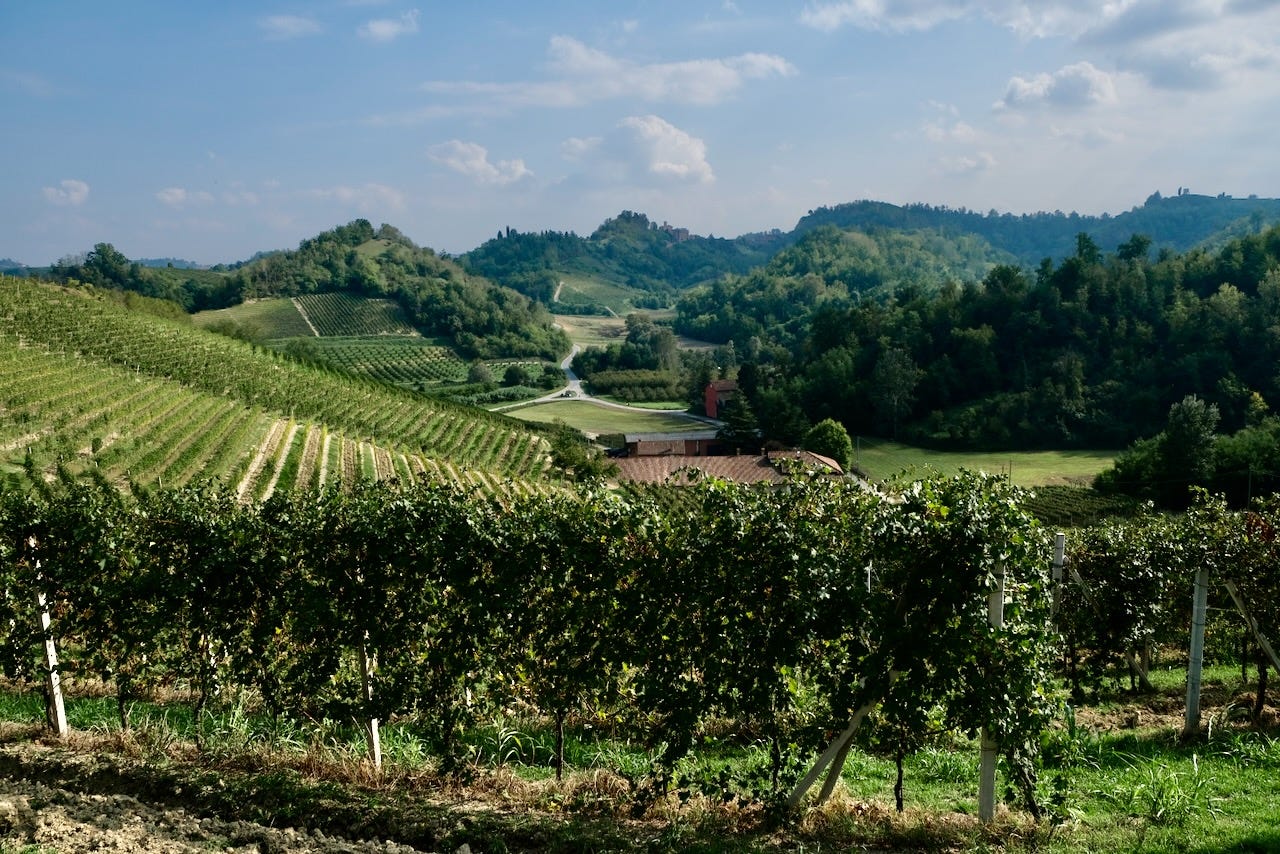
Did I mention the wine? The Roero growing zone lies north of Alba across the Tanaro River, a roughly triangular, undulating region mottled with vineyards, hazelnuts, peach trees, olive groves, pastures, and woodland. Castles and other blocky ruins stitch the hills, creating a jagged horizon that evokes wilderness and habitation in equal measure.
Roero’s territorio is markedly different from that of the Langhe to its south, underlain not with marl but with sedimentary sandstone. This rock or rocce was carved into steep gulches a quarter of a million years ago when the Tanaro abruptly changed course.
The grapes of the D.O.C.G. are white Arneis and red Nebbiolo, and the vines speak a different dialect than in other parts of Piemonte. Roero Nebbiolo is approachable, its tannin more limber than that of its southern neighbors, the acid brighter, the fruit red and charming. Arneis here is peachy, floral, and saline, with streaks of acidity. These are gastronomy wines, amiable rather than petulant or showy at table, which makes sense given the strong food culture. And they’re affordable; on my return I’ve found prices in the U.S. ranging from $25 to $45 for the reds with whites rarely topping $25, and that only for the Riserva bottlings.
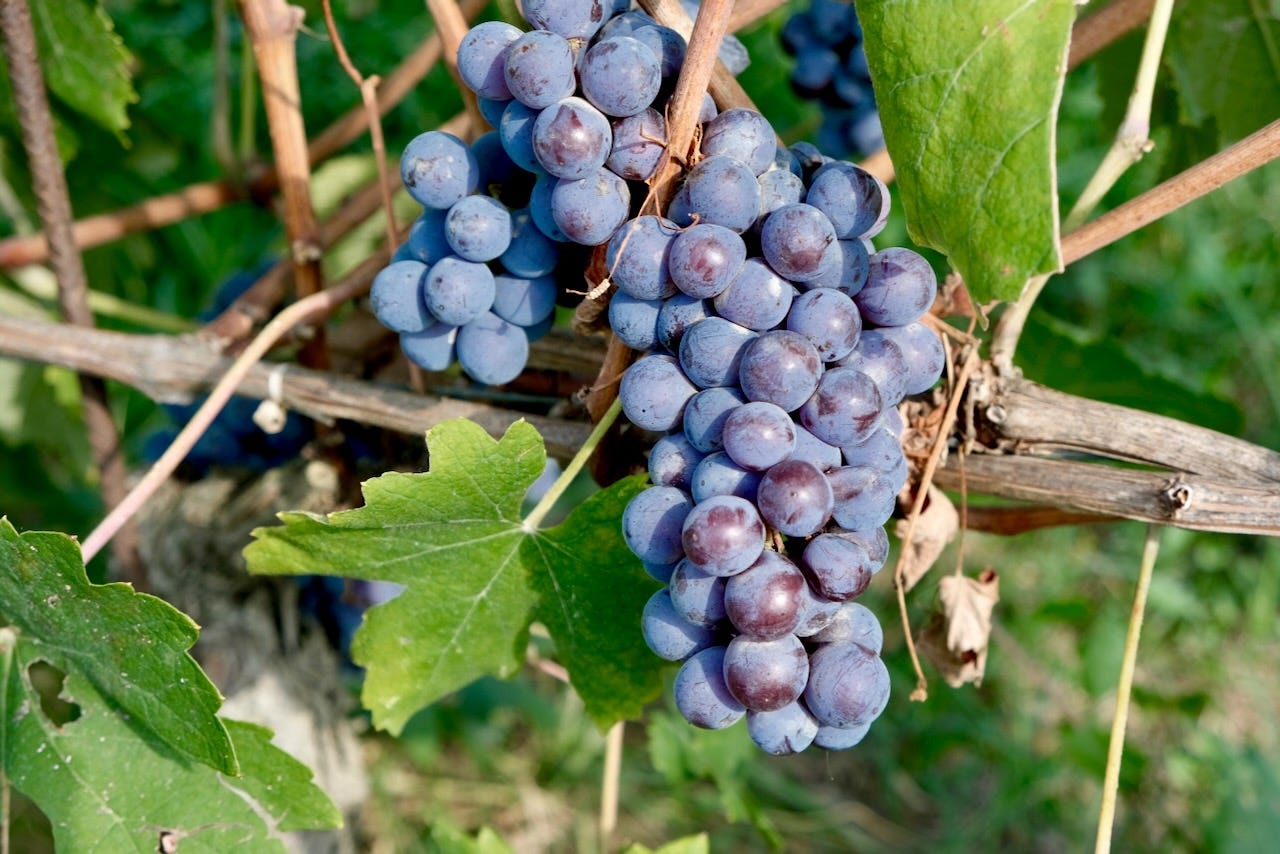
Producers in Roero actually grow far more Arneis than Nebbiolo, with a total of 1,000 planted hectares of white versus 360 of red. Arneis offers a key market advantage thanks to a fashionable thirst for white wine, in particular white D.O.C.G wine from Piemonte, something that Barolo and Barbaresco cannot boast. (There’s also an infinitesimally small quantity of Arneis spumante D.O.C.G.) Still, Roero isn’t exactly a household name, and some makers label their reds Langhe Nebbiolo or Nebbiolo d’Alba, which they’re legally permitted to do, to take advantage of laxer production rules and more recognizable trade names.
As for the winemaking culture, I sensed among producers more mutual support and admiration than frank competitiveness. Roero’s true competition lies to the south, in Barolo and Barbaresco, and the region gives the impression of an underdog vying for the world’s attention. To be sure, the Roero Consorzio summoned us Americans hoping we could give voice (in English) to the territory, to make our readers aware of its many fine qualities. What I saw and heard and tasted convinced me that Roero is indeed worth talking about and drinking. Stay tuned for much more.
Here’s what I’m reading this week
Simple is Boring
I’ve said it before and I’ll say it again: We wine writers are trying too hard to explain wine. Wine’s complexity isn’t a minus, it’s a plus, pleasurable especially when it leads to epiphany. But that only happens to people who stick with it beyond a bottle or two. “In wine, drinking and learning about the drink go hand in hand,” argues Bodhi Landa. “I think it’s generally true that the more you know, the better wine is. Understanding is part of the thrill.” The key, given the morass of wine “content” online, is to find a writer whose voice, cadence, pacing, and tastes fit yours. This is what I’m trying to do here at Maker’s Table: tell stories about food and wine culture in an authentic voice, inserting tidbits of information that, over time, add up to something like a meal.
Bros Taste Blind
“Like the Mets, wine is in a rut… The industry has not adapted to the social-media era,” echoes Arthur Holland Michel, in The New Yorker. Enter the SuperVinoBros, fraternal twins Ryan and Chris Goydos, who serve a steady pour of wine “content” to their hundreds of thousands of followers on TikTok and Instagram. Michel recently accompanied the twins to a Mets game, where they set up a blind tasting exercise in the parking lot after a predictable home-team loss. Ryan’s girlfriend, Carolina Mehedy, a former somm at Le Bernardin, took a sip off-camera. “This is Cabernet Franc,” she told Michel, sotto voce. She nailed it. The Bros did not. Put another chalk mark in the column of hard-won expertise.
Mother Malus, Hiding in Plain Sight
Geneticists have determined that an apple tree planted in Maine centuries ago—and still producing fruit—is a Drap d’Or de Bretagne, a variety first described in a French pomological text in 1628. French settlers evidently brought cuttings of this prized apple, whose name means “Brittany’s cloth of gold,” to the New World, propagating it locally before its promiscuous Malus genes crossed with others and spread across the continent. “The Maine team had found a living lost progenitor to hundreds of varieties—a tree that had been contributing its characteristics to American apples for hundreds of years,” writes Maryn McKenna, in Scientific American. These survivor trees, which have endured hundreds of years of harsh weather, may harbor genes valuable for creating new cultivars that can withstand climate chaos: “the identification of the Drap d’Or isn’t only about illuminating the past. It also represents the promise that the apple’s characteristics, only partially preserved in its many descendants but now recovered intact, may improve fruit yet to come.”
People Skills I
The wine commentariat is still fizzing over a £3,000 wine writing prize awarded to a piece evidently written, so-called, by A.I. (Full disclosure: I was longlisted in the competition’s short- and long-form writing categories this year, as I have been in years past.) Last week wine writer Alder Yarrow waded into the conversation with a stern warning for the profession. Yarrow’s no stranger to tech thanks to his decades leading creative digital agencies, and he’s separately described how he uses A.I. tools in his own work. But this episode feels a bridge too far. “I can’t shake the feeling that this isn’t just a story about a wine-writing contest fallen victim to the pitfalls of an A.I.-enabled world. It’s a symptom of a profession slowly being strangled,” he writes. That’s partly because “[t]here is almost no one left to pay anything resembling a living wage for those who want to write about wine professionally. Fewer and fewer people therefore will write about wine, and the quality of the writing that does get done will necessarily suffer.” It’s no wonder people turn to LLMs to create “content.” But it’s also galling considering that £3,000 is more than I make from this Substack in an entire year.
People Skills II
Bear with me: There’s a fun parlor game in which each person writes a famous quote on a piece of paper—“Four score and seven years ago our fathers brought forth on this continent, a new nation, conceived in Liberty, and dedicated to the proposition that all men are created equal,” or “If music be the food of love, play on; / Give me excess of it, that, surfeiting, / The appetite may sicken, and so die.”—then hands the paper to the person to their left. That person creates an illustration of the quote, then—this is key—folds the paper so only their illustration is visible, then hands it to the person to their own left. That person tries to suss the original quote and write it as a caption to the illustration, or at least write what they think the illustration is about. Then they fold the paper so only their quote is visible, hiding the illustration, and hand it along. This process continues, with each person trying to interpret either the quote or the illustration without benefit of seeing all the prior work. It’s essentially a visual game of telephone, and the reveals at the end, after everyone opens the accordioned pages, are gut-bustingly hilarious, showing wild deviations from the original passages. A team of researchers recently ran this exercise through an A.I. tool and discovered that, unlike the human results, runs eventually converged on the same twelve motifs. Giorgia Lupi, a designer and partner at Pentagram, one of the world’s top design agencies, thinks this makes a strong argument for our messy organic creativity. “Human experience is complex and particular. Creative work means contemplating and translating that complexity rather than flattening it into the simplest answer,” she writes. “This is true whether you are making a data visualization, a brand, or a story. The impulse to optimize for the obvious and to stop at the simplest answer is what I believe we have to resist.”
See you next week.
Images ©2026 Meg Maker. The Roero Consorzio covered transportation, lodging, food, and logistics for my tour of the region.