


Welcome back to The Salt, a curated collection of essays, articles, and marginalia at the intersection of wine and food. These are pieces that caught my attention, challenged my thinking, or just invited me to sit back, relax, and enjoy the read.
Required reckoning
The week’s top food news was an inedible chew. Julia Moskin of The New York Times broke a story about alleged physical and psychological abuse of staff by chef René Redzepi of the Michelin-starred Noma, in Copenhagen. In the aftermath, Redzepi issued an apology for his past behavior, then resigned from his leadership role, naming no successor. Food media has been crackling with commentary about these incidents and the monstrosities that haunt a dispiriting number of restaurants. Having years ago worked in service, I find these accounts ugly but unsurprising. Two follow-up pieces this week stood out. The first is by Lauren Saria, food editor of the San Francisco Standard, who wonders about the true costs of fine dining, in Maybe We Don’t Need Restaurants Like Noma. The second, written from a diner’s perspective, is Adam Roberts’s gutting essay, I Left Noma Mid-Meal. I Wish I’d Left Sooner.
Esther Mobley heads East
After a decade as wine writer and critic for the San Francisco Chronicle, Esther Mobley bids adieu. Mobley had been a 24-year-old assistant editor at Wine Spectator when she landed the gig, prompting wine commentariat’s old guard to erupt in agist, sexist mishegoss. Well, she showed them. “Once the initial jitters wore off,” she writes, “I was able to embrace that I had the best job in the world.” Her journalism brought us stories of a changing industry and emphasized wine’s economic, cultural, social, and aesthetic impact not only on California but on all of America. Wine coverage became so important to the paper that in 2021 it took on a second wine journalist, Jess Lander. Mobley will return to her hometown to become the food editor of another local paper, the Boston Globe.
SLO Wine
Eric Asimov visits the cool, maritime region of San Luis Obispo Coast, meeting makers from Scar of the Sea, Outward, Lady of the Sunshine, Phelan Farm, Dunites, and more. SLO Coast earned appellation status only in 2022 and there’s still a wild-west, we’re-all-in-this-together spirit among producers, many of whom buy fruit from the same sources while supporting each other’s fledgling efforts. “What links the winemakers working on the coast, beyond tight friendships and a certain outsider mentality, is a conviction that regenerative organic farming is best for the wine and the planet, and that wines ought to be made with minimal intervention.” Asimov discovers the results are wines that feel racy, savory, saline, and “alive in the glass.”
Plugging hybrids
Margot Mazur interviews winegrower-maker Matt Niess, who works exclusively with interspecific hybrids and grapes indigenous to California. That puts him in a class by himself, learning as he goes. “It does take a mindful presence in the vineyard,” he says, because “Every book that has ever been written on wine, every class—the trellising, the farming, the spacing—every little detail… is based on the assumption that you’re working with vinifera. If you change that assumption… everything is different.” He’s discovered that hybrids and natives are far less demanding than finicky European grapes, requiring fewer inputs and potentially lowering overall costs. But like any wine, it still needs a market.
What’s velho is new again
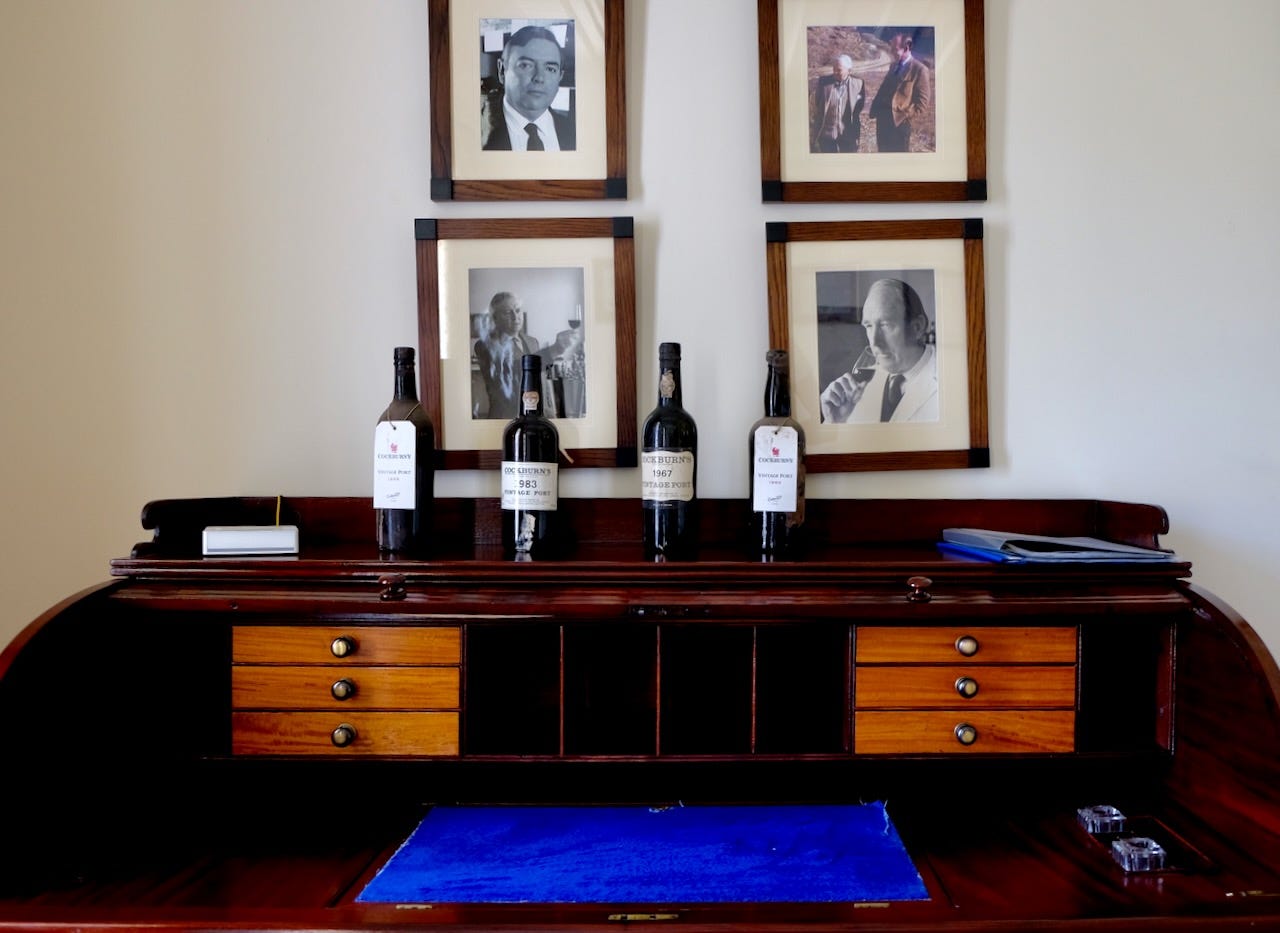
Forty years ago, in an effort to revitalize production, Port producers grubbed up traditional field-blend plots and replaced them with monovarietal plantations of just five grapes: Touriga Nacional, Tinta Roriz, Touriga Francesa, Tinta Barroca, and Tinta Cão. Today, many producers are rediscovering the wisdom of older methods as they strive to address threats caused by climate, culture, and commerce. In The World of Fine Wine, Margaret Rand interviews David Guimaraens of Fladgate Partnership and Charles Symington of Symington Family Estates about their latest experiments. Having visited various properties of both houses, I found this a geeky but essential deep-dive into Port viticulture’s present and uncertain future.
Wine School
Bodhi Landa authors the excellent Substack Thirst Behavior, an engaging mix of commentary and reportage about wine, service, and the nature and culture of taste. The Section called Wine School is a mini-course for the wine curious which Landa describes as “structured micro-learning for those who want to develop foundational knowledge in wine.” Weekly lessons focus on a region or style, “the same way a professional sommelier course would,” swiftly bringing students up to speed. The content is accurate, transparent, and contemporary, and each dispatch feels not too much, not too little, just right. Paying subscribers have access to the full archive, so school is always in session.
Marginalia: another favorite condiment
Our local CSA farm stand closes for the winter just before Christmas, discounting pantry items they don’t want to store until spring. That’s when I stumbled onto the fermented garlic pickle from Pure Indian Foods, adding two jars to my shopping basket, figuring if I loved it I’d want more. I was right. I’d been buying Patak’s for decades, which is widely available but in comparison mild, sweet, and bland. This one packs a wallop: Garlicky, savory, spicy, pungent. A little goes a long way.
Bookmarking…
Julia Coney went viral on Threads last month for suggesting there are better champagnes than that one with the yellow label. On her Substack, Métier, she offers twenty-one better options in her Champagne Starter List. The roster is short, sweet, and all you need to get started drinking much better fizz.
Images ©2026 Meg Maker
It’s my third reading of Julia’s piece on Champagne, and I remain bothered by her lumping grower wines in with the uber-expensive bottles. I know that’s not what she meant, but the writing leaves that impression, and more than mildly.
Thank you for sharing the piece with North American Press! So excited about hybrids getting their due, especially in California.