


I’ll be in Piemonte next week, touring Roero to taste wines and handmade foods: cheese, truffle, hazelnut, honey.
It’s a press trip, and I’m looking forward to it, but I’m also feeling a degree of trepidation, because as usual the itinerary’s so tight one couldn’t slip a silk thread between appointments. Our group of eight American journalists will pile into the van at 9:00 a.m. and not return to the hotel until about 11:00 p.m., so at dinner I’ll still be wearing the clothes I donned for breakfast, the boots that carried me through the truffle woodland, and the sweat-stained (with luck not wine-stained) shirt I wore for tastings at cantinas. There will be no opportunity to freshen up, catch up, call home, or, heaven forbid, jot notes and impressions throughout the day.
This is unquestionably not my favorite way to travel, but it has been the way I’ve traveled since about 2009, when I took my first press trip, a Riesling junket through Mosel, Pfalz, and Rheingau. I was utterly unqualified for that tour, a newbie joining a group of seasoned pros that included a Master of Wine, a pioneering winemaker, and journalists in late career. I tasted a lot, learned a lot, and broke a crown (not recommended, but not surprising given the amount of acid rinsing my teeth). I’ve not been back to Germany, but have since tasted all over Italy, France, Spain, Portugal, Chile, Argentina, British Columbia, and the U.S., and attended wine events in Belgium and the U.K.
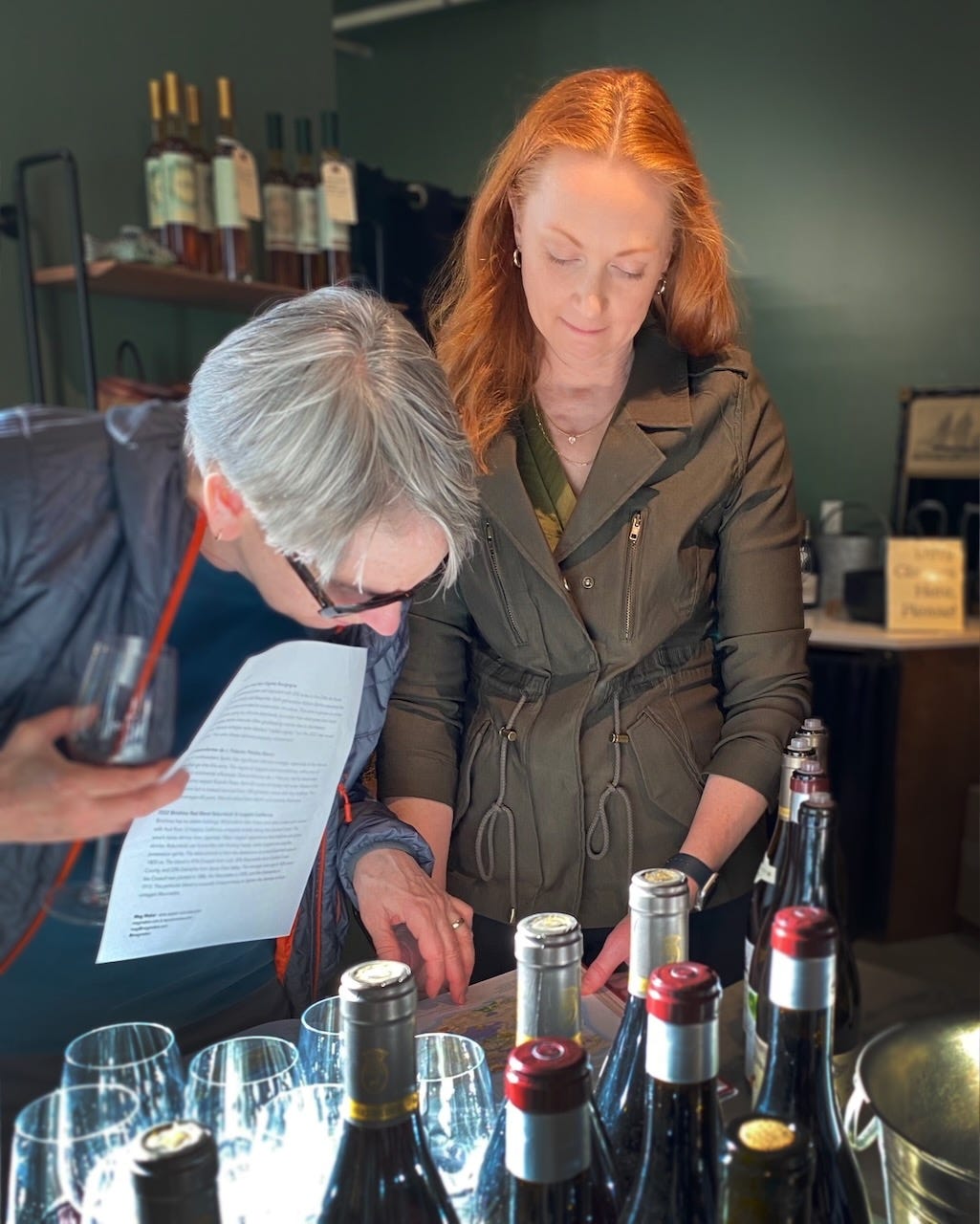
So this is how I’ve seen the world, carry-on stuffed with clothes that can be repeatedly wrinkled and smoothed and washed in the hotel sink to hang in the shower to dry in time for morning. Camera, notebook, chargers, cables, a hat and a special sunscreen that doesn’t smell. Some years, before covid, I would take six or eight tours like this. After covid and more recently the trips have been less frequent. I’ve declined many invitations, but there are also fewer overall, perhaps because organizers want a fresher voice but certainly because the wine industry is struggling with oversupply and under-consumption. On one hand this might drive producers to push for more media coverage to woo new consumers. On the other hand money is tight and press tours aren’t cheap.
The tours have curious commercial mechanics. Nominally, journalists are guests, wineries are hosts, and organizers act as facilitators. But scratch the surface and things get weird. Let’s take Europe as an example. Producers pay into a regional consortium that handles legal niceties, compliance, research, and other shared objectives. The consortium contracts with a marketing and P.R. agency to promote the wines. This agency maintains relationships with other publicists and marketers, both in country and in important export markets, and works with them to identify journalists to invite on a tour. Trip costs are often substantially offset by subsidies and grants from the European Union, which has an interest in boosting its countries’ economic prosperity. That means in practice, the P.R. firm is a client of the consortium, the consortium is a client of the E.U., and the journalists are the product, acquired toward the desired outcome: good press coverage.
On press trips, all travel, lodging, transport, and food are supplied gratis, but I always incur fees for airport transfer, meals en route, international roaming charges, sundries like water for the room, and, if I’m feeling particularly flush, a seat upgrade from Economy to Economy Comfort. It usually adds up to a few hundred bucks, and once upon a time I could make that back by selling a freelance story from the tour. Nowadays publishing on Substack is actually more lucrative. (Subscribe today!)
But hey, “free trip to Europe,” right? Sure, but it’s exhausting, plus a huge time commitment. I can do nothing else while traveling, so all other paid work grinds to a halt. And although I’m supposed to be the one doing the interviews, producers understandably like to pepper us journalists with questions about the U.S. wine market: trends, consumer preferences, how their wines fit in. Most awkward is when they ask directly for my impressions of the wines in the glasses before me. I prefer not to blurt my tasting notes when surrounded by fellow critics, so I tend to turn the questions around, further probing their stylistic aims or asking how they achieved, in the wine, a particular quality of X or Y or Z.
I return from a weeklong trip with a sheaf of notes on hundreds of wines, at which point I must try to make steak out of hamburger. This is especially challenging when I haven’t had time to pen contemporaneous reflections, to write down quotes I’ve overheard or sketch the details of the larger scene: the light on shiny grapes, the wasps who’ve bored into them, the sticky fruity smell of the crush pad and the tang of alcohol wafting from the fermenters, the fizz of the must as it gets underway, my boot print on the tile floor wet with washing down. And the less glamorous scenes, too: trash along the roadway en route to the fancy castillo, a harvest picker peeing in the bushes, a scrawny dog loping around, hoping for a handout. Those are not the scenes the consortium brought me in for, but they’re part of the truth of the region, and it’s my job to record those, too.
The Salt will be off next week, for obvious reasons. I fly out Monday and will return Saturday. Then I’ll set about transforming an itinerary into a story worth reading.
Here’s what I’m reading this week
Drinking the Old-Vine Kool-Aid
Sarah Marsh MW attended the Old Vine Conference in Napa and left concurring that, yes, old vines have many fine qualities and are worthy of preservation, but not at all costs. “It’s just too simplistic to say that all old vines are good and/or better than young vines. Many old vines have viruses,” she observes. “And if it’s not the scion that’s the problem, it can be the rootstock….Frankly, one can find as many examples for as against old vines in terms of virus, health, and resilience to climatic extremes.” It’s an argument I made recently in Renovating Wine, and I’m gratified to read her take.
Michelin Rates Bordeaux
In July, the Michelin Guide issued its first wine producer ratings, for Burgundy, and earlier this month released a second tranche, for Bordeaux. Master Sommelier Dustin Wilson has thoughts—or at least questions, including why this, why now, why them, and for whom? He ruminates thoughtfully about the situation, concluding that, at least at first, Michelin needs these regions more than they need Michelin. “To me, this reads more as a brand story that happens to be about wine, wrapped around an honor that at least some of the people receiving it seem to take very seriously. Once you hold both of those at once, the whole thing makes a lot more sense.”
Getting Closure
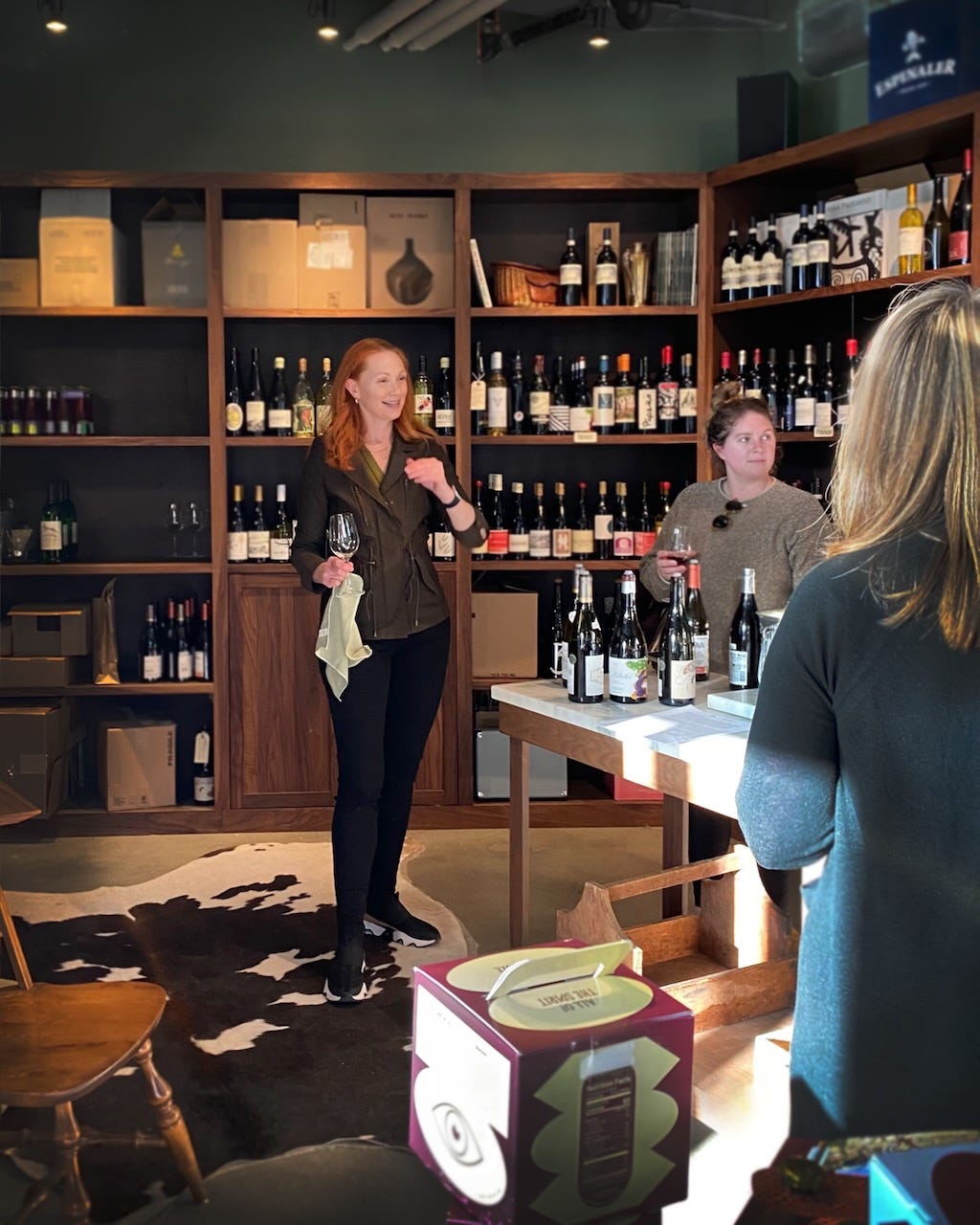
In The New York Times, Eric Asimov looks at the K-shaped trend in wine retail, where larger stores with big-ticket bottles are doing well even as corner shops shutter. The latter just happened to a tiny local wine shop (pictured here) where I led tastings and where, last summer, Asimov stopped in for a visit. “[T]he bigger, wealthier businesses are getting richer, the smaller, less well financed are getting poorer and those in the middle are not quite sure where they are heading other than that they are hustling more than ever.” Asimov offers no solutions, but notes that the small shops that are surviving deliver more than liquid in bottles. They understand their neighborhood, their community, and they engage.
Real Feelings
The wine commentariat remains in a lather over an apparently machine-generated winner in a recent wine writing competition. (See last week’s edition of The Salt and more coverage here and here. You can also read the winning piece yourself.) Much commentary has focused on the facts of the case, but Alice Feiring offered a more piercing cri de coeur. “[L]ast Friday morning when I woke to a tri-continental WhatsApp conversation among friends lamenting that the short-form winner of the 67 Pall Mall Wine Communicator Awards appeared to be A.I. slop, I had a violent reaction. Yes, as my mother would say, knife to the heart.” Feiring is one of the world’s most revered wine writers, and this episode caused real pain. Still, she says, “while the award hurt my heart because my own people are hastening the end of the written word, this debate, I hope, will do some good.” We wine writers are only human, after all.
See you week after next.
Images ©2026 Meg Maker