


A week ago, the Community team lead at Substack, John Malatras, emailed a group of two dozen Substack wine writers with a proposition. He was planning a new Wine & Spirits category, and would we like to join the list?
Would we ever.
Substack’s category feature lets contributors specify their publication’s main thrust. This helps readers discover writers in that category’s Top Bestsellers and Rising leaderboards.
Most of us had set our main category to Food & Drink, a section dominated by people writing about cooking, recipes, and hospitality. That made it hard for wine-curious readers to find creators in the wine space, and nearly impossible for rising stars in wine to get noticed within the larger community. Malatras wrote that he is himself a wine and cocktail enthusiast and was frustrated by this lack of discoverability.
Our replies were swift and enthusiastic, and on Monday the new Wine & Spirits category went live. The leaderboards lit up with wine writing friends and colleagues, and the chatter has been uniformly positive. The upshot is you can now check out the current lists of Top Bestsellers and Rising in Wine & Spirits to find new wine creators to follow.
One caveat: The lists only show writers who offer a Paid tier, because Substack grants extra clout to those who can attract a paying subscriber base. So the lists lack wine experts who are on the platform but don’t use it commercially.
Still, monitoring these two new lists is a good way to find both established and rising wine writing talent.
Why this, why now?
Curious about Substack’s thought process, I reached back to John Malatras to understand what had inspired the change.
What prompted you add the new Wine & Spirits category?
I’ve been following WineStack as a wine hobbyist for a while and have felt it come into its own in 2026. Given that, I was disappointed to come across Paul Gregutt’s note mentioning his struggles getting his publication treated as a legitimate press outlet by official wine boards. This, along with the growing subscriber base of WineStack (and all beverage creators), felt like a good catalyst to break out the category from Food & Drink.
How does this new category benefit the Substack community, especially readers and lurkers?
The dedicated Wine & Spirits category offers a new surface for curious readers to find creators they might be interested in. The umbrella Food & Drink category has a huge market on Substack which could often make it harder to discover creators within the niche of Wine & Spirits. Now that the category is split out, interested readers are more likely to find it in onboarding, the home feed, and via the leaderboard tag on Wine & Spirits creator profiles.
How will this new category benefit beverage writers?
The dedicated category will make it easier for interested readers to discover Wine & Spirits content. Hopefully, having a linkable home page for the category will also be helpful within the industry.
Anything else you’d like to add?
Thank you for sharing your work on Substack, and thank you for sharing your thoughts and feedback with our team. I (and many of us at Substack—we have an internal wine club!) really believe in wine and spirits as a community gatherer, a historical time capsule, and a unique story. The industry has its ups and downs, but I think the work you’re all doing is what will always bring it back up. We’re honored that this culture-making is happening on Substack. Cheers!
Cheers back, John. (And I want to know more about Substack’s wine club.)
Here’s what I’m reading this week
The World Atlas of Wine, revised
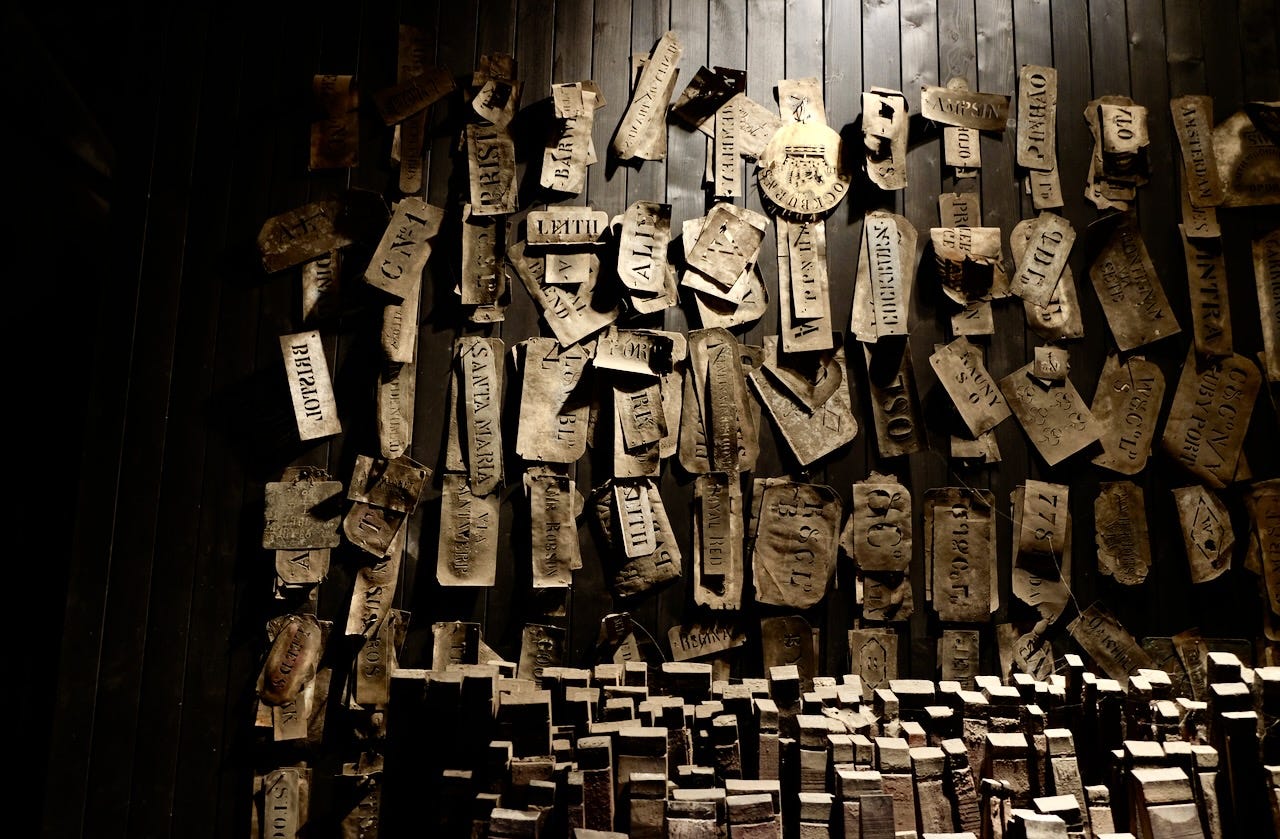
I just received an advance copy of the 9th edition of The World Atlas of Wine, an indispensable professional reference first published in 1971. Authors Hugh Johnson, Jancis Robinson, and Julia Harding have throughly revised both text and cartography, adding 18 new maps plus fresh material about climate change, sustainability, wine labeling, and emerging regions. My print copy of the 7th edition sits on my bookshelf, but I always carry the eBook format on my mobile devices while traveling in wine country. More than once a fellow journalist has leaned over my shoulder with an astonished What are you looking at—and how can I get it? I’d skipped the 8th edition, but this one looks worth the wait. Both formats ship October 6th; the book retails for $75 but you can pre-order from Bookshop.org for $70. I was thrilled to have contributed a photo to this new edition, the image that won second place in the 2025 World Food Photography Awards. You can find it on p. 207, and above.
Margaritifesto
In Crown Creative’s Hospitality Everywhere, sommelier and writer Bodhi Landa reminds us that authentic cocktails follow a recipe for pleasure; tinker at your peril. His new manifesto takes aim at the so-called skinny margarita, a newish fad that strips the sugar from the drink to make it seem more, I don’t know—virtuous? Does anyone truly drink a cocktail to improve their physical wellbeing? No. And anyway, that sweetness is not merely decorative, it’s required to balance the other two elements, spirit and citrus. A margarita made without sugar “is not a delicious cocktail,” Landa writes. “It is bitter acid and alcohol in a staring contest, with nothing around to break the tension.” He’s amenable to bending a drink toward the customer’s predilections, and offers a recipe using a touch of agave syrup and a tad less Cointreau to scratch that skinny itch. “The best bars are not necessarily the ones that give guests precisely what they ask for,” he says. “They are the ones that understand what the guest is actually trying to achieve, and can get them there without sacrificing the integrity of the thing they came to experience in the first place.”
Peak Hospitality
On Monday, a sudden hailstorm forced 180 cyclists in the Vuelta a España off the road and into the lobby of IGESA Village Club, a sleepy one-star hotel high in the French Pyrenees. The hotel staff sprang into action, handing out towels, passing around free hot drinks and refreshments, and offering hotel rooms for showering and the gym for spinning-down. Storms here in the peaks aren’t uncommon, but this one was fierce. “A hotel is also a place of refuge,” said manager Guillaume Villeneuve, who ordered his team to open the bar as the cyclists poured in and colonized every inch of the facility. After the weather cleared, riders, organizers, and Yelp reviewers expressed gratitude for the stellar service. Villeneuve was gracious. “What we experienced yesterday was simply incredible; we are moved and honored to have been able to be part of the race, even if only for a short time,” he reflected. “But we must remain humble and keep a cool head. We experienced an exceptional event, certainly, but we must always put things in context. They are the real heroes. We were simply doing our job.”
Carbon Sink
In 2020, Napa’s Glass Fire incinerated the forest surrounding Smith-Madrone’s 38-acre vineyard in the Spring Mountain District. Facing years of cleanup, the winery recruited researchers and an eco-consultancy to embark on an innovative Hügelkultur project to bury, rather than burn, the waste material. The crews dug deep trenches in the forest, then added logs, branches, and other debris, finishing with a layer of straw and soil. Over time, the material will decompose, sequestering the carbon and providing runoff capture on the steep site. “Our challenge was to get rid of the fuel load,” said winery founder Stu Smith, adding that the project “is a great example of how complex farming in the mountains in Napa Valley is,” given the need for wildfire mitigation, wildlife management, forest stewardship, site drainage, and more. Preliminary results have been encouraging. Read more and find images in this research report (PDF).
A Case for a Bottle
“It’s an American thing to be bottle-averse,” declares Emilie Abel. “We are a by-the-glass culture: open-to-better, efficient, hedging, optimized for individual preference and a clean exit.” Perhaps this is mainly true of the young and carefree, but she makes a strong case that splitting a bottle of wine two, three, or four ways is both cheaper and more convivial than à chacun son goût. “So pick one!” she implores. “Be the decider! Self-appoint. Commit without consensus, workshop, or back-up plan!” Then sit back, relax, and watch what happens.
See you next week.
Images ©2026 Meg Maker
The Substack wine club mostly consists of discussing, buying, and sharing deals from Last Bottle (https://lastbottlewines.com). We've been hooked by their "marathon" weeks
It's great to have a list of names all in one place! I just found a couple of new lists to subscribe to. And to all the paid subs out there, keep up the great work, but also, keep providing great work...