


Noirien is both an ancient synonym for Pinot noir and the name given to a large ampelographic group of grapevines from northeastern France. Modern ampelographic groups are useful in illuminating not just genetic but also cultural and practical relationships between grapes.
Noirien, pronounced as in French, nwahr-ee-EHn, is an old French word for Pinot noir; noir means “black” in French, from Latin niger, “black” or “dark.” (The origins of the name Pinot are contested. Many believe it derives from the French pin, or “pine,” because it makes small, tight clusters that resemble a pine cone. It’s also possibly derived from Pignols, a village in the Auvergne where Pinot has been cultivated since at least the Middle Ages.)
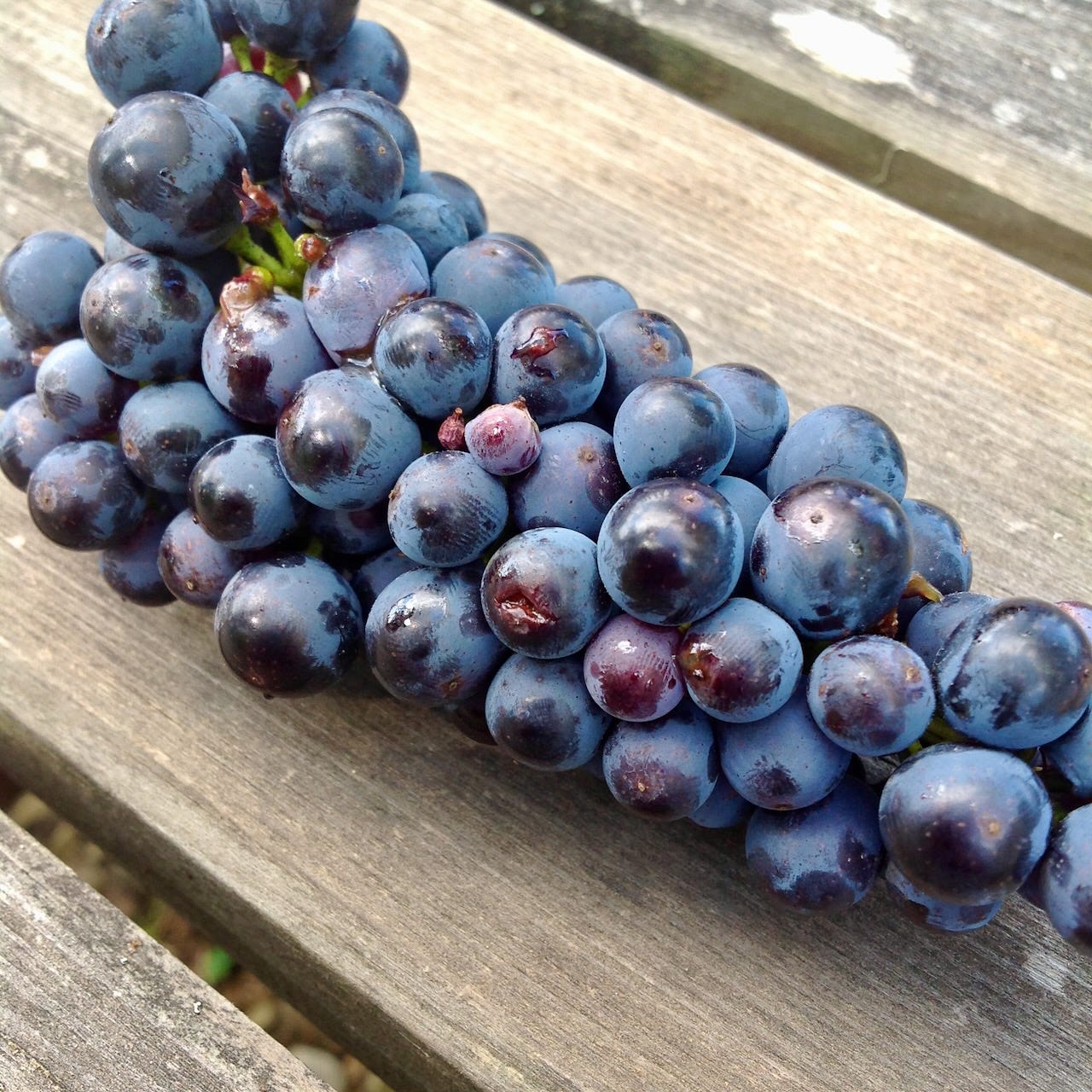
The Noirien group includes Pinot noir and its color mutants (Pinot gris, Pinot blanc, and Pinot Meunier), Chardonnay, Gamay noir, Auxerrois, Melon, Troyen, and a handful of others that are no longer in wide production. Noirien’s zone extends from Champagne in the north through the Côte d’Or to Beaujolais in the south. Its western edge starts in the central Loire and runs east to Alsace and the Jura.
The vines in the Noirien group share both morphological and genetic traits and are well adapted to the zone’s climatic and geological conditions. Groups like these are called eco-geotypes or sorto-types by botanists and ampelographers. Today, according to Wine Grapes, the definitive guide to the world’s vine varieties, there are 16 eco-geotypes in France alone.
Noirien and the Rise of Eco-Geotypes
Before the 20th century, the practice of grapevine classification, or ampelography, was principally about diagramming a vine’s physical properties, then keying those metrics against known materials to arrive at a determination about grape type and provenance. The process, based as it was on extrinsic factors, often led to classification errors.
