


Gouais blanc is an ancient and historically important grape, but its significance lies in its genetics, not its wines. Grape scientists have determined that Gouais blanc (goo-WAY blanh) gave rise to at least 81 other varieties, leading to its nickname, the Casanova of Grapes.
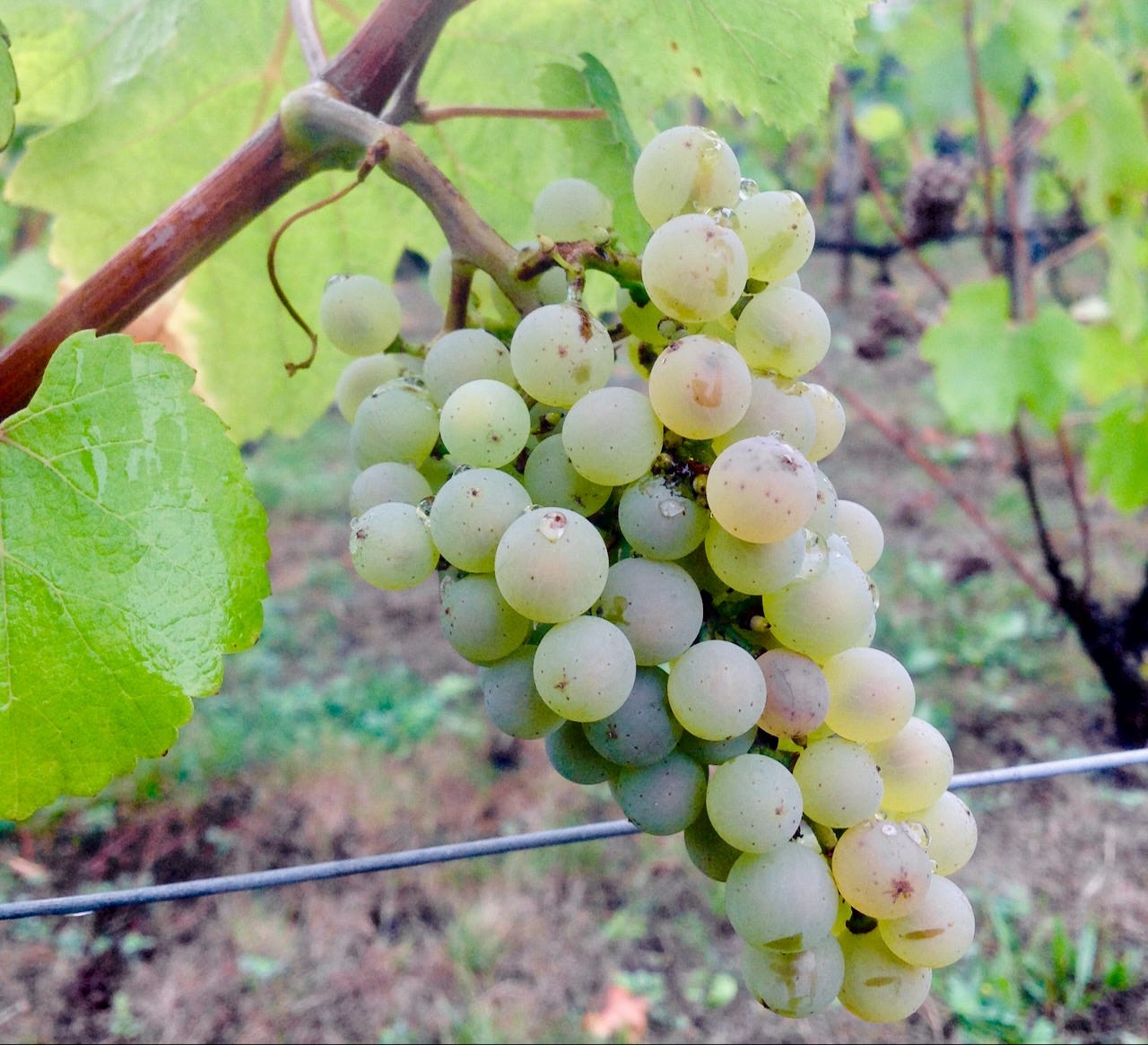
Geneticists believe Gouais originated in the area that’s now northeastern France and southwestern Germany. It proliferated in France in the Middle Ages, planted principally by commoners who used it to make their own modest table wine. The vine was high-yielding, producing abundant pale green clusters. The wine was tart and featureless, but at least it was plentiful.
The monks and landed gentry were meanwhile cultivating Pinot noir, which they viewed as noble. As early as 1598 they began to encourage the removal of Gouais vines, an effort perhaps motivated more by classism than pragmatism. By the twentieth century, the grape had all but disappeared from cultivation.
Gouais blanc’s offspring
Grape vines are promiscuous, and given their proximity, Gouais and Pinot noir soon met across the fence. That union alone yielded 16 important new varieties, including white-fruited Chardonnay, Auxerrois, Aligoté, and Melon de Bourgogne, and black-fruited Gamay and Beaunoir.
Gouais also crossed with many other grapes, including Chenin blanc, Tressot, and Savagnin, to create myriad other new vines, like Colombard, Blaufränkisch, Muscadelle, and Jacquère. It has also contributed to the complex pedigree of modern interspecific hybrids like Regent, Prior, and Chardonel.
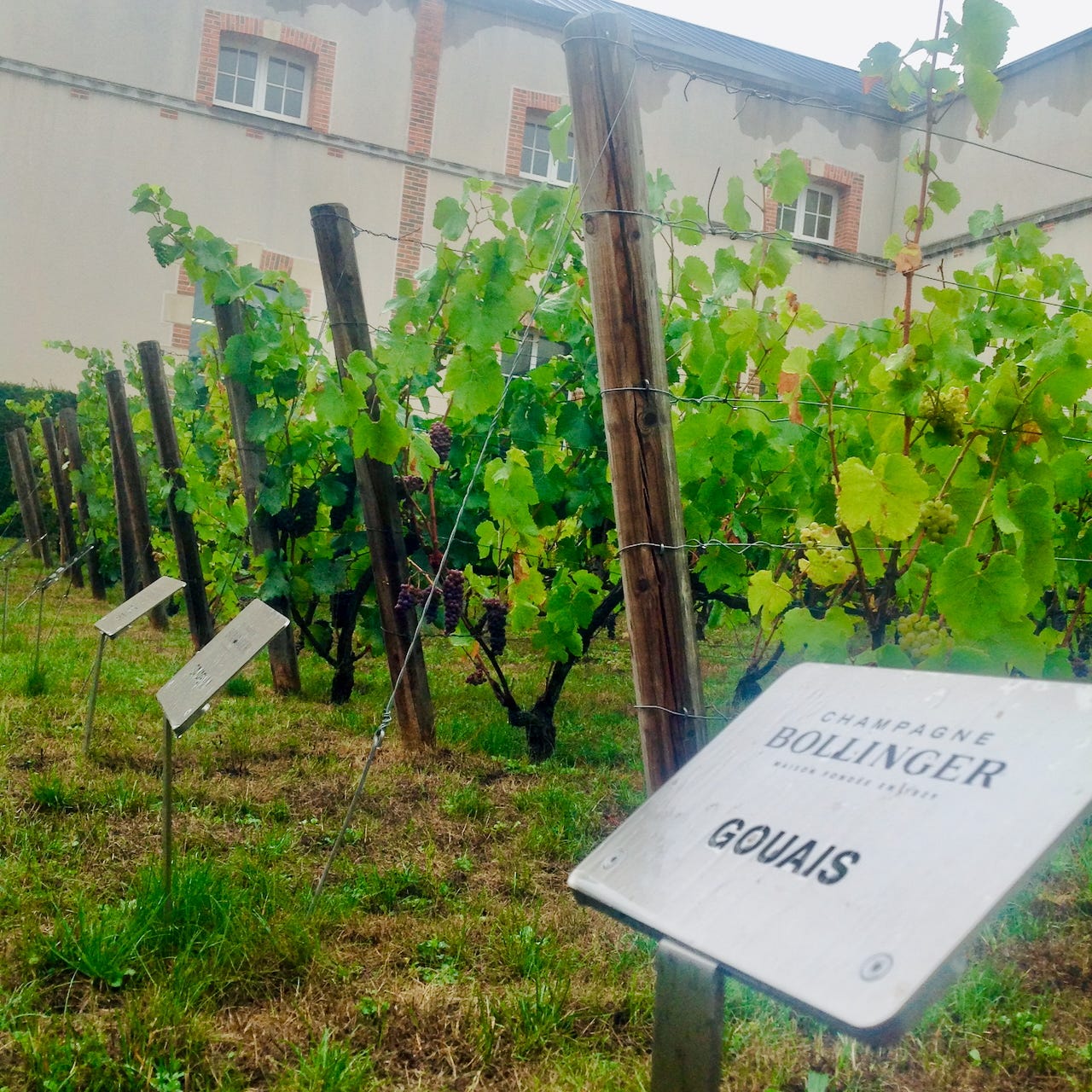
Gouais in the modern era
Today Gouais is grown in only a handful of sites, principally in Switzerland’s Haut-Valais (where it’s called Gwäss), having lingered there since the Middle Ages. It’s made its way into lone vineyards in Oregon and Australia. In France it survives in the heritage vine collection, dubbed “the Louvre of grapevines,” of the Institut National de la Recherche Agronomique, or INRA, and in a tiny private vineyard in the Haute-Savoie.
When held to low yields, Gouais can make a crisp white wine with flavors of green apple and lemon. Its natural acidity makes it a good candidate for sparkling wine.
Exploring the legacy of Gouais blanc
Given the grape’s extreme rarity, you’re unlikely to see it on shelves or wine lists, and even your favorite sommelier has probably never tasted one. But you can chase its legacy in the varietal wines of Gouais’s famous progeny: Gamay from Beaujolais, Aligoté from Burgundy, Melon de Bourgogne from Muscadet, and Chardonnay from just about anywhere.
Images ©2026 Meg Maker