


Welcome back to The Salt, my weekly curated collection of essays, articles, and marginalia at the intersection of wine and food.
Design for success
Brett Vankoski salutes leading women in wine while observing that the industry isn’t reaching those on the receiving end—the female consumers who buy the stuff. It’s essentially a problem from design thinking; wine industry product management has historically been led by men who have focused on the proclivities of male consumers. That might have worked historically, but it’s not working under newer demographic and psychographic realities. “The women who never became fine wine customers were not born indifferent to it. They were never given a compelling reason to care,” he writes. “The premium tier isn’t female-proof. It’s simply that until recently it’s been mostly female-neglected.” Vankoski concludes by admitting that as a male industry veteran he was nervous about sharing these insights, but “I would be doing both myself and this industry a disservice by staying quiet.”
Getting spicy
Spice importer Burlap & Barrel has sued the Trump Administration over new sweeping global tariffs. The company direct-imports from spice farmers in over twenty countries, and since its founding, ten years ago, $2 million has gone to these small and family businesses. The products are highly regional with few or no substitutions: onion from Vietnam, dried tomato from Turkey, cacao from Tanzania, herbes de Provence from, you know, Provence. The suit has been filed by Liberty Justice Center, which writes, “For small businesses like Burlap & Barrel… the stakes are immediate and practical: unlawful tariffs can disrupt supply chains, force price increases for American consumers, and threaten jobs and investment.” In their own statement, Burlap & Barrel noted, “When these tariffs were first announced last April, we made two promises: we would not raise our prices, and we would not ask our partner farmers to absorb the costs. A year later, we’re proud to say we’ve kept those promises. This lawsuit is about protecting our ability to continue doing that.” Please consider supporting them by spreading news about the suit and by purchasing their excellent wares.

Growth of a Gourmet
As a young man, David Tamarkin, former editor of Epicurious, now with King Arthur Flour, fell in love with Gourmet magazine with an ardor bordering on obsession. One story in particular fingered his psyche so stubbornly it set him on the path to become a food writer. When at last he landed his first byline in Gourmet, his boyfriend had the print piece framed (he’s always been too embarrassed to hang it). In 2009, when the magazine shuttered, “I felt I’d lost not just an outlet but the source of all my ambitions,” he writes, in his new essay, Gourmet is a Sickness. The magazine has recently been relaunched with an altogether different editorial mindset, and Tamarkin contemplates what the original might have become had it slid into a digital publishing age rife with listicles and slideshows and SEO gimmickry. “It’s a luxury that we never had to see Gourmet navigate the last 17 years of the internet. And yet we can’t help wondering what it would look like now if it were still alive.”
To taste is human
In the New York Times, culture journalist Joseph Bernstein asks, Is Taste the One Thing AI Can’t Replicate? The piece is less about the software mechanics of programming taste into an AI machine and more about the social mechanics of cultivating taste in the programmers themselves. Not, Can taste be taught to a bot? but, Can taste be taught to a human? I argue it cannot. Taste is not a skill, it’s a tactic. Its input is lived experience and its output is a rainbow of personal predilections: thirst and desire, aversion and displeasure. Taste is contingent and conditional, aesthetically elastic, a continuous dialogue between our ideas about excellence and our need for something better (which makes it inherently optimistic). Taste is a muscle that strengthens as we mature, which makes it hard to teach but easy to learn. For a human. For now.
“You are being given a free recipe”
In The Kitchen Confessional, Kristen Hartke reminds us that food writing is never only about food: it’s about memory, family, trauma, politics, sadness, joy, and more. Even recipes—or maybe especially recipes—are about more than food now that so many are created by self-publishers. “When food blogging began its dizzying rise in the 1990s, it became populated with a lot of people who loved food and cooking but, to be honest, didn’t have the first clue how to write and desperately needed editors,” she says. “This led to a genre of writing that I like to call The Ramble, and it’s had an impact on all food writers, no matter how accomplished they are.” So next time you google a recipe and run into a wall of text at the top, be generous. “There is always some jerk in the comments… who has to complain about having to read about my food memory before they got to my recipe. Seriously? Have these people never heard of scrolling?”
Marginalia: all nature in motion
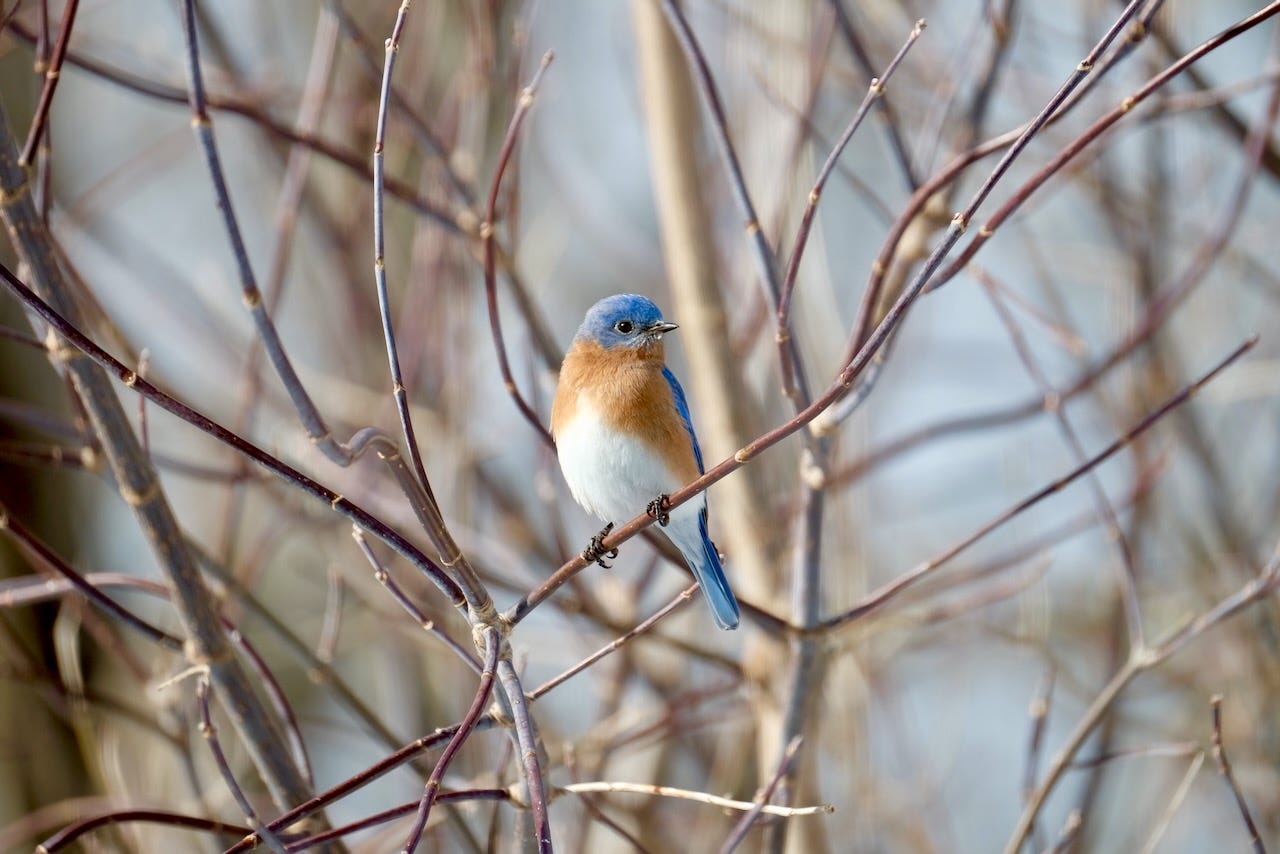
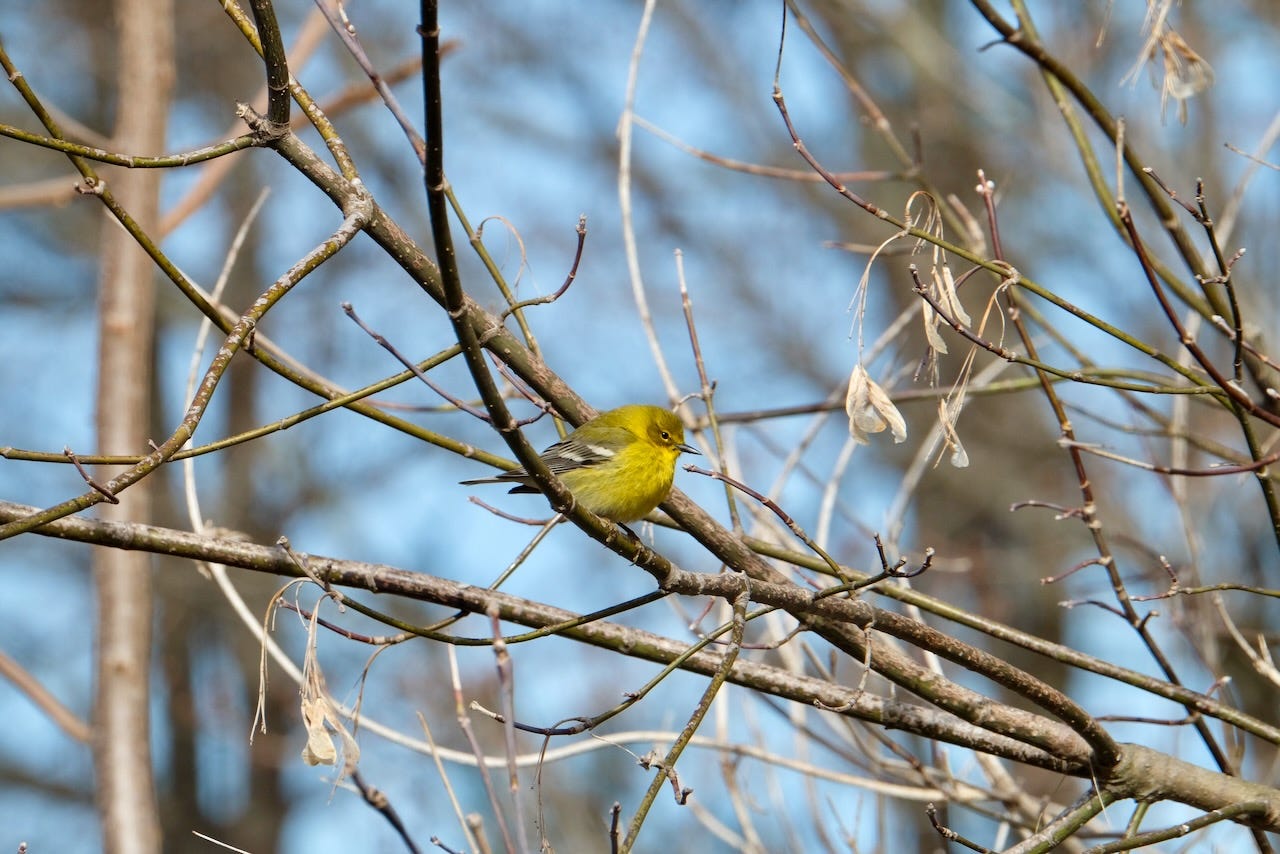
In the Northern Hemisphere, the northward bird migration has begun. Bird movements can be tracked—this feels nearly miraculous—by the same radar system used to monitor the weather. BirdCast, a project of Cornell Lab and other researchers, publishes a live migration map during both spring and fall movements. The main heatmap shows nightly traffic across the lower forty-eight states, from sundown to sunup, when birds are on the wing. The Mississippi and Eastern Flyways are especially hot right now. They also offer a dashboard that you can configure for your specific location. On March 29th, 367,800 birds flew over Grafton County, where I live. The current total count this season—again, for my county alone—is nearing 1 million, and we’re just getting started. Because they fly at night, birds can get disoriented by bright lights. We can support them by keeping our properties dark during these critical periods—as we say, Lights out for the birds!
See you next week.
Images ©2026 Meg Maker
Love the bird photos!