


Welcome back to The Salt, my weekly curated collection of essays, articles, and marginalia at the intersection of wine and food. These are the pieces that caught my eye, changed my mind, or invited me to sit back, relax, and enjoy the read.
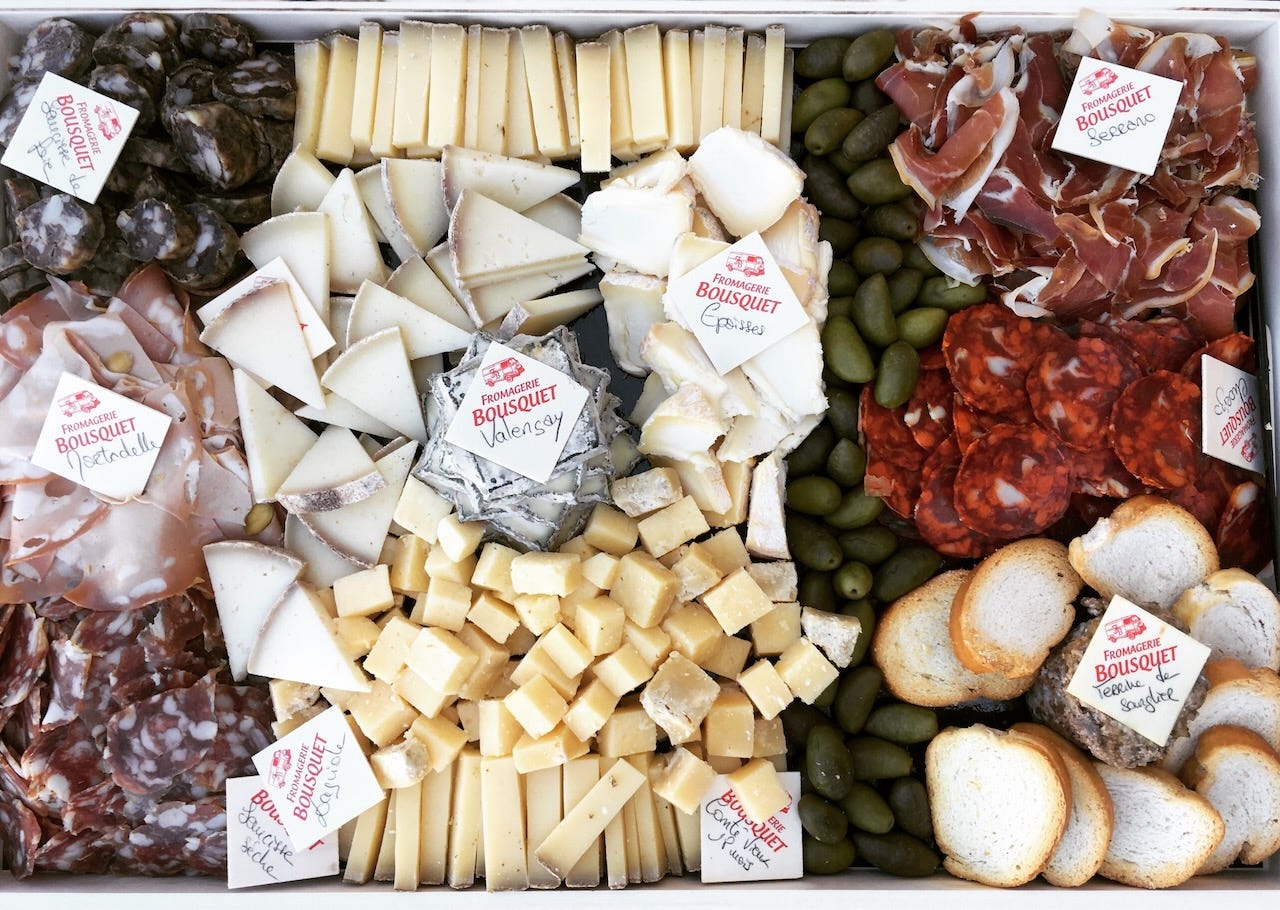
Tastefully yours
Taste is a slippery fish, one I’ve never quite landed. I have formal education in art history and literary criticism and have spent the last two decades as a critic of material culture, but the nature of taste has long eluded me. Perhaps that’s because academia views taste as vulgar and populist so leans instead into so-called eternal truths. (Which, underneath, are just cultural preferences; circular.) Recently I’ve been reaching out to writers I admire to get their take on taste: what it is, how it forms, whether it can be taught. Bodhi Landa emailed me a brilliant gloss, then took to his own Substack to meditate on how taste gets enacted within spheres of cultural production, including but not limited to wine, and whether AI machines could ever rise to the task. In Landa’s definition, taste is not merely selection, it is “articulation,” and the job of a sommelier (or DJ or designer or name-your-taste-mediator) is not simply to locate value but to translate it meaningfully to others. That talent is hard-earned, messy, frictive, but that’s the point: “This is the part of taste that resists automation—not the identification of the thing, but the negotiation around it. The small, human adjustments that turn a preference into a moment, and a moment into something that feels, however briefly, like meaning.”
Randall ruminates
I worked for Randall Grahm at Bonny Doon Vineyard for a few years, nominally directing the wine club and e-commerce but mostly executing Other Duties As Assigned, including staff training, staff management, media relations, marketing, product design, trade events, and editing reams of copy written by the man himself. This week he’s on Wine Searcher with characteristically rangy reflections on the state of play of the U.S. wine industry. It’s transparently obvious to his former editor (me) that the publication refused to footnote his text, à la David Foster Wallace, instead executing them as long parentheticals in the running copy. No matter. Among his best observations is his theory that visual culture has muted the impact of wine communications and that text remains the more imaginatively evocative medium. “Language has the agility to at least hint at the give and take that occurs in the tasting experience, attempting to convey something that is intensely subjective to an intelligence beyond one’s own,” he writes. “Watching a video, an Instagram moment of someone tasting something, somewhere (that you presently are not!) creates a vast chasm between two subjectivities and thus leads inevitably to alienation.” Lots more at the link.
Who snebbed my cheese?
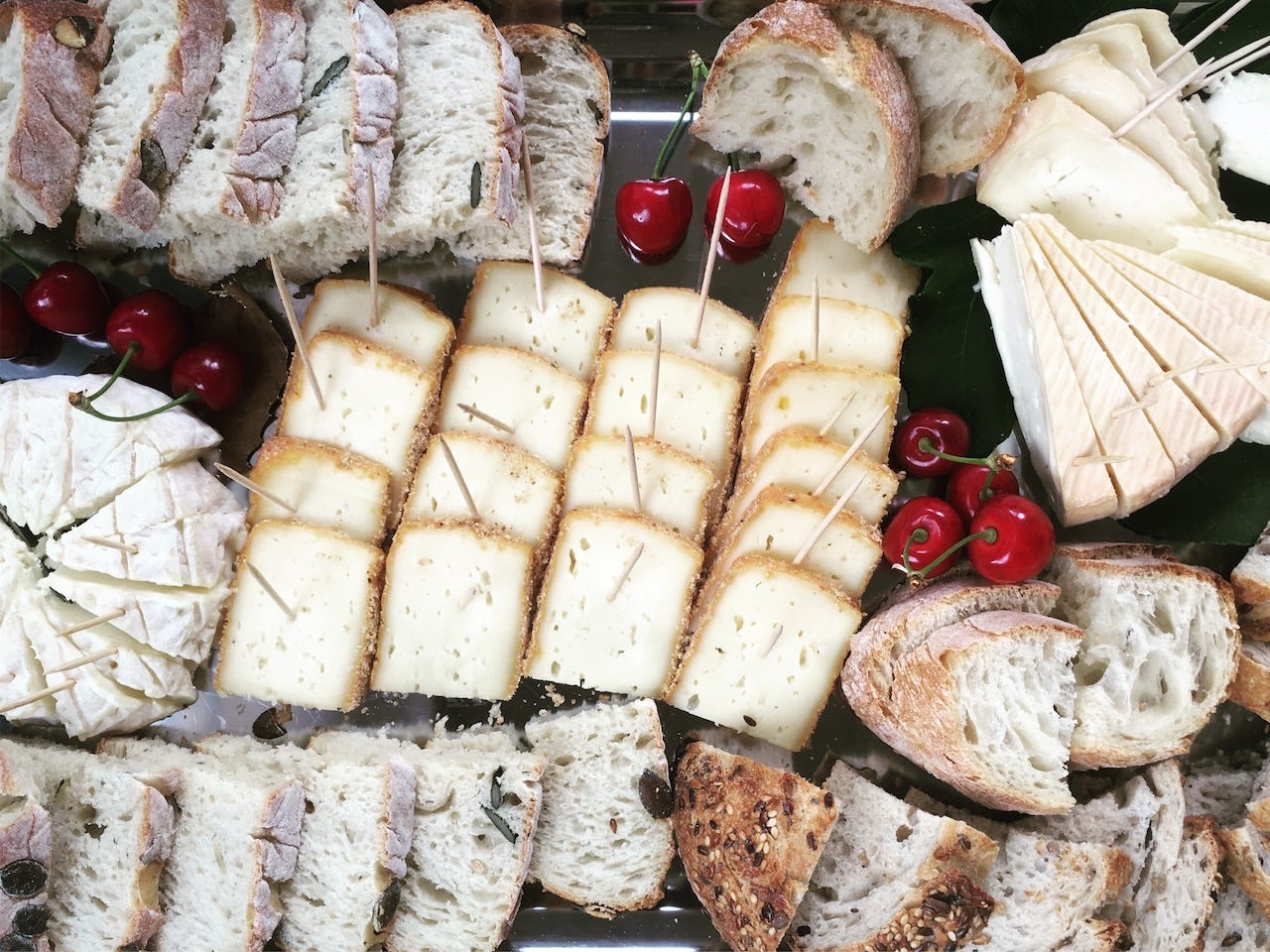
British cheese monger and author Ned Palmer cautions us to avoid becoming a “snebber”—that person who nips the tasty nose from a wedge of cheese, leaving others to fumble with awkward offcuts. On A Cheesemonger's Odyssey, he shares the correct way to cut various types of cheese so that each piece winds up with bit of paste and a bit of rind and no one’s left holding the hard moldy bits. “[C]utting cheese properly ensures that everyone’s piece is of equal and optimal quality, and we want to be nice and fair, don’t we.” Yes, we do.
Snack/bar
Speaking of cheese, Anna Darrow’s answer to her spring doldrums has been to lean into apéro, “the hour-plus during which we force our guests to talk with us over martinis, wine, and snacks before dinner.” She revisits a few favorite spreads to demonstrate styles and modes, which range from spartan (Brillat-Savarin, baguette) to rococo (tea sandwiches, shrimp cocktail, baked brie, dressy bites), paired sometimes with martinis, sometimes with wine, often with negronis, made once, but never again, with mezcal. The approach is agreeably low-stress, limitlessly diverse, convivial, “and no one is worried about dinner, since we’re all going out together, or maybe going our separate ways. The night is a journey.” Chez Maker, the journey often starts and ends with snacks. Same reasons. Same pleasure.
Organized labor
“Spring cleaning, for most people, means squeegeeing windows, packing up the winter coats, and, just maybe, washing that rug you bought because it’s washable but have literally never washed. For me, it starts in the pantry,” writes chef and recipe developer Sohla El-Waylly. In Your Pantry Is a Cry for Help, she shares advice and step-by-step instructions for a spring kitchen re-set, from cleaning and sorting to storage and organizing the spice rack. The goal is not only a tidy pantry but one from which you want to cook, a place “where great meals are hiding.”
Forbes adds voice to chorus
The last 18 months have seen an inflorescence of food media startups, including Best Food Blog, the Gourmet reboot, Caper Media, and, just last week, Ravenous. All of these projects evince a bootstrappy, leftist, alt-media vibe, and more power to them. This week business juggernaut Forbes waded into the wine media space with the announcement of Forbes Wine, an editorial-cum-commerce play with a more expressly capitalistic sensibility. Clive Pursehouse, recently of Decanter, will serve as executive editor, and sommelier Stevie Stacionis will curate the project’s wine club. The effort aims to reach a broad spectrum of the wine-curious, from collectors to tire-kickers, and the team plans to spin content across multiple channels, “meeting our audience on the platforms that they’re already consuming content,” said Emily Jackson, senior vice president of consumer growth. Editors plan to recruit a mix of experienced stringers and new voices, and to introduce formal reviews and 100-point scoring. What’s old is new again.
See you next week.
Cheese boards I have known ©2026 Meg Maker