


The Salt is a new curated collection of essays, articles, and marginalia at the intersection of wine and food. These are pieces that caught my attention, challenged my thinking, changed my mind, or simply invited me to sit back, relax, and enjoy the read.
My goal is to send The Salt weekly, and I’m keeping it free for now. Because it’s a Section, you can subscribe to it separately from the rest of my content (by default I opted everyone in). I’m mostly planning to feel my way forward and see what connects, so, as always, I welcome your feedback. Happy reading.
Burgundy, top of mind
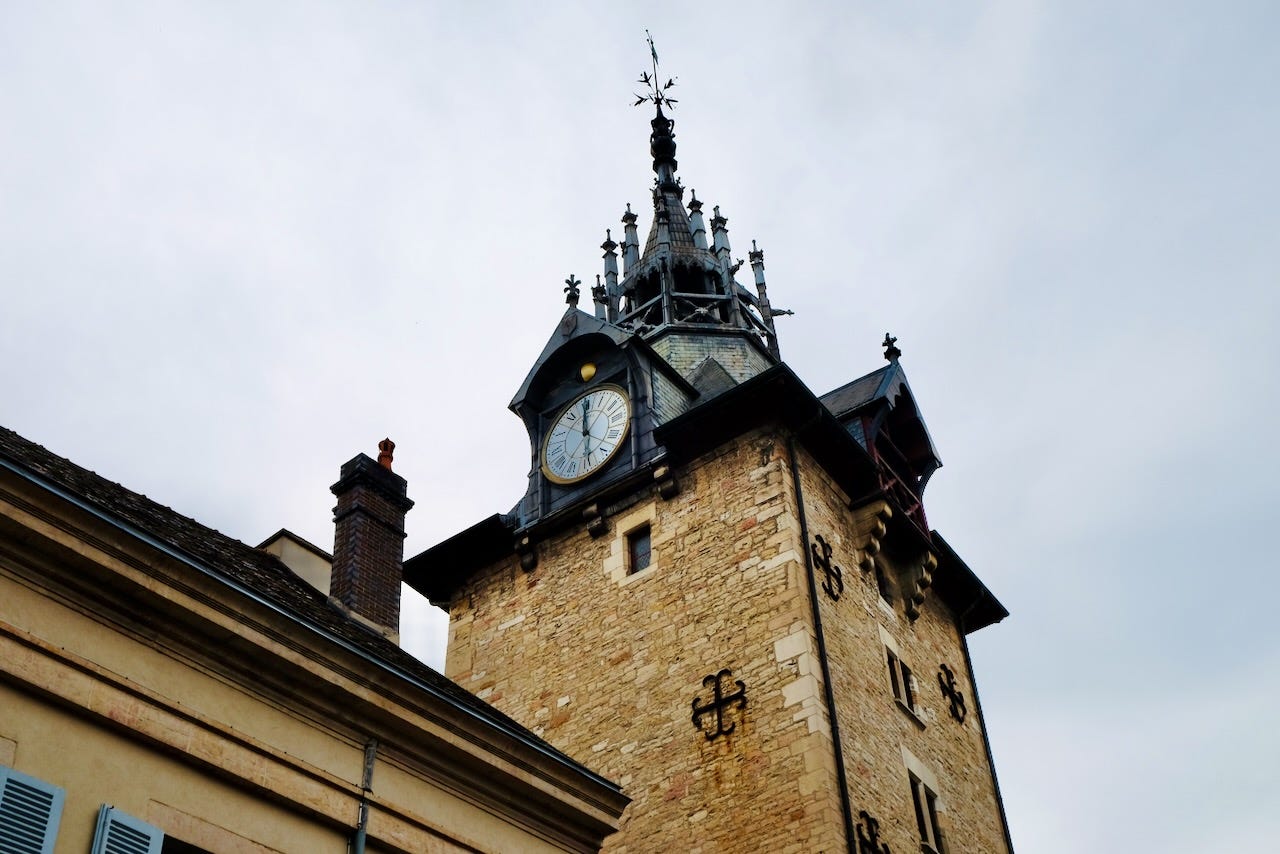
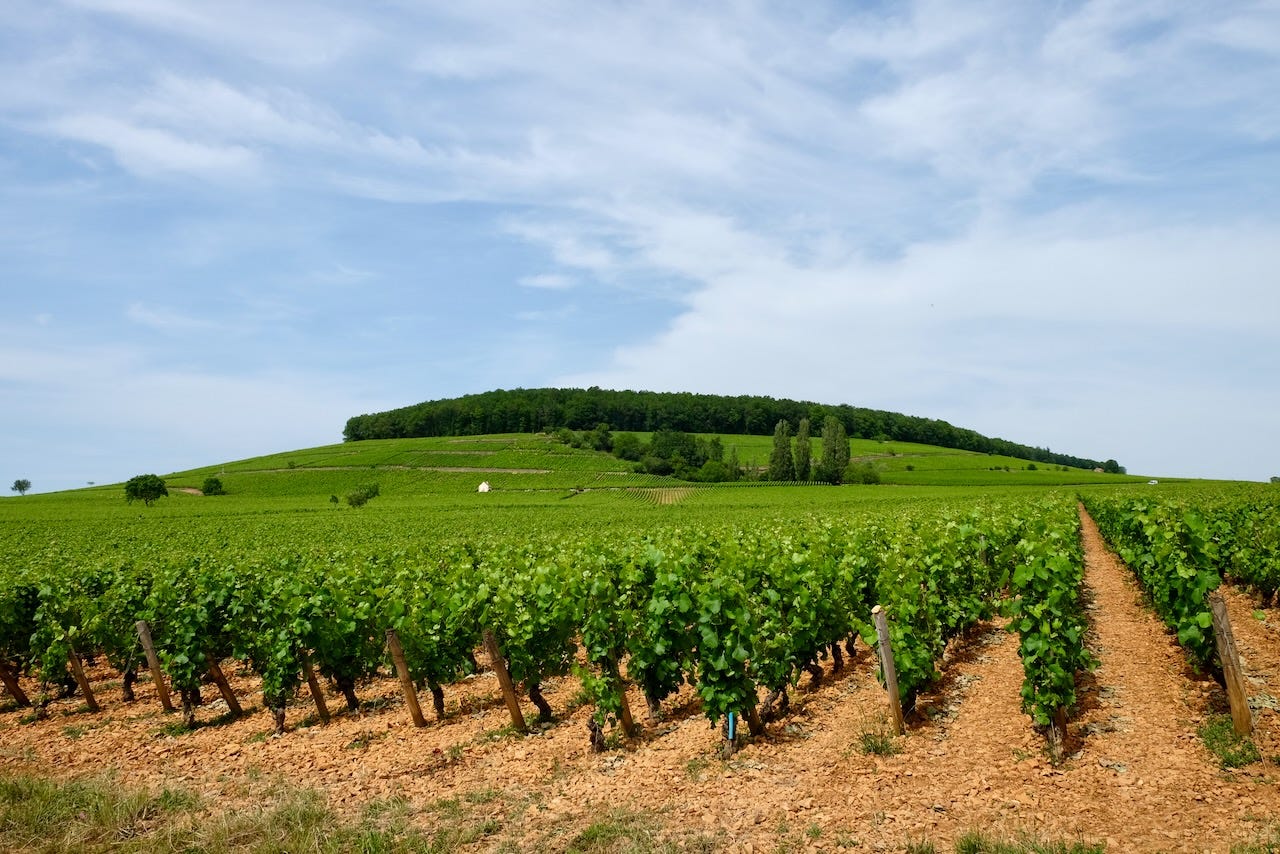
Brett Vankoski takes us on an enchanting twenty-four-hour side trip, post Wine Paris, to visit his friend Damien Gachot, fifth-generation winemaker of Domaine Gachot-Monot, in the Côte de Nuits. “In Paris I had encountered dozens of friends and colleagues from across the world. But not Damien. Burgundians generally don’t bother with the big wine shows. They never seem to have anything to sell.” Vankoski’s evocative writing sweeps from the Romans to the present day and offers a glimpse into the daily life of one family coaxing elixirs from Burgundy’s famous dirt.
Man buys bottle of wine, opens to share with guests. It’s only news when you learn the bottle in question was 1899 Romanée-Conti. Soo Hoo Khoon Peng, a businessman from Singapore, bought it last year to celebrate his 50th birthday—but not as a collector’s item: to taste. “Too many great bottles are never opened,” Soo Hoo said, adding that to pour it for others “isn’t about status, it’s about learning and human connection.” Guests at the tasting included Aubert de Villaine, co-director of Domaine de la Romanée-Conti, and William Kelley, editor-in-chief of The Wine Advocate and himself a producer of Burgundy wine. I’m pretty sure it wasn’t the only great wine on the table.
A natural progression
Bodhi Landa says natural wine is growing up—and there is palpable relief as the category moves out of its adolescence. “Natural wine made the wine world less stiff,” he writes; an altogether good thing. But, “It also, inevitably, became its own kind of snobbery,” squeezing classical forms out of the discourse. “This is not unique to wine. This is what happens to everything with an identity attached to it.” Landa thinks the term itself, “natural wine,” is past its sell-by date and invites us to consider other terms that welcome both revolutionaries and classicists to the party.
The advice columnists
Come for Sara Keene’s essay about rescuing an American couple in a Paris wine bar, stay for her tips about how to read a wine list. “[T]here are certain things, I’m finding, that are crucial for helping me to navigate wine—its vocabulary, its immensity—with increased ease. Life rafts, if you will.” She provides not too much, not too little, just enough information for someone new to wine who aspires to order with confidence.
As Helena Nicklin entered midlife, wine started to wreck havoc on her sleep, mood, and sense of wellbeing. “[M]any women in their forties who’ve kept up a wine habit feel something change… The question creeps in: Why can’t I handle it like I used to? The answer isn’t about weakness, it’s biology and it has a name: Perimenopause.” Nicklin sought advice from experts and reports here on strategies that seem to work best. Hers is a refreshingly non-hysterical take that does not advocate absolute abstinence but instead seeks a middle ground in which wine can remain comfortably part of one’s life.
Pain and Pasta
The annual Grand Prix de la Baguette de Tradition Française de la Ville de Paris took place in Paris last week. For the competition, bakers from around the city submit two baguettes for judging. The winning baker is handed a prize of €4,000 plus a contract to supply baguettes to the Élysée, the president’s residence, for a year. Sithamparappillai Jegatheepan, of Fournil Didot, in the 14th Arrondissement, was the winning baker on his first try. In her summary, Meg Zimbeck of Paris by Mouth shares behind-the-scenes photos from her time as judge in 2013. Note: They don’t just taste, they swallow.
Winemaker and Italophile Dan Petroski has embarked on a year-long project to diagram dozens of pastas most emblematic of Italian culture. In his introduction to the series, he notes his aim is to understand “how these pastas actually behave on the plate: the time, the place, the texture, the sauce and wine affinity, and more,” adding, “this isn’t about mastery. It’s about paying attention.” His first dispatch considers the Winter filled pastas (agnolotti, cappelletti, ravioli, and tortellini), whetting the appetite for comfort food even while most of North America tilts toward spring. (Bonus charming drawings by Amber Vittoria.)
The form isn’t even that old
In The New Yorker, Hannah Goldfield wonders Why We Can’t Stop Reading—And Writing—Food Diaries. Three decades ago, Ruth Reichl stymied booksellers with Tender at the Bone, a memoir with recipes. Was it an autobiography? A cookbook? Something else? Yes. Today, the genre is fully mature and has spawned myriad alternative narrative forms, short to long, visual, cinematic, and a mix. “If the food diary pushes its practitioners toward solipsism, or toward showing off, its popularity also evinces something encouraging: a curiosity about how other people live, the texture of their days.” Goldfield’s piece is essential reading for people (hello!) who write about food and wine and wonder if, and why, anyone cares.
Marginalia: a favorite condiment
Sun-Dried Tomato Powder is my new superpower. I like the one from Burlap & Barrel, made from tomatoes grown on Turkey’s Aegean coastline. Glutamate in powdered form but make it natural. Sprinkle it on sandwiches (mash it into the mayo), spike fish, dust pasta, dry-rub meat. It’s good on everything, maybe even breakfast cereal.
Two poems (circling back to Burgundy)
Judy O’Kane is a wine writer, educator, academic, lawyer, poet; I’ve probably missed a few. She regularly contributes to The World of Fine Wine, most recently in Two Poems by Judy O’Kane: The Table, and La Route des Grands Crus, which concludes:
You open an app: each parcel of land
appears on-screen in pale pink
and purple: the climats and lieux-dits
of the Côte de Nuits subdivide
and kaleidoscope; the phone waves
like a magic wand, a divining rod.
Images ©2026 Meg Maker
Good idea, Meg!
Thank you for the mention. And what a great idea this round up is!