


Welcome back to The Salt, my weekly curated collection of commentary and marginalia at the intersection of wine, food, and culture. My bookmarks folder was slender this week, so instead of the usual half-dozen articles, I’ve recommended seven wine books from my shelf, mostly memoiristic.
I’d love to hear about some of your favorite wine books. Drop titles in the comments and let’s get reading.
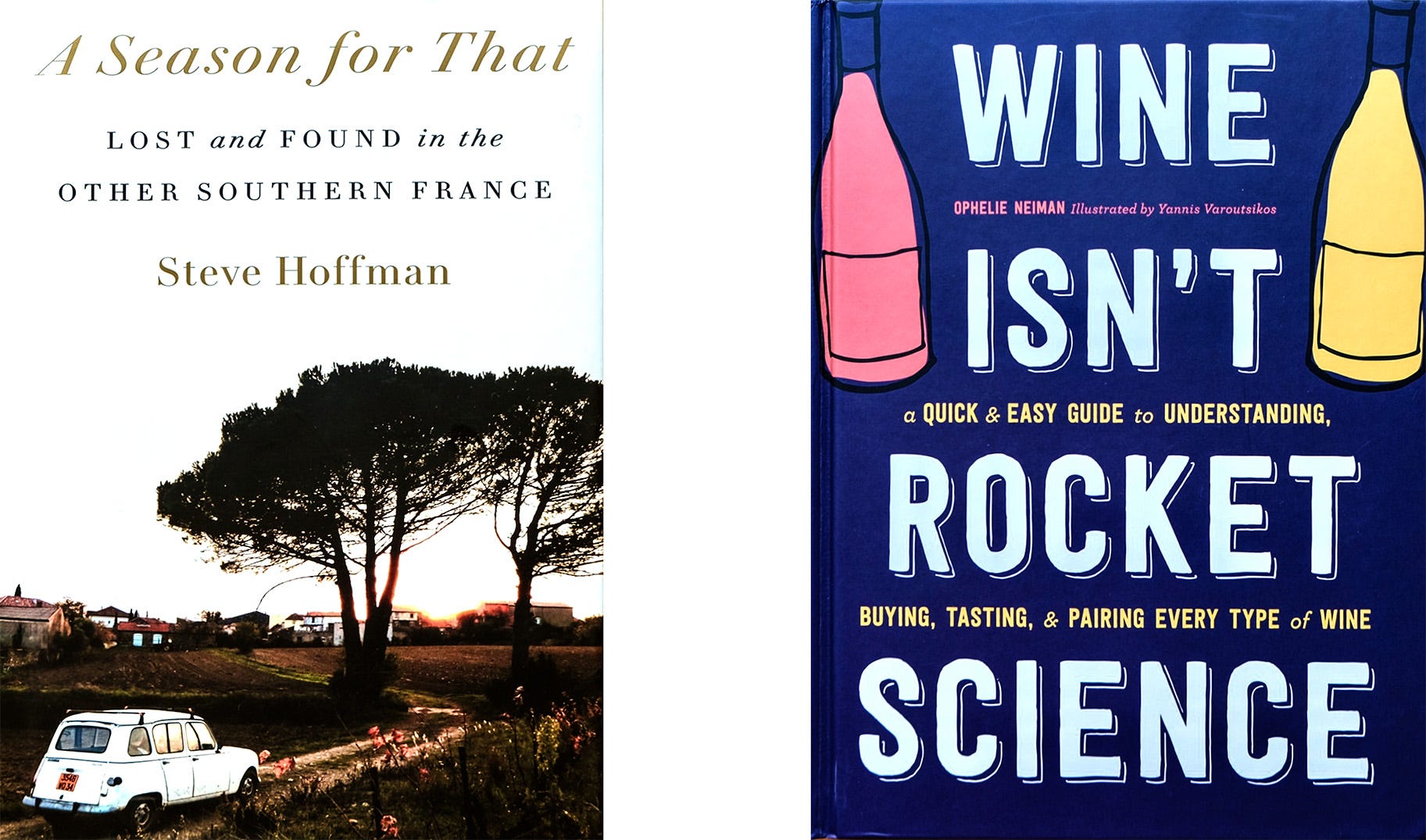
A Season for That: Lost and Found in the Other Southern France
Steve Hoffman | New York: Crown, 2024 | Bookshop.org
When Hoffman and his family decamp for six months from Minnesota to the tiny village of Autignac in the Languedoc, he swiftly discovers the mismatch between his idea and the reality of la vie à la française. Wine to the rescue. Autignac is situated in the Faugères wine growing region, and Hoffman, and eventually the entire family, get swept into the rhythms of viticulture and production. It’s a book about wine, food, family, and the threads that bind community. Hoffman’s prose is deeply affecting, emotive but never sentimental. This memoir was one of my favorite books of 2024, and I’ve lost track of the number of copies I’ve given as gifts.
Wine Isn’t Rocket Science: A Quick and Easy Guide to Understanding, Buying, Tasting, and Pairing Every Type of Wine
Ophélie Neiman | New York: Black Dog & Leventhal, 2017 | reference | Bookshop.org (ebook)
I stumbled upon the first French edition, Le Vin C’est Pas Sorcier, at a winery in the Languedoc and bought it on the spot to tote home in my luggage. Then I bought the English edition, and they now sit adjacent, commes des cousins, on my bookshelf. Neiman is one of France’s most celebrated and popular modern wine commentators, and her book offers a friendly, even charming, introduction to all things wine. Sections consider viticulture, winemaking, tasting, service, and acquisition, with illustrations by Yiannis Varoutsikos, who has produced other books in the Rocket Science series. It’s a great introductory wine text for visual learners.
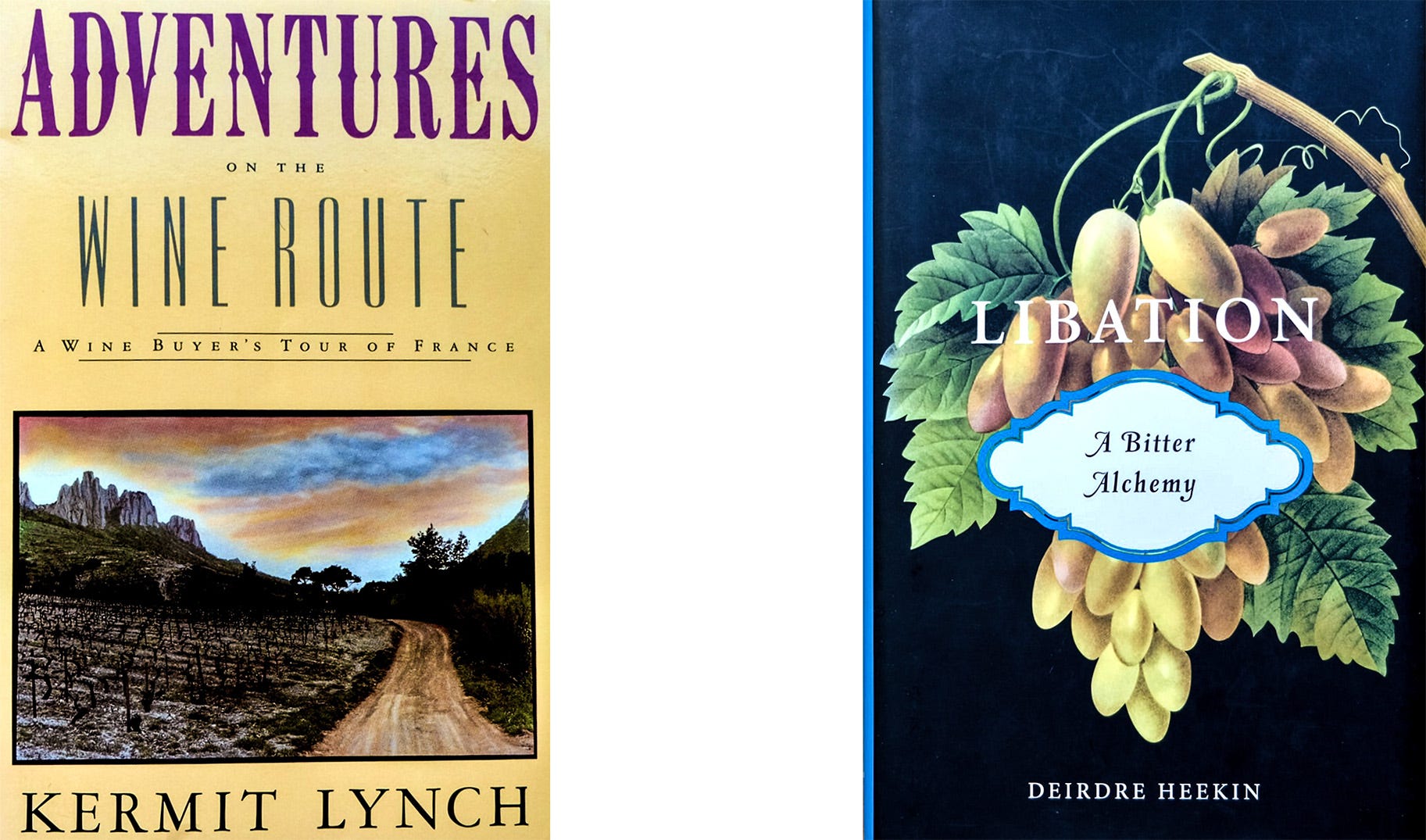
Adventures on the Wine Route: A Wine Buyer’s Tour of France
Kermit Lynch | New York: Farrar, Straus and Giroux, 1988 | memoir | Bookshop.org
Naïve newly-minted American wine buyer Kermit Lynch lands in France in the mid-1970s with no language skills and even less grasp of French vinous culture and custom. But he’s game for the discovery, as are the vignerons who want their wines exported to the booming U.S. market. Lynch’s memoir of the era is a fast-paced, populous, and amusing, inviting us into cellars to grasp the winemakers’ lived reality. He’s a reliable narrator, clear-eyed, peppering his text with his own opinions without apology or remorse. Adventures is an evergreen memoir for readers who enjoy narrative tourism, French culture, and (recent) wine history.
Libation: A Bitter Alchemy
Deirdre Heekin | White River Junction, Vt.: Chelsea Green, 2009 | memoir | Thriftbooks.com
Around 2007, Heekin and her husband, Caleb Barber, planted hybrid grapevines in their cold homestead in Barnard, Vermont. Today their natural wines are internationally famous, but back in 2009, while Heekin was waiting for those vines to bear fruit, she was training her palate and exploring the realms of fragrance, spirits, and ancient libations. This memoir documents her process, ushering us through remote Italian hill villages, country cafés, vineyards tended by nuns, and a dusty bookstore in Naples where she discovers a recipe for rosolio. Heekin’s writing is lyrical and her anecdotes are enchanting, making this a great read for anyone curious about this winemaker’s learning process or approaches they might use to develop their own palate.
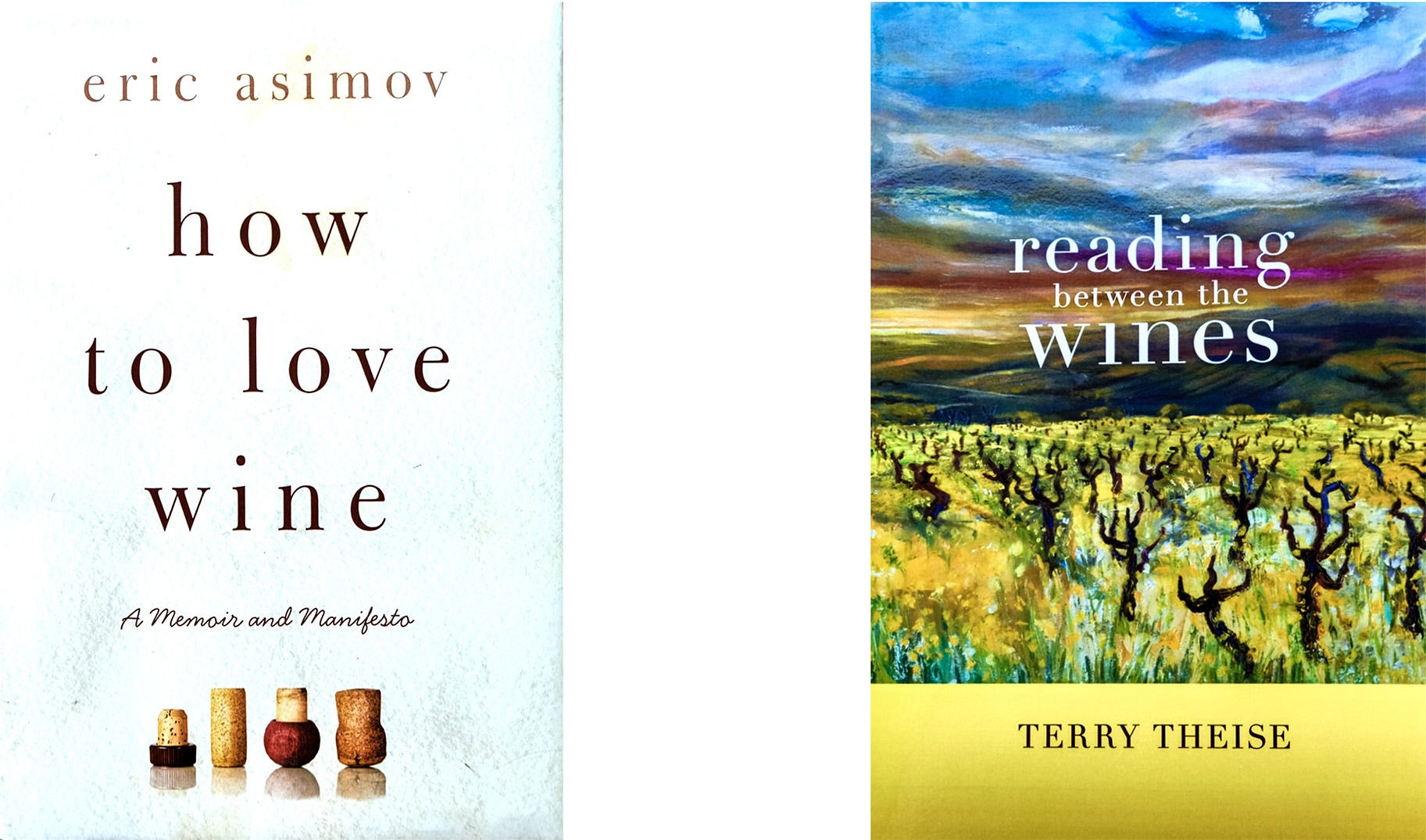
How to Love Wine: A Memoir and Manifesto
Eric Asimov | New York: William Morrow, 2012 | memoir | Bookshop.org
Part memoir, part anti-instruction manual, each chapter is a short opinion piece about contemporary issues in wine and gastronomy: tasting notes, scores, markets, pleasure, food, culture. Asimov’s views are expansive and generous, anti-elitist, but he does not hide his own preferences and proclivities. The writing voice is direct, the language spare and journalistic, but the book still has a beating heart. Best for American readers new to wine who feel disillusioned with the way wine is often written about and taught.
Reading Between the Wines
Terry Theise | Berkeley, Calif.: UCPress, 2010 | memoir-ish | Bookshop.org
Not exactly a memoir, rather a series of essays tackling the more penetrating wine questions that vex Theise. Each chapter addresses a specific philosophical question, but all converge toward a singular vision: that wine matters, its beauty is transformative, and that opening oneself to wine is a way toward ecstasy. Theise illustrates his ideas with telling stories from his life as an importer for Skurnik, so most are situated in German, Austrian, and Champagne regions, although he takes side-trips to Burgundy, because Burgundy. Written well above a 12th-grade reading level, and best for readers with some existing familiarity with wine, but an important addition to the canon of philosophical writing about wine.
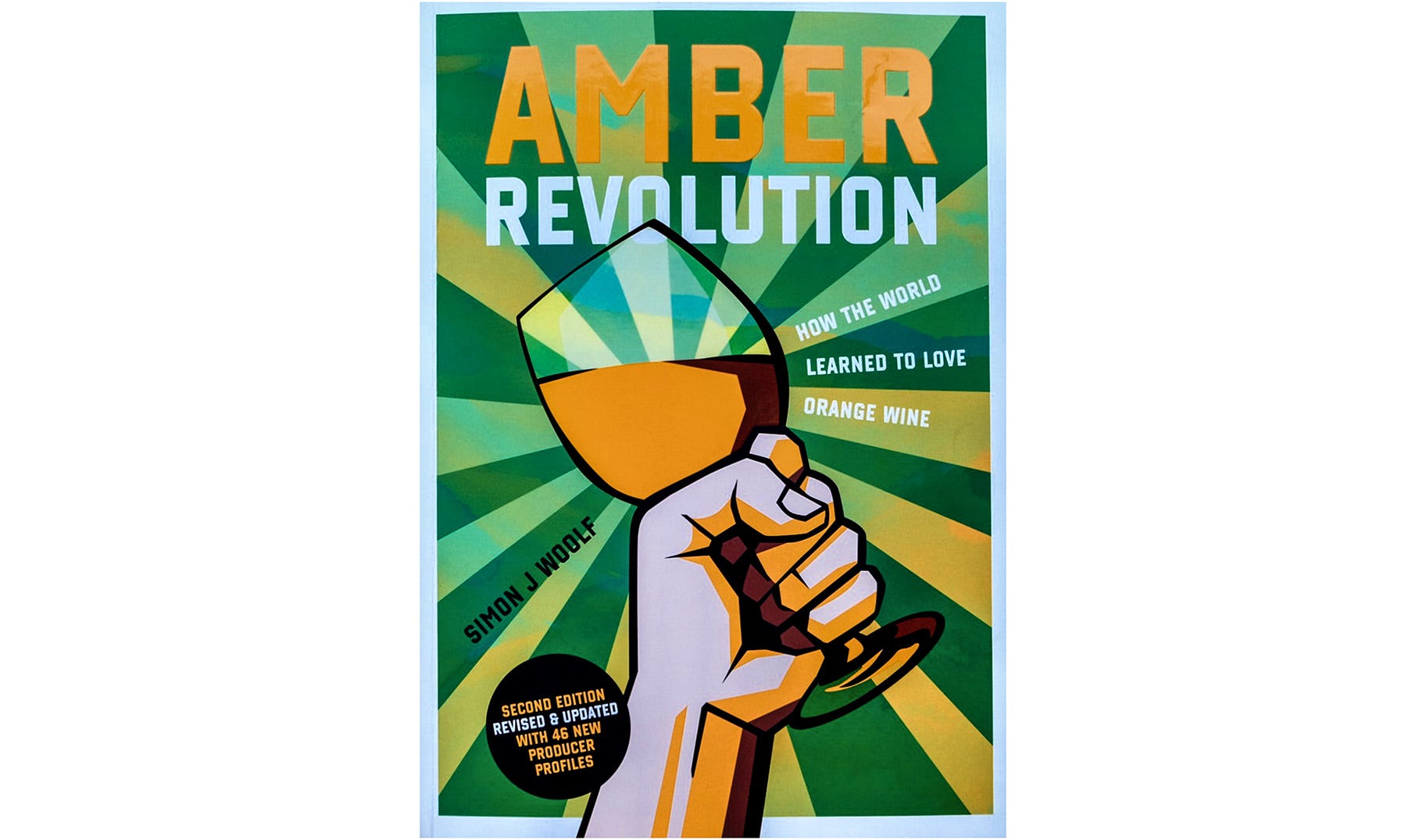
Amber Revolution: How the World Learned to Love Orange Wine
Simon J Woolf | Northampton, Mass.: Interlink Books, 2018; 2nd ed. 2021 | nonfiction | Bookshop.org
Woolf’s first, mind-bending encounter with orange wine, deep in a cellar carved into Trieste karst, propelled a years-long quest to understand its history and traditions. This book documents the style’s historical roots in Georgia, Friuli, and Slovenia, sharing stories of family producers who kept the orange flame burning through war and internationalization, or rekindled it after an interregnum of modern winemaking. Photographs by American wine educator Ryan Opaz bring Woolf’s stories to life, imagery that proves especially important given amber winemaking’s unique techniques, equipment, and cellars. It’s an essential book for anyone curious about amber wine, natural wine (different, but intersectional), and the rebirth of this ancient style.
See you next week.
Book cover photos: Meg Maker
Beyond educational/resource texts, I do still enjoy going back to Wine & War on occasion.
My book, The Caramel Vineyard, could be of interest to your readers. It's about what happens when gold is found among the vines...https://www.goodreads.com/book/show/234221462-the-caramel-vineyard
If you want to read about my winemaking experience, which inspired the book, this might also be of interest: https://axelgeorg.substack.com/p/reluctant-winemaker-no-more