


The Salt is my weekly curated collection of writing and marginalia at the intersection of food and culture. Today’s roundup is heavy on A.I.—as subject, not method. I also share new data on the state of wine industry both globally and at home, and plug a new ingredient I can’t cook without.
The death of the photograph as proof
Art director Zoë Yasemin reflects on what luxury image-making has become now that no one believes their eyes. Even as recently as a few years ago, a high quality photo proved its own authenticity thanks principally to the effort required to take it. “Even when the entire frame was a fiction, the photograph still held, somewhere in its grain, the quiet insistence that something had been there. Roland Barthes called this ça a été, that-has-been.” The receipts—the high cost of such image making—did the work of insisting the subject was not only genuine, it was worth the trouble. No more. Today a flawless image instantly earns suspicion: Is it real? Meaning specifically: Is it A.I.? Campaigns now double-back on themselves to hide their polish, to leave a trace (or add a trace), of quirk, kink, or imperfection—marks only humans can make. “The word I keep returning to is position,” she writes. “A visible point of view. A small, slightly awkward, decided thing.” Position has driven artistic production for as long as there has been art. I’d like to think that’s lasting.
Lights, camera—
In The New Yorker, Jay Caspian King reports on his efforts to get A.I. to write something, anything, we’d want to read. He asked Claude to churn out convincing prose in the style of George Elliot, Earnest Hemingway, Henry Fielding, and others. Although it proved a reasonably competent mimic of voice, tone, and style, it fell far short on drama. When confronting emotional or psychological obstacles, the characters went limp. “A.I. also had a weird habit of making its characters fidget constantly, always running a finger along the edge of a table or adjusting a collar. The most reliable marker, though, was something more abstract, and, I suppose, upon reflection, even a little spooky. The scenes generated by A.I. had characters, but, apart from fidgeting, they mostly did nothing.” They are ghosts lacking agency: no goal or through line, no way to decide next steps. The result is a story without action—which is effectively no story at all. In grad school I wrote a one-act play over the course of six weeks, itself a kind of Hero’s Journey. It was brutal, but it forced me to confront the sole element that propels all drama, and the reason they call it acting.
Caveat lector
I’m not the first to notice that Substack’s rife with A.I.-generated slop, but the apparent degree to which it has infected wine commentary is truly dispiriting. Lately I’ve been running copy that fails my sniff test through a raft of A.I. checkers. Some pieces are evidently human-made, some a mix of human and A.I., while others are confidently 100 percent spew. The checkers are imperfect, and I grasp the irony of using one machine to check another’s work, which is why I always try several tools before reaching a verdict. The experiments have taught me to be vigilant as I read here and elsewhere, and especially as I amplify others’ work. A.I. has become so adept at mimicking human cadences it readily lulls the reader into a false sense of authenticity. But it can’t say new things, and while a piece may look polished, scratch the surface and the thing turns to dust. I do use A.I. for research, translation, and transcription, but I cannot imagine using it to write about a product (wine) whose existence and worth are substantiated exclusively by human experience.
The global wine scene
The International Organisation of Vine and Wine (O.I.V.) has published its 2025 State of the World Wine Sector. The report considers data on vineyard surface area, wine production and consumption, and international trade by region, type, volume, and value. The data show declines or stagnancy in many of these categories, and overall a global sector struggling with myriad geopolitical and climatic pressures. But there are some signs of stabilization: “Across production, consumption, and trade, volumes remained under pressure, but overall market balances stayed broadly contained, supported by lower output, gradual stock adjustment, and the high level of internationalisation of wine markets,” the authors write. The twenty-six-page report is crammed with stats valuable to writers seeking defensible data for their reporting.
Wine-to-consumer
Another report out this week focuses exclusively on the U.S.: Silicon Valley Bank’s Direct-to-Consumer Report, a follow-on from their annual State of the U.S. Wine Industry Report. Four hundred fifty American wineries completed the survey, 61 percent of which make fewer than 5,000 cases annually. True, big-volume producers sell less wine direct and more through distribution, but the preponderance of tiny wineries in the report shows how invested they are in this high-margin channel. Rob McMillan, founder of S.V.B.’s wine division and the report’s longtime author, notes that today’s highest-performing D.T.C. programs are outwardly focused, mostly on client relationships and events. They also take their offerings on the road rather than rely solely on people showing up at the tasting room with wallets open. The report’s data are useful not only to wineries but also to retail shops that run wine clubs, events managers at private clubs, and regional consortiums seeking to grow wine tourism and consumer engagement. And of course to wine writers like me.
Marginalia
I love alliums in every form, but I’ve recently come to appreciate the special sweet-savory tang of the dried versions, which add dimension fresh can’t match. My current crush is the range of dried alliums from Burlap & Barrel, including onion, garlic, black garlic, and purple shallot. I’m especially enamored of their Toasted Onion powder, which contributes depth and sweetness to sauces, spreads, and marinades. I used to think dried was a lazy shortcut. I’m glad I’ve outgrown my bias.
See you next week.
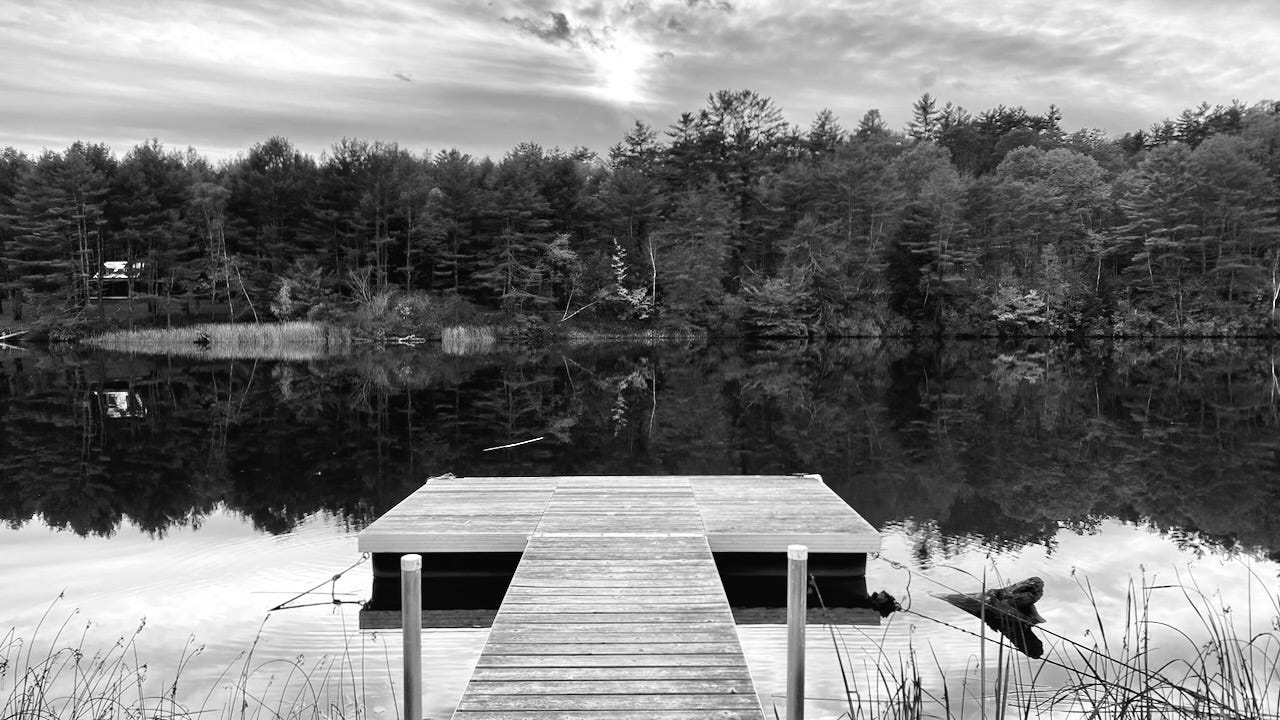
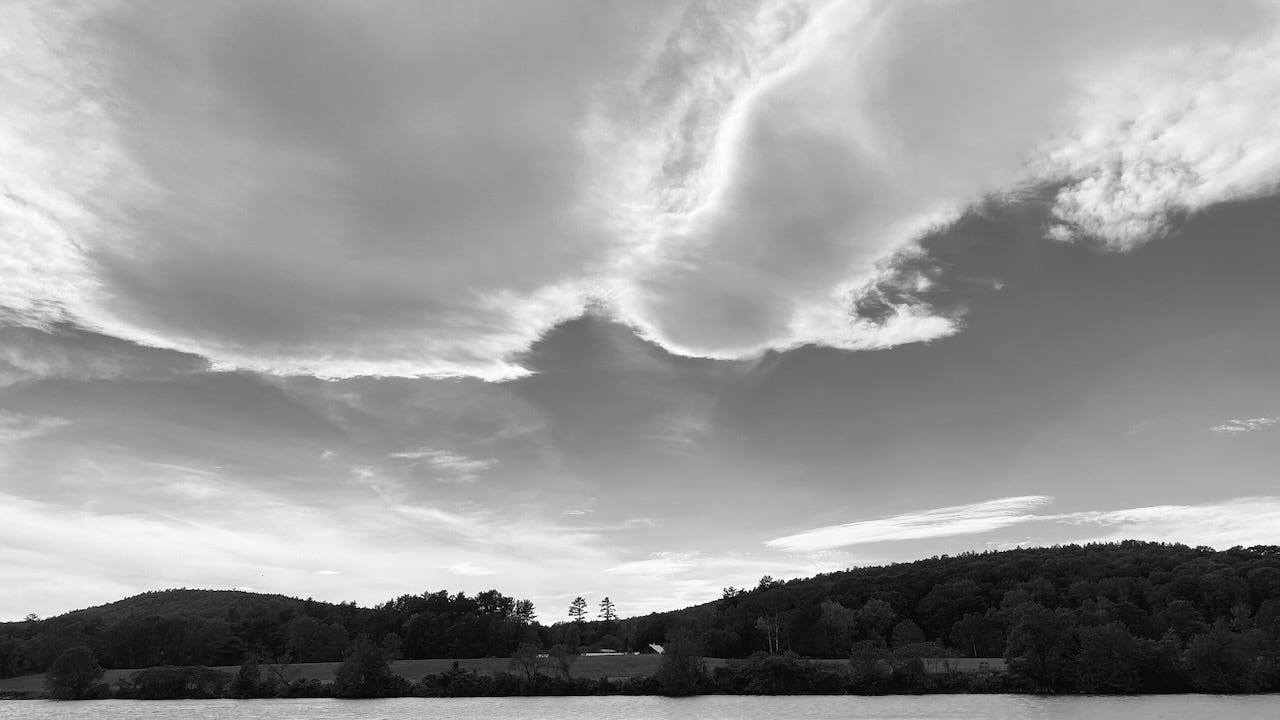
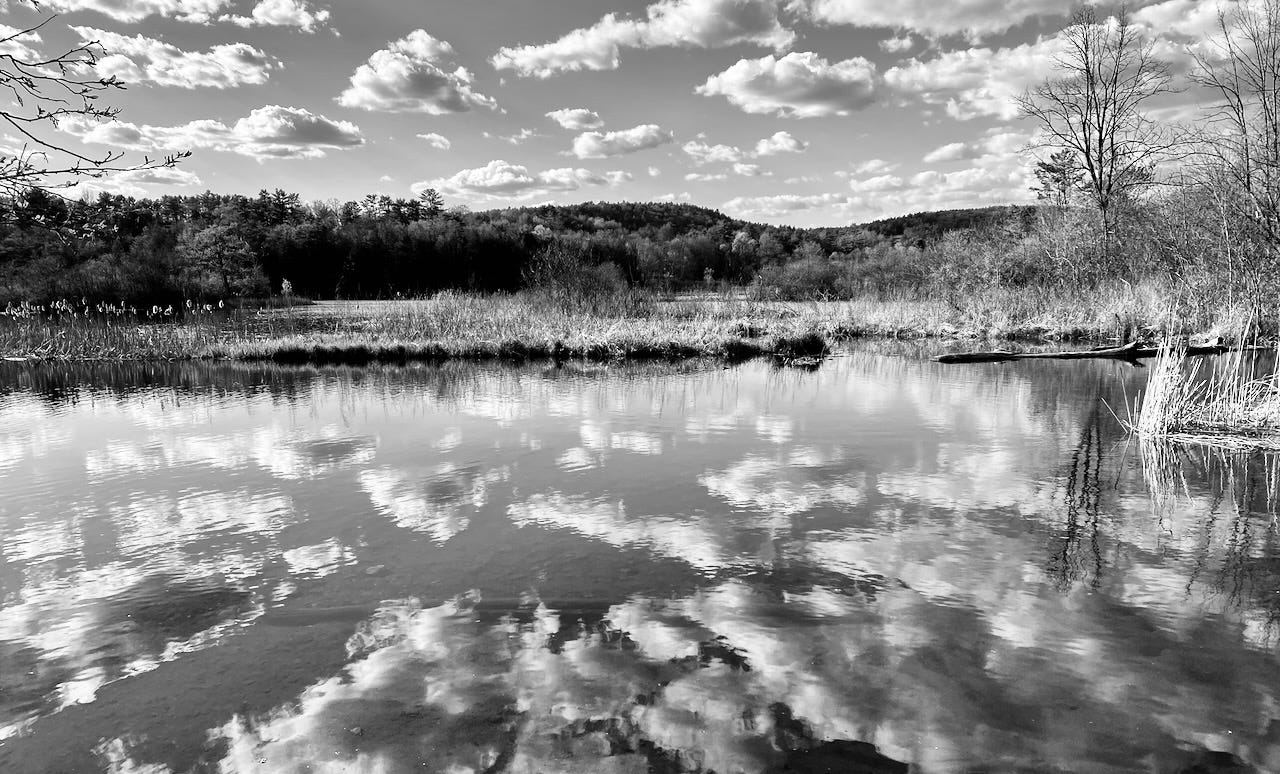
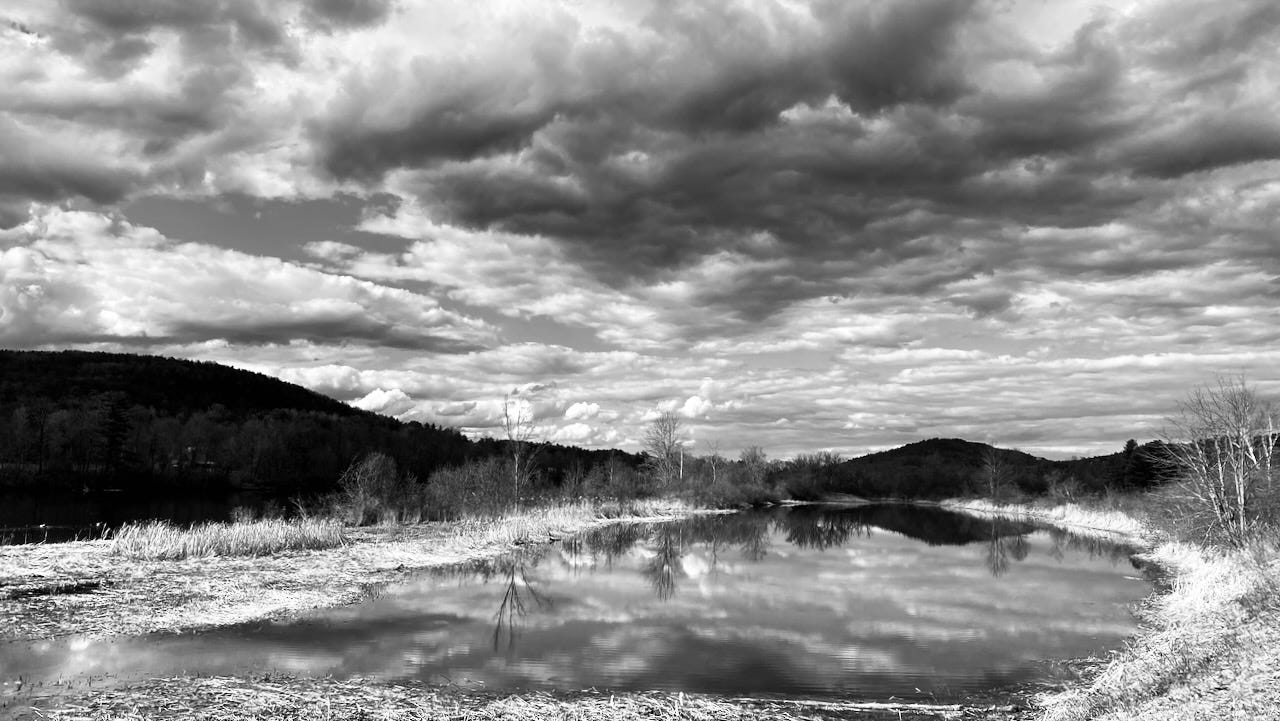
Images of the Connecticut River in Lyme, N.H. ©2026 Meg Maker
I use AI as a preliminary search and as a proof reader, but have never and will never use AI to write something with my name on it.
Bookmarked that spice shop. Thanks!